
Finalist on BBC's The Traitors · Season 2, episode 12
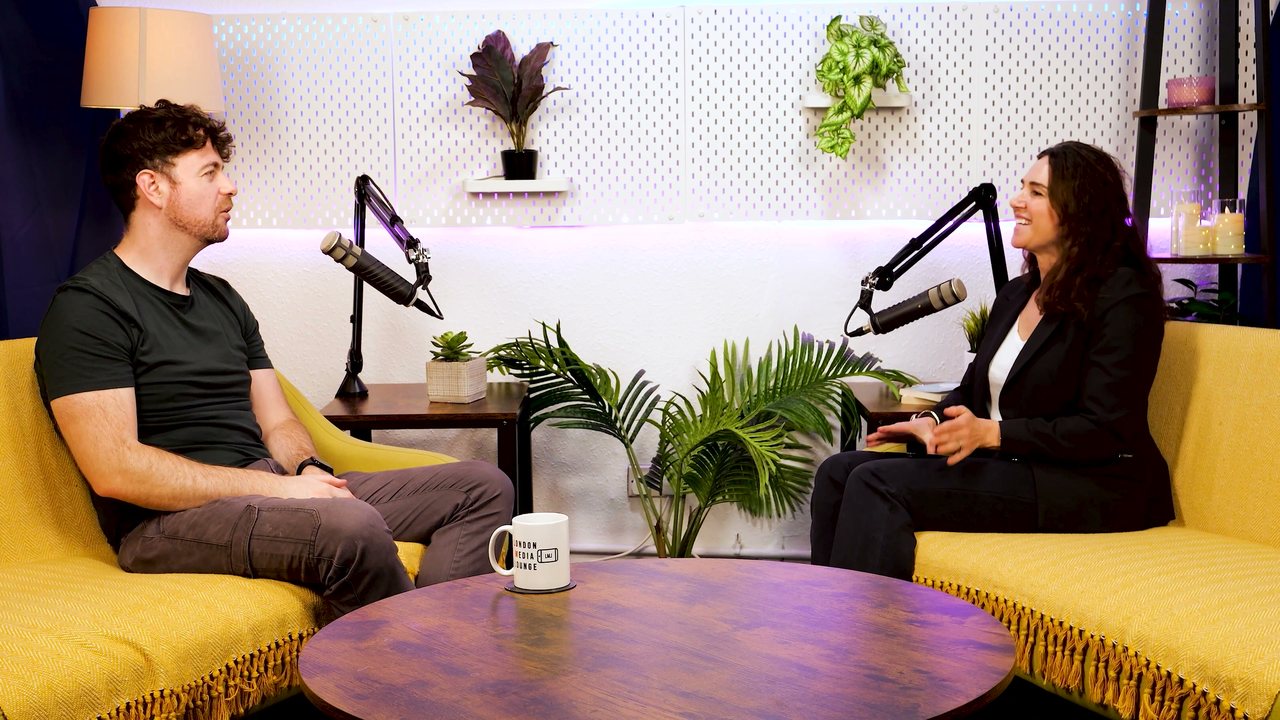
The synopsis in audio: Andrew Jenkins and Aleksandra King on The BEYOND Podcast
Andrew Jenkins with Aleksandra King on The BEYOND Podcast: the same 13 minute synopsis, audio only.
- 12:59
Andrew Jenkins and Aleksandra King on The BEYOND Podcast
Transcript
You were declared dead at 21. What happened? I was driving my car, and there were five of us in my vehicle altogether. My previous partner, my son's mother, was in the passenger seat; my best friend and his girlfriend were in the back, and the lady I used to work with was in the back. I hit a kerb on the left-hand side with my left-hand wheels, the passenger side, flipped the car to the right-hand side, and went through the driver's window, through the door to the side window. So my legs were in the footwell under the steering wheel, and my top arm was outside the car. My head and my arm, as you can see there, were dragging on the floor for a couple of hundred yards. When the car stopped sliding, it landed on top of me. So when the fire brigade, the police and the emergency services turned up, they told the people in the car that I was dead. I had to have two blood transfusions on the side of the road, because I lost six pints of blood; you've only got eight in your body, and I lost six of them. I won't go into too much detail, but I had no hair, no skin, nothing on top of my head at all, because I was dragging on the floor. I had a big hole in my skull, and I had bone embedded in my brain. When the fire brigade turned up, they had to lift the car up to get underneath it to work on me. As you can imagine, it was horrendous. I was in a coma for four weeks in intensive care. And I suppose something like that won't ever leave you. No, it doesn't, and I've only really come to terms with it in the last couple of years. I let my trauma define me for probably 24 years; my life was literally a car crash. So, the last two years, I'm really getting strong again and using my trauma for good, to help inspire other people. Doctors told you at some point as well, from what I've understood, that you wouldn't be able to walk again. Yeah. When I was in my coma, my family were called into the hospital on three occasions to say, "He's not going to make it through the night; come and say goodbye." I've got three brothers, two older brothers, one younger brother, and my mum and dad. When I started recovering, they got told that, from the scans they'd done on me, there's lots of shadows on my brain, which means dead tissue, so I've got severe brain damage. There's a chance I'll never wake up, but if I do wake up, I'm not going to recognise anyone or walk on my legs ever again, so prepare for the worst. So I woke up after four weeks, and my mother and father were standing over my bed. I didn't know where I was or what had happened. It was quite scary: lots of beeping everywhere, tubes everywhere, in the hospital in intensive care. Then four days later the doctors came round and said to me, "You're never ever going to walk again," and my first response was, "I guarantee I'll walk in this hospital." They're literally saying to you, you are not going to walk again, and you're going, "Yes, I will." My mother said, "It's embarrassing. The doctor is trying to tell you you're not going to walk again, and you're arguing. You're in bed with a tracheotomy in your throat, tubes coming up everywhere, and you're arguing with this man, telling him you are going to walk again." a good support around you to help pick you up if you're feeling a bit down. So you took these steps until it was a 1,200 km trek. Where did you go, what did you do, and why? And what message were you sending with this very, very long walk? I walked 1,200 kilometres across four countries. I walked the length of Scotland. I started at Ardross Castle, where we filmed The Traitors, right at the top of Scotland, up at the top of the Highlands, and walked the length of Scotland, part of England, then went on a ferry from Liverpool to Northern Ireland, walked the length of Ireland, went back over to North Wales, walked the full length of Wales, and ended up at Cardiff Castle on the 10th of November. And I did that for everybody out there who is battling demons, who thinks they're not good enough, who is being told they can't do something in life, who has lost their confidence and self-worth. Being in a coma, I say I ticked so many boxes. I worked in the corporate world for years, in corporate banking for 18 years and in insurance; then I'd been in a coma, never to walk again, so I lost my confidence and my self-belief. I did it for the people out there who are struggling, to say to these people: keep working hard, keep believing in yourself, and you can achieve anything in life you want. I'm for that, I suppose. Take us with you on that walk, to a moment you remember vividly. What was going through your mind in that moment? Where were you, and what were you doing? There was one time I hurt my knee really badly, and it was my fault: I didn't do any stretching, I wasn't doing any exercise at the end of the day. I was probably walking about 40 km a day, every day, a marathon a day. That's a lot of walking. That's a lot. When I got back to my accommodation, I just wanted to relax, to be honest, when I should have been stretching and foam rolling. I'd walked, I think it was 800 kilometres, and I hurt my knee really badly, and the owner of the team who were doing my walk with me, Challenge the Wild, wanted to pull me from the challenge. He said, "We have to stop. You've got to think of your long-term health, because this could have implications for you." But again, showing my resilience, that's my stubborn side, I said, "No, I'm not quitting." I'll crawl on my hands and knees over the finish line at the end. I'll never give up on anything in life, and if I believe in something badly enough in life, whatever that is, I'll go after it and I'll get it eventually. And again, not being big-headed, anything in life that I really wanted and really believed in, I've achieved it, I've got it. I knew I was going to finish my walk. I could have hopped it; I don't know how I would have done it, but I wasn't going to stop. But yeah, it was a tough, tough day, a really tough day. Okay. Now we're going to go back a little bit more into your past. You said that you used to live by people's expectations. What did you mean by that? I think we all do; I think most people do in this country. When you're born, you're the truest, most authentic version of yourself. As a child you've got no inhibitions, you've got no self-esteem issues with your confidence; we're just plain, innocent children with blank canvases. And then you get programmed to fit into society, to be socially accepted. First of all your parents do it: they'll punish you sometimes just for being yourself. You're running around laughing, they'll send you to your bedroom, they'll take your toy off you, and you're thinking, "I'm just being myself." And then it's, "You'll do this job like your dad, this job like your mum. Why can't you be like your brother?" They compare you to your siblings. So then we go to school, and we get judged some more by the teachers. Our self-worth starts getting valued by the grades we get in schools. People who always get an A grade just think they're amazing; you get an E grade, you're written off. So people attach their self-worth and value as a human being to their achievements in life and the material things in life. That's what I talk about in schools now. I say it's important to try hard and get good things, I'm not saying that, but don't beat yourselves up and think you're a bad person if you can't achieve it. And then we end up finding a job with the biggest salary possible, so from a relatively young age, more money means more happiness. And then one day you wake up: you're in a house, you've got a good salary coming in, a six-figure salary, you've got a good body, a nice house, a good car, a pretty partner, and me, still, I was really miserable. I was that person. I'd look in the mirror now and again and think, "I've got everything in life that I was told would make me happy," but I was still miserable. Okay. Then the opportunity comes along for you to be on Traitors. Why did you do it? I ask myself that question: why did I do that? No, I actually had a message on my Instagram page; I didn't apply for it initially. I would never apply for things like that; I don't really watch reality TV. So I had a message on my Instagram from a casting director saying, "Do you want to apply for the show? Your story looks incredible, you seem like a nice person, do you want to apply for the show?" At first I didn't think it was serious, and then I thought to myself, I can get a great profile and a platform, the connections I've got now, to do what I want to do now. So I wanted to start talking about wellbeing and mental health before the TV show, but I only had a couple of hundred followers; I didn't have any connections. So that's genuinely the only reason I did that show. Being recognised in the street, I'm a humble man; I'll never change the person I am, regardless of how successful I become. The only reason I did that show is to get a platform to do what I do now. All I want to do is lie on my deathbed, close my eyes, knowing I made a difference to this planet. All I want to do is help people. I don't suffer in silence; I did for many, many years. I want to help give back to people; I will show people you can overcome lots of things in life and have a good life. the biggest one, probably, or trauma, some form of trauma. You spoke earlier about your mum, and that's dark; no one wants to lose their mum. It's a horrible, horrible thing. Tell us a little bit about how you process that, because people are losing people they love. How do you process that grief? Listen, I loved my mother to bits. My mother was the matriarch of the family; she was the boss of the family. She was only about 4 foot 10, and all of her boys were towering over her. When she spoke, we all listened. She was the boss of the household, the main person in the house, and the strength: that's where I get my strength from, my mother. But I've done a lot of work over the last two years on mindset, on reframing things, and this sounds, ooh, whatever, now, but there's a lot of reading about spiritual things, about frequencies, vibrations and all this sort of thing, and I believe my mother's still with me in some capacity. She might have left her physical body, a vessel, but her spirit is still with me, and I feel it sometimes. I did a talk in Leeds, a big talk, a big conference, and I did it just after my mother passed. I'd sent my slides over a few weeks before that, and one of the slides was me, my mother and my son; the whole point of that slide is to spend time with people, don't take people for granted. So I was standing up in front of the big audience, I clicked with the clicker, the picture came on the screen behind me, and my voice went funny. The voice went a bit funny, and all of a sudden I felt really warm, I felt really warm, as if somebody put their arm around me, as if I felt somebody, and I felt really calm, but I felt my voice was a bit funny. All of a sudden it was like my mother had her arm around me and said, "Come on, boy, you've got this, you're good." It's really emotional. I just felt really calm, and I carried on talking then, in front of the audience. And I did tell the audience that. I said, "My mum passed away three days ago," and they said, "Well, you're doing this talk, and it was only three days ago." We'd been booked in a long time, as the main speaker, so I couldn't cancel it. I know grief is absolutely different for every single person. I was diagnosed with grieving after my accident, because I refused to get a professional, but then, 15 years after my accident, I actually went to see a counsellor for the first time ever, and she said to me after the first session, "I know what's wrong with you." I said, "What's up?" and she said, "You're grieving." I didn't know much about it back then; I do workshops on it now. I said, "What do you mean, grieving? That's when you die." And she said, "You don't have to die to grieve; it's the loss." I used to play rugby, I used to do this; I was grieving the old Andrew. She said to me, "People grieve all the time. Every single person grieves; they don't realise they're doing it." When you lose a big project in work, for example, they tender for a big project in work, it doesn't come off: that's grieving. You change department in work, to a different department: that's grieving. Retiring from work is grieving. You lose your sporting career. He said, "People, when they have children, grieve, because they can't go out as much; they haven't got as much money, as much freedom." You grieve in your own life. So when I do my talks and talk about grief, I can see people in the audience thinking, "God, I must have been grieving: I lost my job, or I got divorced, or I separated from my partner." All grief is, is the emotional reaction to loss of any kind. So I was grieving after my accident. In regard to my mother, I try to reframe it. Obviously I miss my mother, of course I do, but I try and think about the 47 good years I spent with my mother, rather than focus on the negatives. Some people, when they grieve, focus on the fact they're never going to see that person again, never listen to that person again. I know it's different for everyone, not knocking anything at all, but with me, I try and think, "Right, think of the good, think of the good 47 years that I spent with my mother": happy memories, when she'd put me in bed, reading the story every night, and that puts a smile on my face. So I try and focus on the positives rather than the negatives. And if you're serious about wellbeing and mental health, you've got to check in on people. We all spend 10, 20, 30 minutes a day scrolling on our mobile phones, or Instagram, or whatever we look at, but we haven't got five minutes, ten minutes to ring our best mate. And sometimes somebody's going through something, which could be a terminal illness, loss of a job, separation: just check in on that person. It takes two minutes to pick up the phone, or even a text, to say, "How are you feeling? Is everything okay?" And that simple text could be the difference between them taking their own life or not. And I know that might sound a bit harsh, but it's true, it's true. That person could be sat in their house, isolated, lonely, nobody around them for days sometimes, and that text is the first time anybody's spoken to them for days, or weeks sometimes. That could be the difference between them taking their own life or not, and it's as simple as that. Just check in on people: people you care about, loved ones, work colleagues. Just check in on them, a simple text, checking they're okay.
Andrew Jenkins, Speaker on wellbeing and mental health; a finalist in the second series of BBC's The Traitors; Aleksandra King, Podcast Host and Producer, The BEYOND Podcast
Cite this page The synopsis in audio: Andrew Jenkins and Aleksandra King on The BEYOND Podcast. Sourced.media, updated 10 November 2026. https://sourced.media/the-beyond-podcast/andrew-jenkins/synopsis-audio/
 Andrew JenkinsGuest
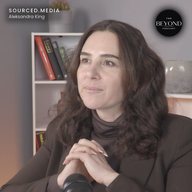 Aleksandra KingHost
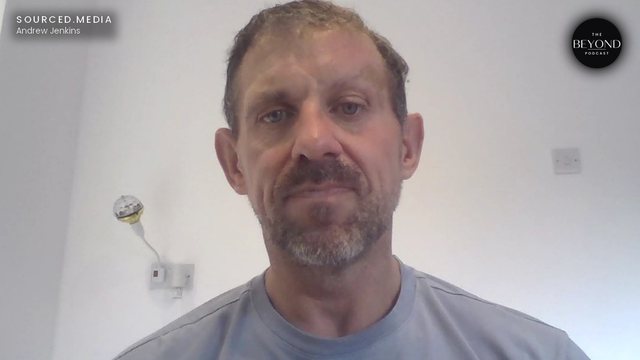
 Andrew Jenkins