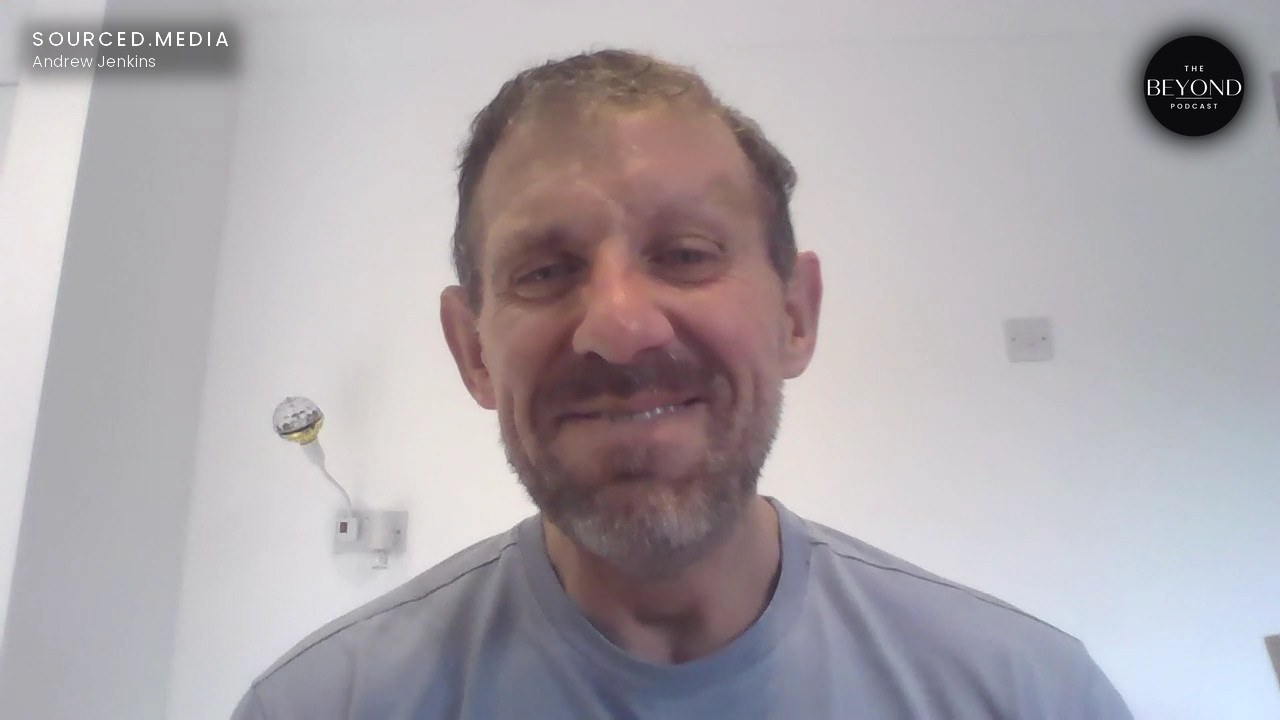
Andrew Jenkins, finalist on BBC's The Traitors
Story
Andrew Jenkins, finalist on BBC's The Traitors, on surviving a crash at 21, walking again and why he asks people to talk
Andrew Jenkins, finalist on BBC's The Traitors
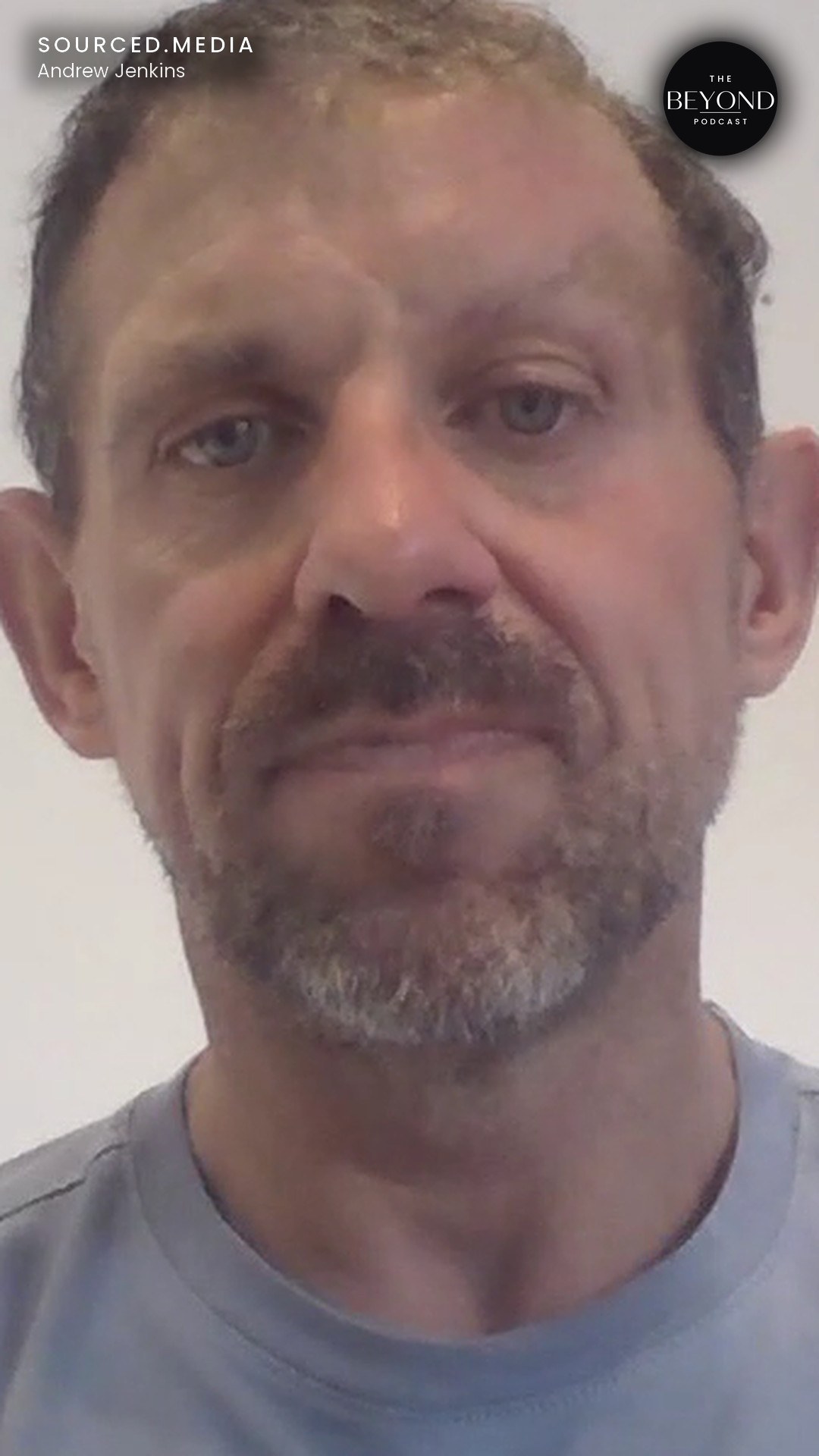
Andrew Jenkins, a finalist on BBC's The Traitors, was 21 when the emergency services at a car crash told his passengers that he was dead. In conversation with Aleksandra King on The BEYOND Podcast, he explains how he walked again, what he learned behind a mask, and why he now asks everyone to talk.
 Andrew JenkinsSpeaker on wellbeing and mental health; a finalist in the second series of BBC's The Traitors
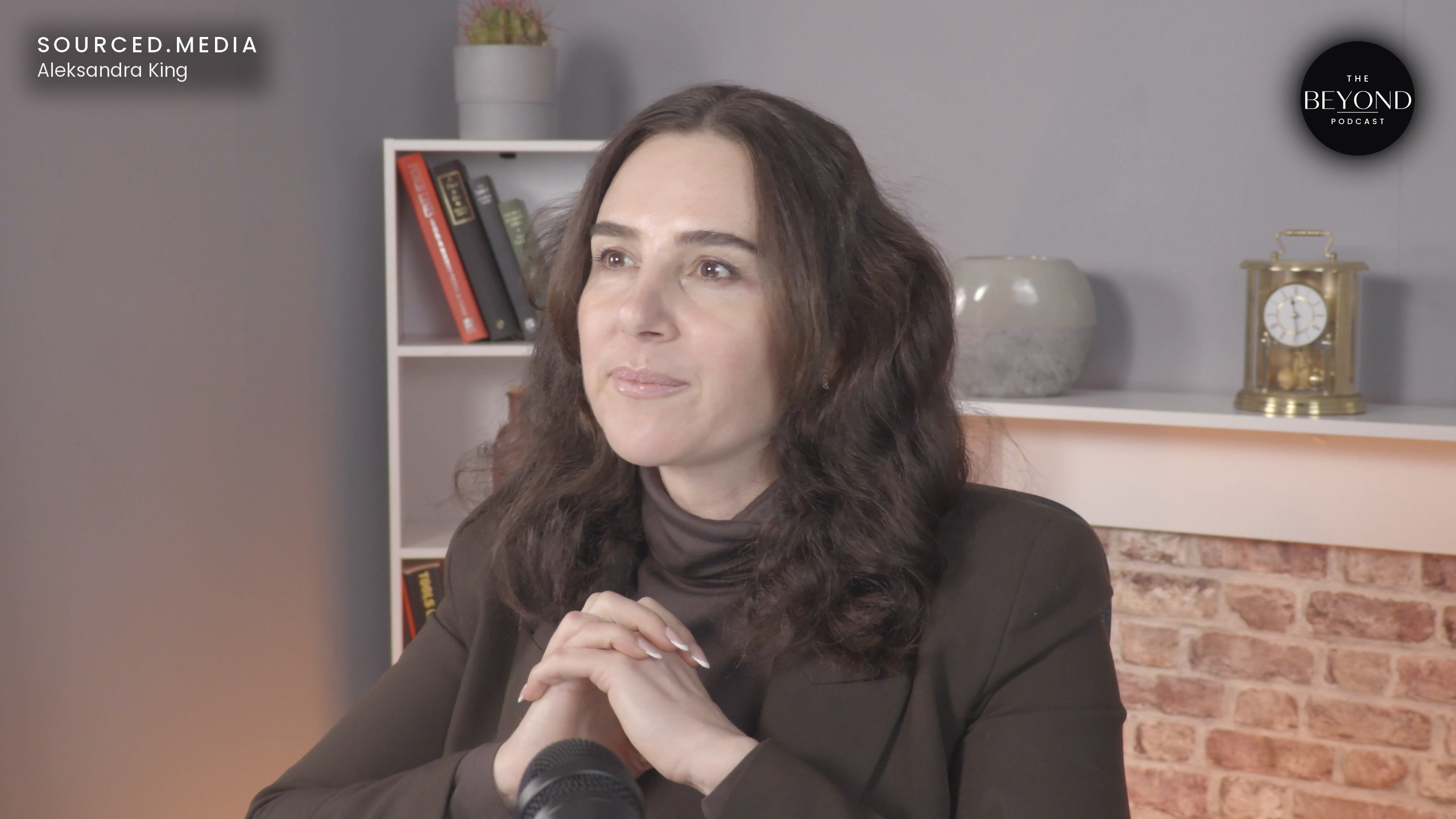
 Aleksandra KingPodcast Host and Producer, The BEYOND Podcast
- Source
- The BEYOND Podcast, hosted by Aleksandra King, with guest Andrew Jenkins
- Full episode
Takeaways
- One small step every dayHe relearned to walk by adding a couple of steps each day, and he applies the same steady gain to work and relationships.
- Other people's expectationsA six-figure salary, a nice house and a good car left him miserable, because he was living to the expectations of his parents and his social circle.
- Vulnerability as strengthHe once thought being vulnerable was weakness and now calls it brave and courageous, the strength it takes to remove the mask.
- Lean into itFeelings pushed down for decades come back stronger, as anger, frustration, violence or drugs, so he now asks what is causing them.
- Grief without a deathA counsellor told him he was grieving the old Andrew, and he now teaches that grief is the emotional reaction to loss of any kind.
- Check in, and talkA two-minute call or a simple text can reach someone isolated, and his one piece of advice to anyone struggling is to open up.
Andrew Jenkins, finalist on BBC's The Traitors, told podcast host Aleksandra King on The BEYOND Podcast about surviving death and rebuilding life. Andrew Jenkins, the guest on this episode of The BEYOND Podcast, reached the final of BBC's The Traitors. Aleksandra King sets the programme aside at the start and goes back to the car crash that left him declared dead at 21.
He spent four weeks in a coma, and doctors told him he would never walk again. His working life was spent in corporate banking for 18 years and then in insurance, where he was miserable on a six-figure salary. The Traitors gave him the platform he wanted for talking about wellbeing and mental health, and soon after the show he left his job.
The episode goes beyond a survivor's story because he is so plain about the cost of keeping everything inside. He refused counselling after the accident, and 15 years passed before he saw a counsellor. He now speaks in schools and at conferences about failure, grief and the feelings men are taught to suppress, and his advice comes down to one thing, which is to talk to someone.
What happened on the night he was declared dead at 21?
He was driving four passengers when the car clipped a kerb and flipped onto its right side. Jenkins went through the driver's window and was dragged along the road for a couple of hundred yards, and when the car stopped sliding it landed on top of him. The fire brigade had to lift it to reach him, and the emergency services told the people in the car that he was dead.
He had lost six pints of blood and needed two transfusions at the roadside. He had a hole in his skull and bone embedded in his brain.
I was in a coma for four weeks in intensive care.
 Andrew Jenkins
He remembers feeling the kerb and little else. In his view the people in the car had it worse, because they saw what he did not. He calls his own part the easy bit, since all he had to do was get better in a coma.
The crash shaped him long after he left hospital, and only in the last couple of years has he come to terms with it.
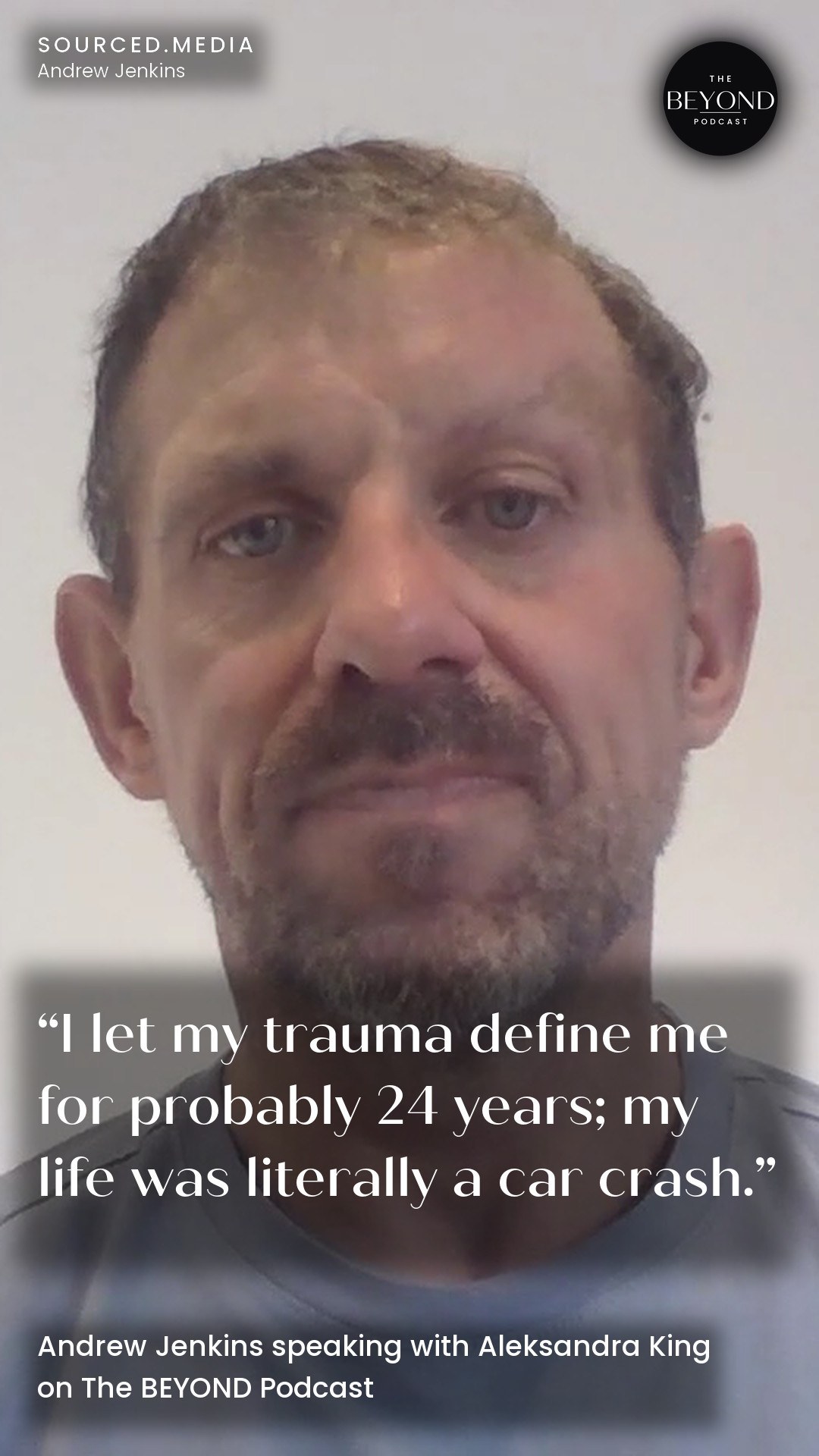
I let my trauma define me for probably 24 years; my life was literally a car crash.
Since then he has been getting strong again and using that trauma for good, to help inspire other people.
How did he walk again after doctors said he never would?
During the coma his family were called to the hospital three times to say goodbye. The doctors read shadows on his scans as severe brain damage and warned that, if he woke at all, he would recognise no one and never walk again. Four days after he woke, they told him so directly.
I guarantee I'll walk in this hospital.
He made that promise in bed with a tracheotomy, and his mother found the argument embarrassing. He credits the stubbornness to rugby and to a fiercely competitive household of four brothers. When someone tells him he cannot do something, he sets out to do it ten times better.
After two months on his back his legs were like jelly, and he could not remember how to walk. A physiotherapist placed his feet one in front of the other for days, and after a week on the parallel bars he let go. At 21 he had too much still to do in life to give up.
The method he took from the hospital is the one he teaches now. Each day he wanted a couple more steps than the day before, and the steps mounted up to walking again. He applies the same idea to careers and relationships, aiming to improve by about 1% a day.
Pick yourself up, dust yourself off, believe in yourself and keep going.
Why walk 1,200 kilometres across four countries?
After the show he set himself a far longer walk. He began at Ardross Castle in the Highlands, where The Traitors was filmed, and walked the length of Scotland and part of England. He crossed from Liverpool to Northern Ireland, walked the length of Ireland, then walked the full length of Wales to finish at Cardiff Castle on the 10th of November.
He walked for everybody battling demons and for anyone who has been told they cannot do something or has lost their confidence and self-worth. He knew that loss himself, because the coma had taken his own confidence and self-belief.
At around 40 km a day, a marathon a day, he skipped the stretching at the end of each day and hurt his knee badly about 800 kilometres in. The team walking with him wanted to stop for the sake of his long-term health. He refused, saying he would crawl over the finish line on his hands and knees if he had to.
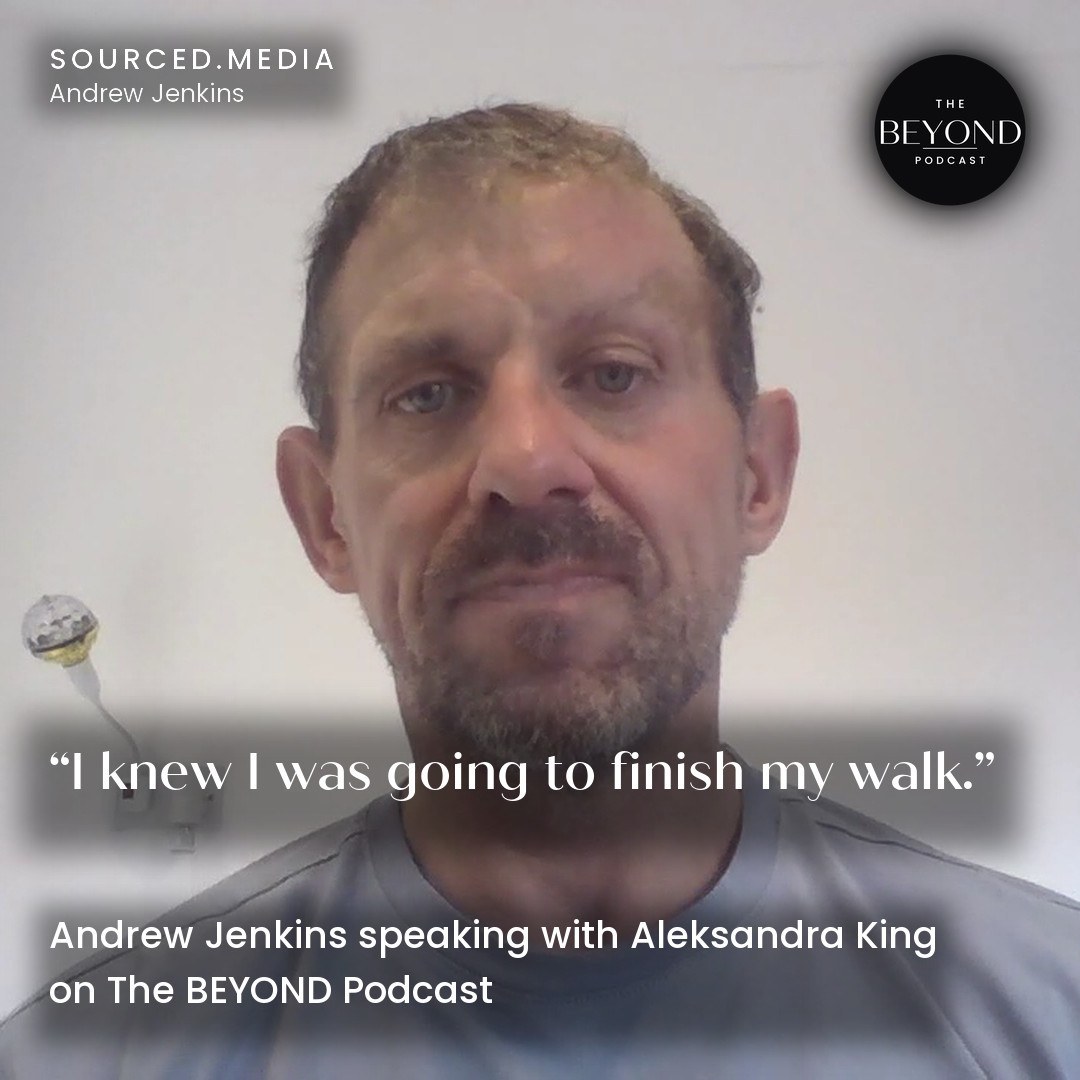
I knew I was going to finish my walk.
Purpose kept him going, and his work with people with a brain injury reminds him how close he came to being unable to walk or feed himself. A couple of days of pain seemed a fair price for raising money for people less fortunate than him.
From the recording
Why was he miserable with everything he had been told would make him happy?
Jenkins traces the misery to expectations learned in childhood. Children start as blank canvases, in his account, and are then programmed to fit in, compared with their siblings at home and judged on their grades at school. From a relatively young age, more money comes to mean more happiness.
His own version came with a six-figure salary, a nice house and a good car, and still he would look in the mirror and feel frustrated with himself.
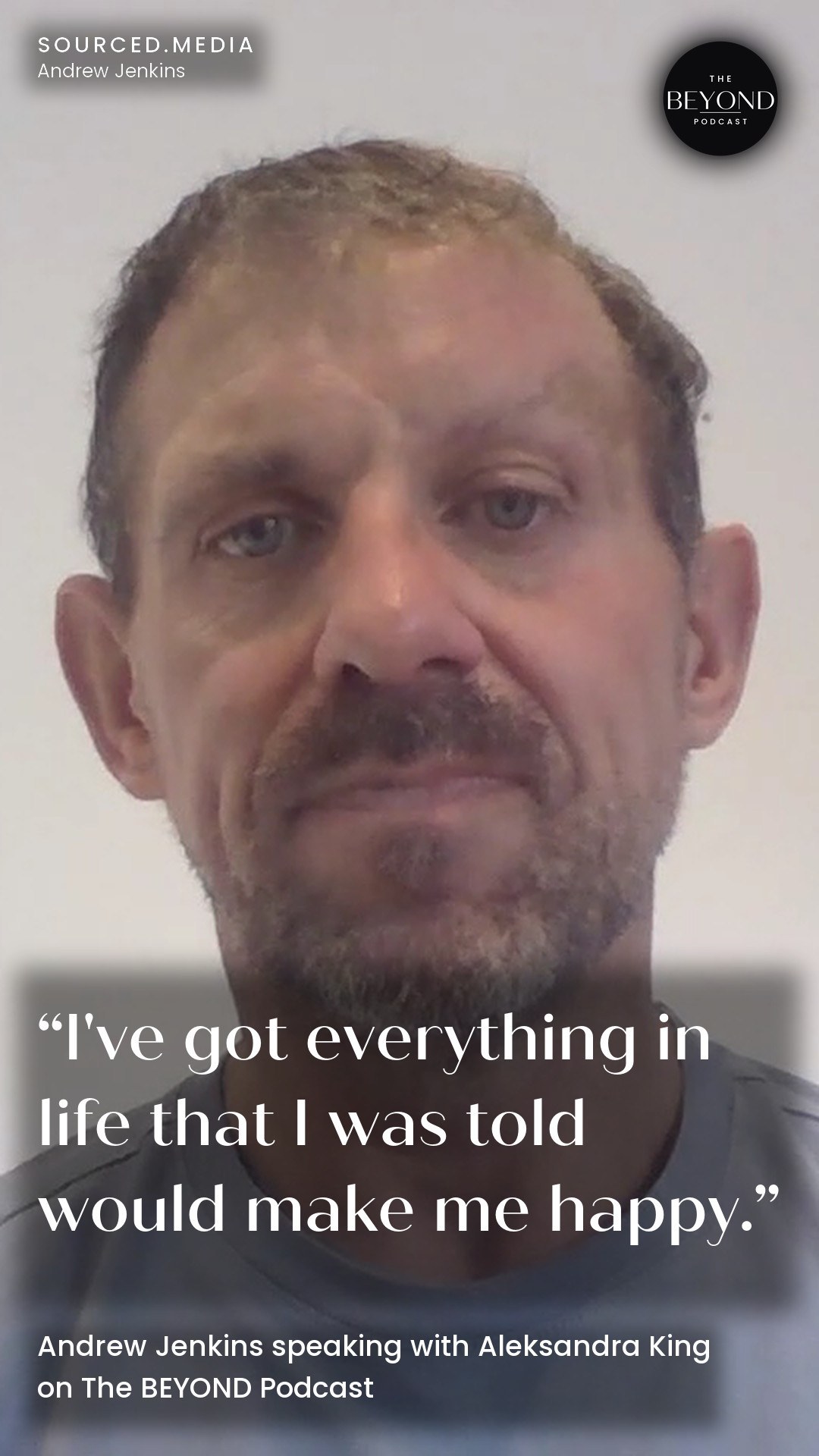
I've got everything in life that I was told would make me happy.
He calls the realisation an awakening rather than a midlife crisis. He had been living to the expectations of his parents and his social circle, in a job that paid well and never fulfilled him. He now tells parents to let their children do something they enjoy.
Living against his values left him uneasy, and the way out was to take off the mask. He admits that this is frightening, because people feel vulnerable and out of control without it. He once thought being vulnerable was weakness, and he now sees it as brave and courageous.
The same upbringing taught him to hide his feelings. His parents have never told him they love him, and he is compassionate about it, because their generation did not show emotion. His father showed love with time, standing on the touchline in all weathers, and his mother through acts of service.
He grew up believing that men who show emotion are weak, and rugby, the gym and work on the door reinforced the belief. After the accident he refused counselling and spoke to nobody about it for years. Feelings pushed down for decades, he argues, come out as anger, frustration, violence or drugs.
Try and lean into it and deal with it, otherwise it'll keep coming back up every now and again.
When he is upset now, he asks what is causing the feeling and whether it goes back to his childhood. He has spent the last couple of years working to heal that inner child.
Transcript
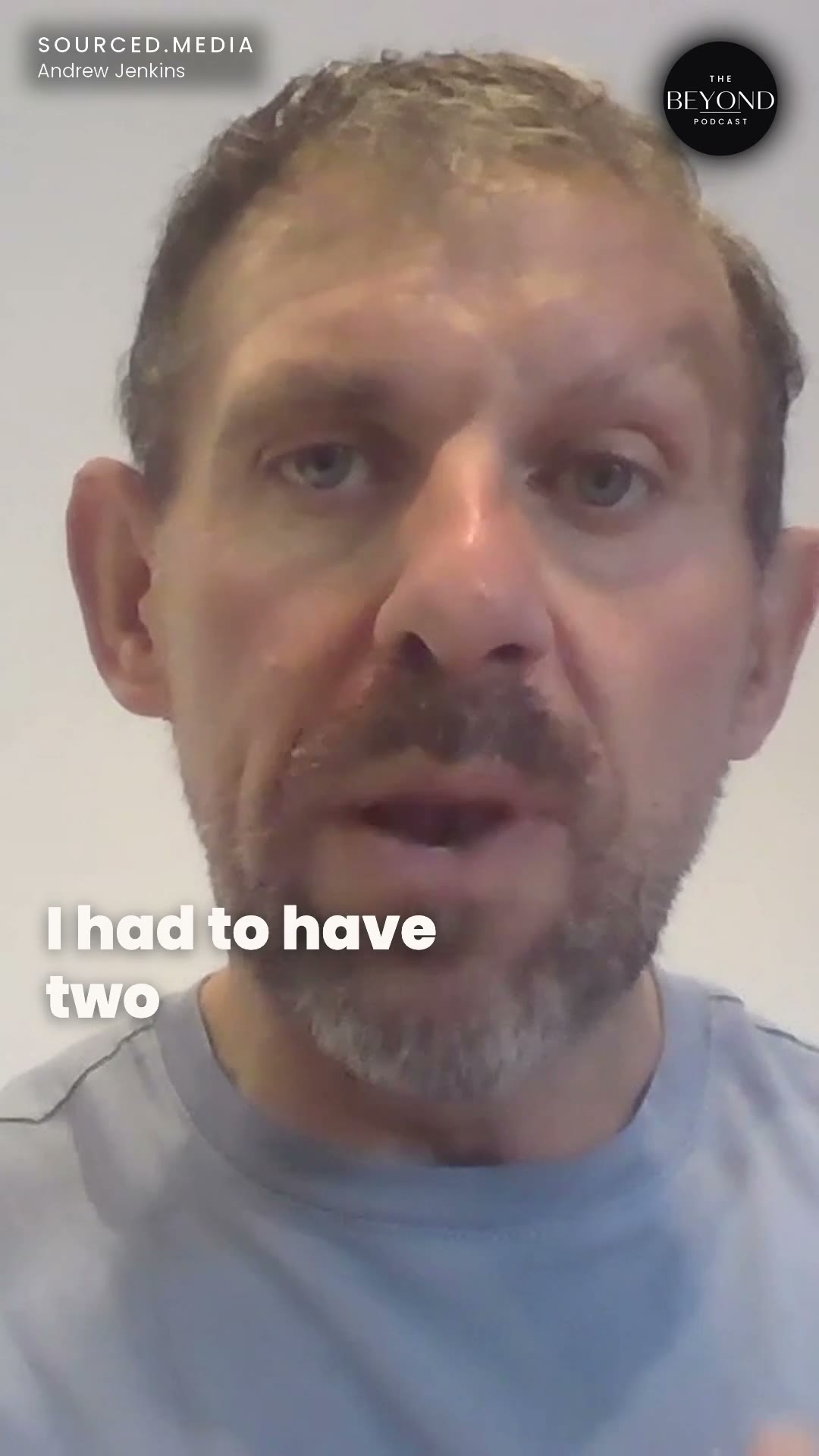
Andrew Jenkins: My head and my arm, as you can see there, were dragging on the floor for a couple of hundred yards. When the car stopped sliding, it landed on top of me. So when the fire brigade, the police and the emergency services turned up, they told the people in the car that I was dead. I had to have two blood transfusions on the side of the road, because I lost six pints of blood; you've only got eight in your body, and I lost six of them. I won't go into too much detail, but I had no hair, no skin, nothing on top of my head at all, because I was dragging on the floor. Andrew Jenkins: I had a big hole in my skull, and I had bone embedded in my brain. When the fire brigade turned up, they had to lift the car up to get underneath it to work on me. As you can imagine, it was horrendous. I was in a coma for four weeks in intensive care.
Why did he go on The Traitors, and what did turning Traitor cost him?
He did not apply for the show at first. A casting director messaged him on Instagram, and although he wanted to talk about wellbeing and mental health, he had only a couple of hundred followers.
So that's genuinely the only reason I did that show.
He went in as a Faithful, a role King thinks suited the honest person he comes across as. Then the Traitors at the time told him he was such a strong Faithful that they would murder him the next day unless he joined them. He sat in the room for 15 or 20 minutes before deciding.
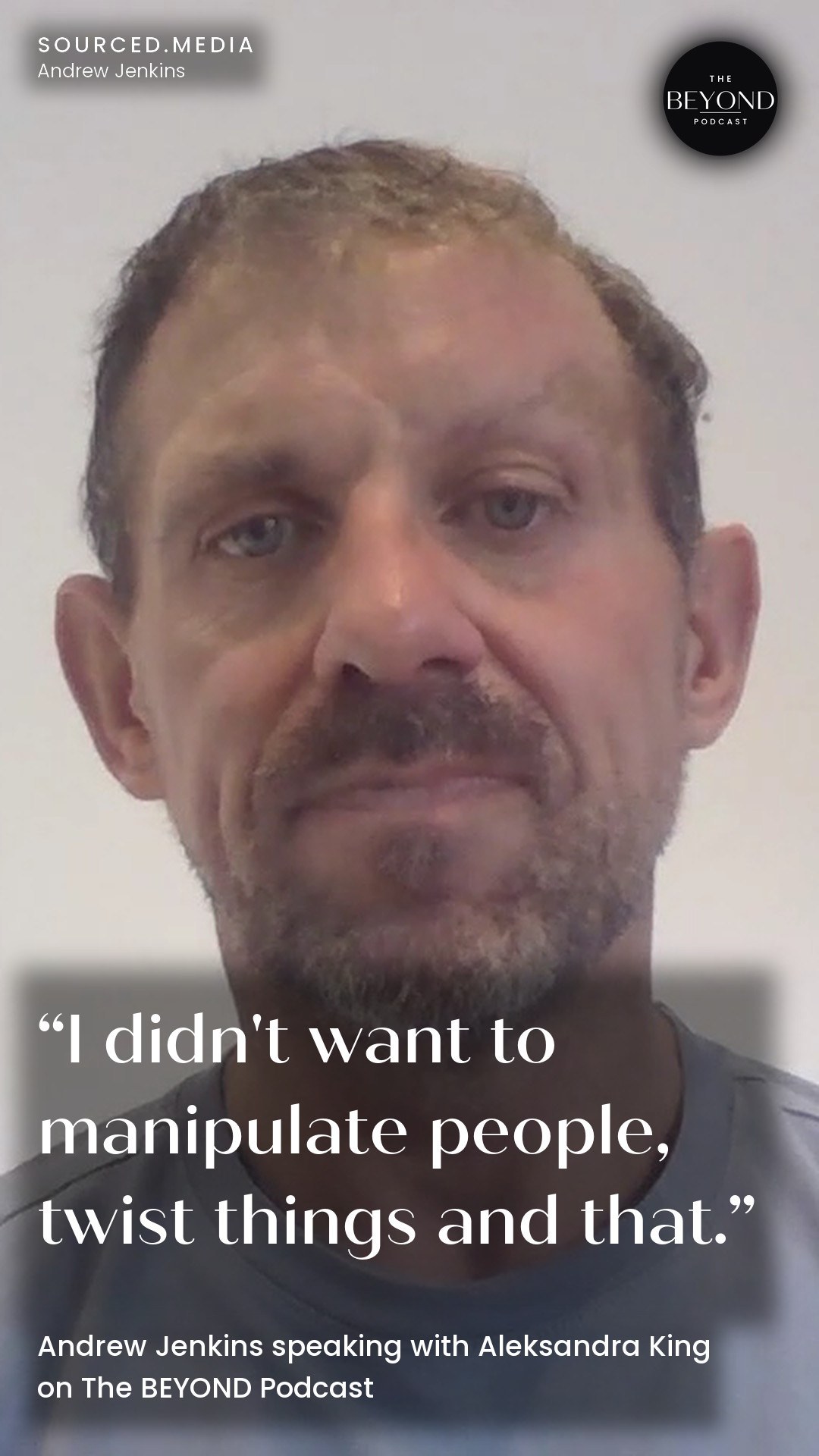
I didn't want to manipulate people, twist things and that.
It was only a game, he reasoned, and the people who knew him would know he was not a liar. As a competitive sportsman he also refused to quit at half-time. He hated the first days, and the one real lie he told at the round table twisted his insides.
What surprised him was how readily people followed the herd, too scared to go against everyone else. In his view that is why the Traitors win by a landslide in the early weeks. He kept his own game friendly and quiet, and he was accused at the round table only once.
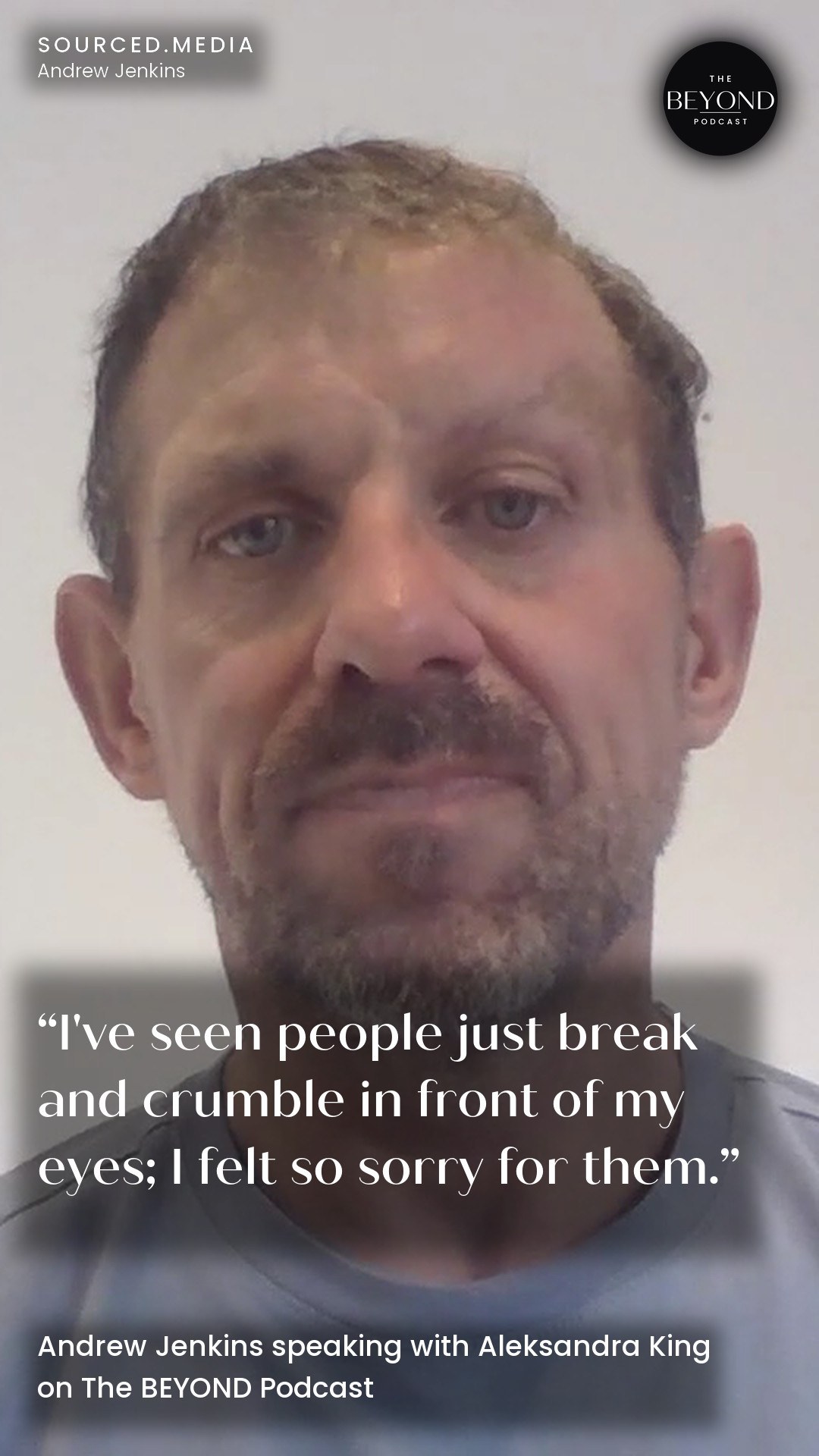
I've seen people just break and crumble in front of my eyes; I felt so sorry for them.
What did losing the final teach him about what matters?
He kept pictures of his family in his room and talked to them every night and morning, so often that he wondered whether he was going mad. About a week before the end he knew he would not win. The people in the pictures, he realised, would love him the same whether he finished first, second or tenth.
It made me realise, it gave me lots of time on my own to think about life in general: what's important, what's not important in life.
He reached the final round table as one of four and was voted off in fourth place. On screen he smiled and walked away calmly, having expected it for days. He was upset for a reason he had not anticipated, because for the first time in a long time he felt proud of himself.
I'm proud of where I got to, whereas years ago I'd be disappointed I didn't win it, but now I'm proud of where I came.
After the show the invitations came constantly, and he fitted talks and podcasts around his insurance job seven days a week. He kept his existing customers happy but brought in no new business, and that sat badly with him.
I've got to leave. I'm robbing a salary off you at the moment.
He left the same day with nothing set up and no savings, a massive gamble in his own words. People assume television made him rich, though he lost in the final, and after a hard start the last couple of months have gone really well.
Watch the full episode

Watch the full episode on YouTube (opens in a new tab): Andrew Jenkins on The BEYOND Podcast · the episode page on the show’s site (opens in a new tab)
What did a counsellor mean when she told him he was grieving?
He waited 15 years after the accident before seeing a counsellor, and after the first session she told him he was grieving. He had thought grief belonged to death. She explained that people grieve for any loss, and his was the life he had before the crash.
I was grieving the old Andrew.
He now runs workshops on grief and lists losses people rarely recognise as grief, such as a failed tender, a change of department, retirement or the end of a sporting career. He defines grief as the emotional reaction to loss of any kind.
His mother died a few weeks before this conversation. She was about 4 foot 10, the matriarch of a family whose sons towered over her, and he traces his strength to her. Days after her death he was the main speaker at a conference in Leeds. When a slide showing her came up, his voice went, and then he felt a warmth, as if someone had put an arm around him.
I know grief is absolutely different for every single person.
He tries to reframe his loss by remembering the 47 good years he had with her instead of dwelling on never seeing her again. His father, married to her for 58 years, is struggling, and Jenkins hopes she is proud of the work he is doing.
From the recording
Why does he ask everyone to check in on people and to talk?
For Jenkins, checking in on people is the test of whether anyone is serious about wellbeing and mental health. People spend 30 minutes a day scrolling on their phones yet cannot find five minutes to ring their best mate. A call takes two minutes, and a simple text may be the first contact an isolated person has had in days.
That could be the difference between them taking their own life or not, and it's as simple as that.
The people with the biggest smiles and the nicest houses can be struggling the most, he warns. He knows of men in their 40s, with a perfect life on the outside, who have taken their own lives because they could see no other way out.
It took him 15 years to talk to anyone, and that is the step he now urges on others. It need not be a professional, and he argues that friends, family and colleagues will not judge.
Just be brave, be courageous, take that first step and talk to somebody.
He believes prevention is better than cure, and he wants schools to teach children about APR, calories and regulating their emotions. King closes where the episode began, with a first step, and draws the lesson for anyone suffering, which is to take that step and have that conversation.
About Andrew Jenkins
Andrew Jenkins is a speaker on wellbeing and mental health and a finalist in the second series of BBC's The Traitors, where he finished fourth. Declared dead at 21 after a car crash, he spent four weeks in a coma and walked again after doctors told him he never would.
He worked in corporate banking for 18 years and then in insurance. He now gives talks and workshops on failure, grief and mental health, and he walked 1,200 kilometres across four countries for people struggling with their mental health.
The BEYOND Podcast and Aleksandra King
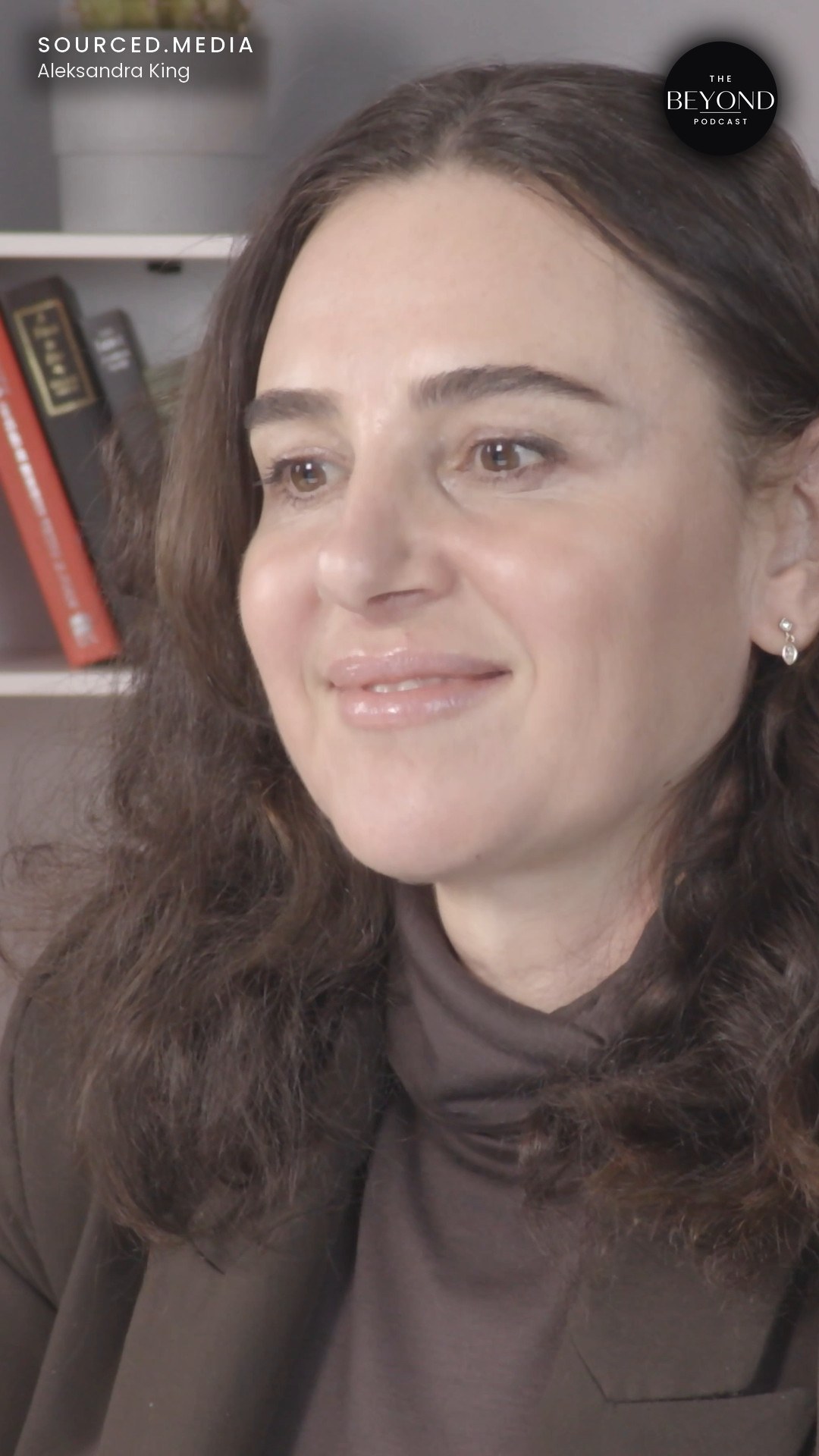
Aleksandra King hosts and produces The BEYOND Podcast, a video interview podcast. This episode is on YouTube in full, with its own page on the show's site.
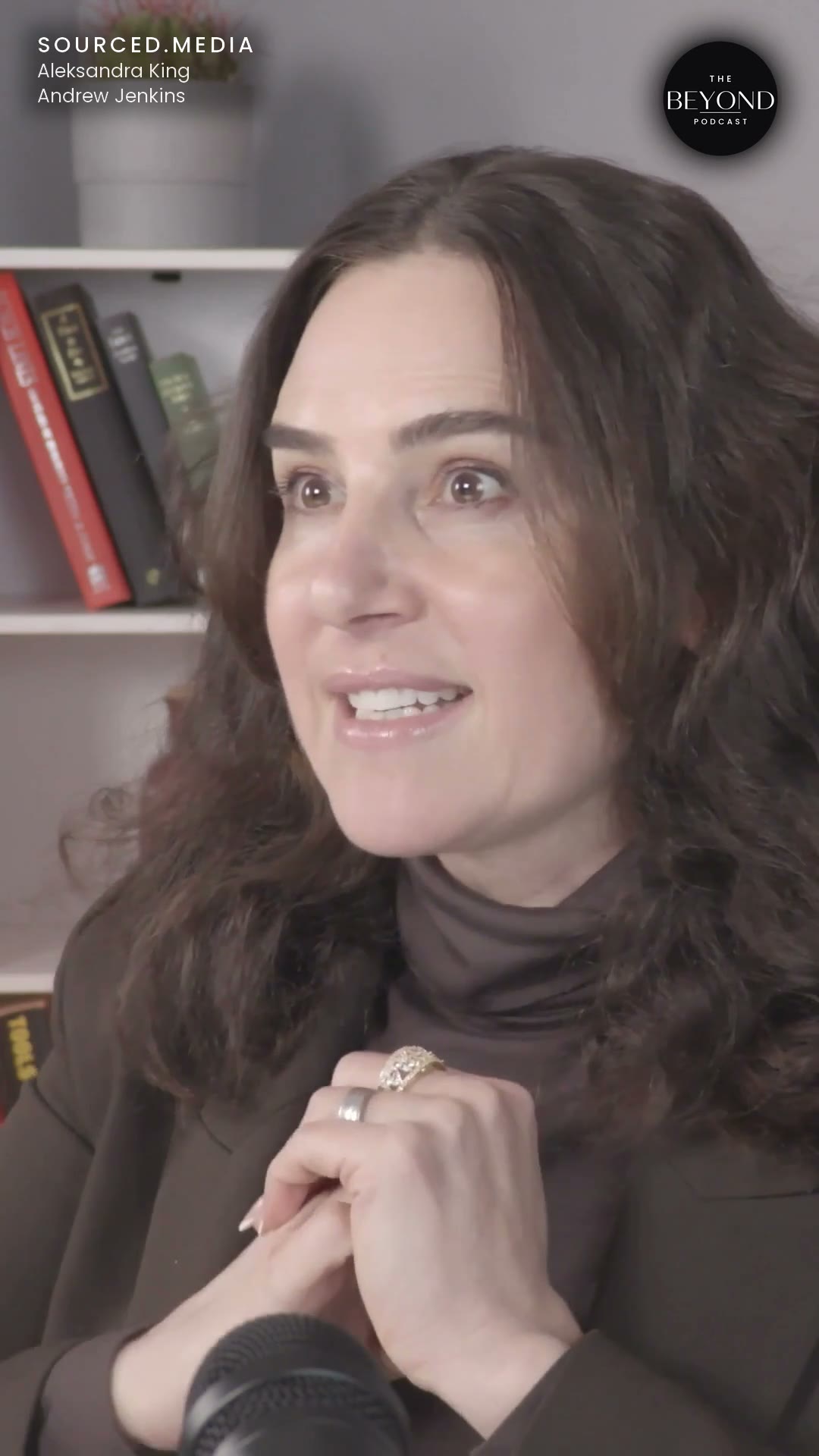
King lets the story unfold in order, from the crash to the walk, the career and the show, and then widens it. She draws on her own time on The Apprentice, where she saw the same pack behaviour, and keeps returning to what his story offers anyone facing a bad diagnosis or a loss.
Aleksandra King, host and producer of The BEYOND Podcast and co-author, with Elliott King (opens in a new tab), of Marketing Wins (opens in a new tab).
Cite this page “Andrew Jenkins, finalist on BBC's The Traitors, on surviving a crash at 21, walking again and why he asks people to talk”. Andrew Jenkins, finalist on BBC's The Traitors, in conversation with Aleksandra King, The BEYOND Podcast, 21 November 2025. Sourced.media. https://sourced.media/the-beyond-podcast/andrew-jenkins/story/ (permanent identifier https://sourced.media/id/C_R09193PR8Z)


 Aleksandra KingHost