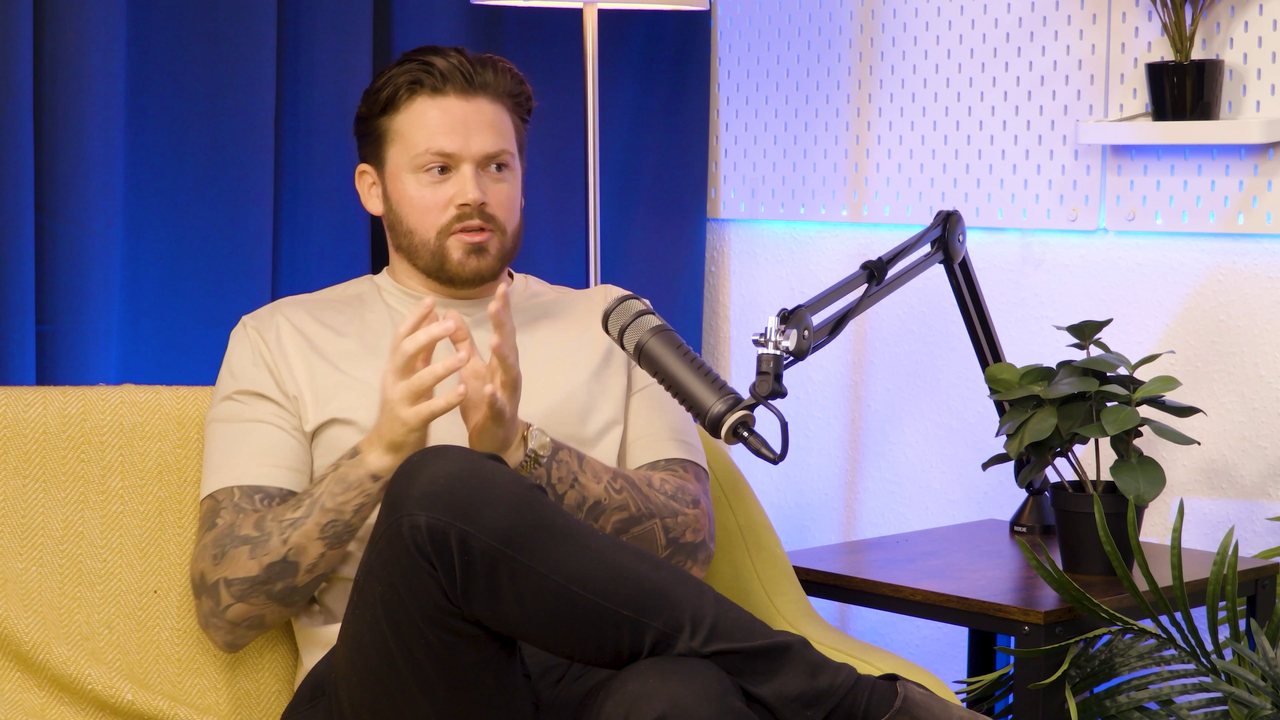
Chief executive of The Coaching Masters · Season 2, episode 15
The synopsis: Lewis Raymond Taylor and Aleksandra King on The BEYOND Podcast
The synopsis of the episode: Lewis Raymond Taylor, subject of Netflix's The Psychopath Life Coach, with Aleksandra King on The BEYOND Podcast.
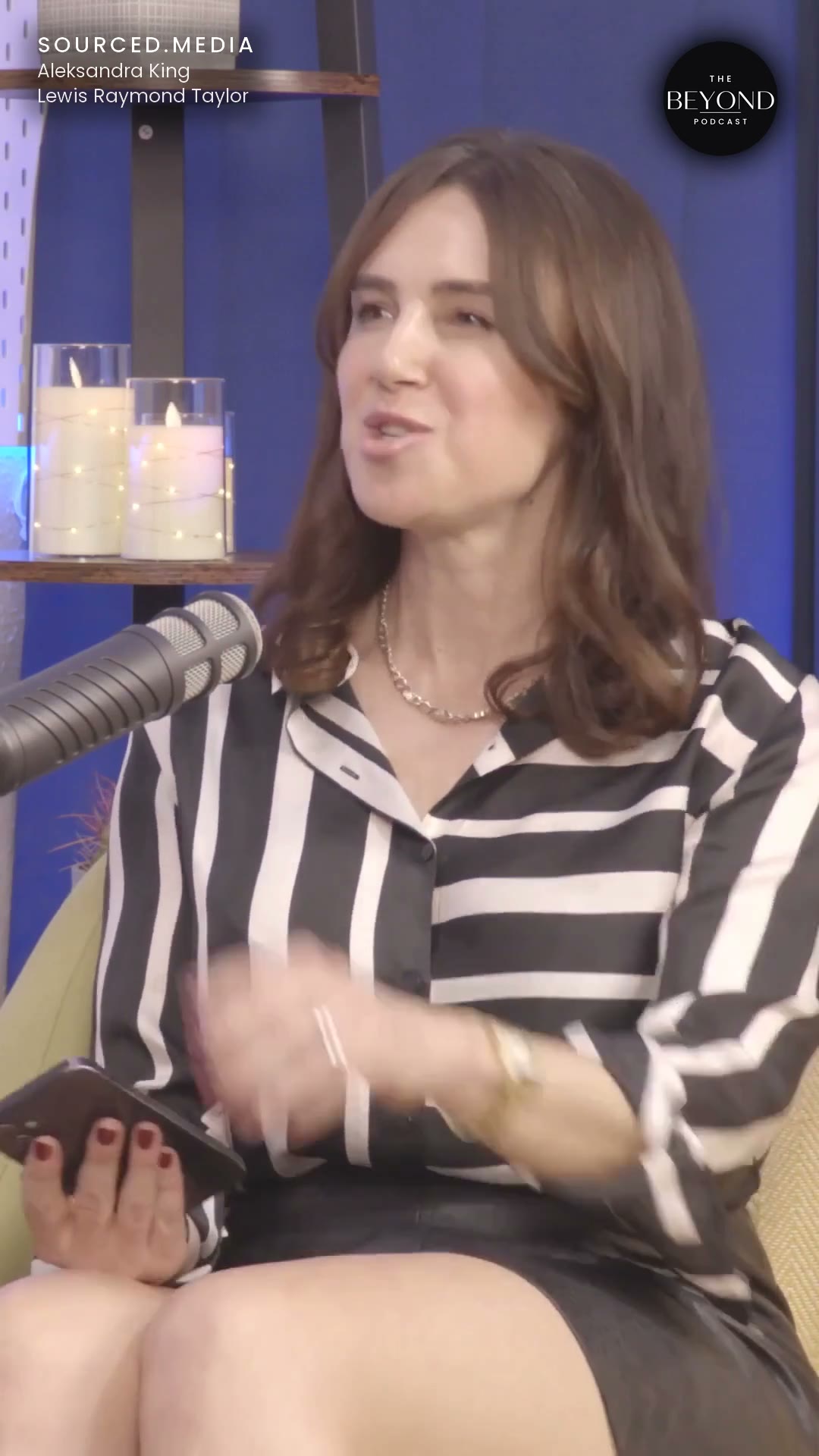
Lewis Raymond Taylor and Aleksandra King on The BEYOND Podcast
Transcript
How did you feel about it? Do you feel? Oh, yeah. Do you feel? I mean, obviously I don't feel anything, I'm sure. What? Yeah, we'll get into that, but I just don't have a visceral reaction, so come on. It is just a thing. It's like asking a blind person why they can't see. I have cognitive emotions, so I could tell you how I feel, but it's just the way I represent it. So I could answer that question. But if we're getting into the actual depth, if you see a little kitten or something getting run over, do you not feel really, really sad? Is it that kind of feeling that you don't have, or is it a different kind of feeling that you don't have? See, that's a little bit different, because that's on the spectrum, and there's a threshold. So the illusion of empathy and fear and things that people seem to get consumed by on a day-to-day basis, I just don't feel; it's just very baseline. If something significant happens, if I was to see a cat getting run over, yeah, I would. It's difficult, because I'd have to really be there to know exactly what I feel like, because it is kind of rare that I have those moments. But I would be concerned about it, and I would care about it. I actually really like cats, funny enough. Oh, good. How can you not like cats? At one point I had five, because in Bali we would see little ones on the street, just ironically, and I would take them home. So I do like cats, but there's a big difference between cognitive understanding, empathy, feeling like "I know that's sad and wrong and bad", and having a visceral reaction to it. And if something significant happens, like a death or something really tragic, I will have a feeling, but it will be less. It'll be like a tiny little flicker, and it will go straight away after. Prison, addiction, your diagnosis. Does a part of you regret being so open, or are you totally comfortable? Totally comfortable. Don't you question yourself sometimes at night, or wake up and think? The only thing that's come up recently is because I recently did another documentary that's going to be aired in Germany, a whole different feature that's sort of similar. And since the first documentary I've had a son, and the questions that come up around him to do with love are very sensitive, because I'm very aware that one day he may watch that, and of what he would think about it. I want to make sure that he understands it correctly and doesn't perceive it in the wrong way. So that's probably the only thing. I don't regret it, but that's probably the first time I felt uncomfortable with how my thoughts might be perceived, because I'm now aware that it's not just me. Yeah, there's someone more important than you, and their life is impacted by everything. It's communication, isn't it? You've got to let them know, like you say, who you are, and then the rest is noise. Once they know you, they know you. The rest, it doesn't. But I get it. As a parent, totally. Because imagine being asked, "Do you love your son?" Oh God, yeah. That's what they threw at me. And the answer is yes, I do. But I don't necessarily feel it. And it's different, and it's probably less; that's the truth. Because I can't just pick and choose. I can't just say, "I'll have that emotion, but not that one." I just have a very flat range, and it's a knowing rather than a feeling. And it's shallow, and it's lower than Than everybody's, well, I dunno, because you've just exhibited more than parents who don't consider themselves as having psychopathy and whatever: you are considering him already. You're thinking about, "Well, when he's older, he's going to watch these things back. What I've said is going to impact him." And a lot of parents don't. They don't care how they speak to their kids and whether that's going to affect them or not, and they don't have any diagnosis. It's true. They absolutely should. And that's why it is a spectrum. I'm not a full-blown psychopath that cares about nothing and nobody other than myself and would go out and want to create harm to everybody I come across. That's just the 0.1% of the population known from serial killer documentaries. That's a very, very small part of that spectrum. I cognitively understand and intellectualise and know what's right and wrong, and have values and morals that I've learned that I stand by. Not because I get an instinctual, gut, visceral feeling that I have to do it, but because I've learned, and I know that that's what I want to live my life by. And I was like, "Okay, cool, whatever." And then they said, "Oh, but your friend has posted a picture of you on the day you were sentenced." And there was a picture of me outside the courtroom, and then there was a picture of me outside the exact same courtroom seven years before, when I'd been to jail another time. But he'd written at the top, "Nothing changes," as the caption. And it's strange, because loads of people had told me things in the past, and I kind of brushed it off, because again, I was like, "I'm not listening to them." But because it came from my friend, it just hit me. And I was like, "What does he mean?" Because he was just as bad as me. But because he said that, I kind of listened, because it was my friend, and I thought, "What does he mean by 'nothing changes'?" And then I just realised, actually, seven years before, I was in the same prison. Well, the same courtroom, different prison. But I'm back in a cell. And I realised, and there's a saying that I've picked up since, that if nothing changes, nothing changes. And I did realise that I was doing the same things, as in another saying, but I've picked up some vocabulary to explain these situations. But if you keep doing the same things over and over again, you're going to get the same result. And that's the definition of insanity. And I realised that I couldn't keep doing it. So it was more of a selfish, "I don't want to go back to prison." This doesn't make sense. Well, yeah, you'd be there again. So then you realised, actually, "I do want to be the guy that's on the outside, and not the guy that's in the car going to prison." All the time. Yeah. Because I was a bit older now, and I kind of got the realisation that this isn't what I want to do for the rest of my life. But it wasn't the full realisation. So that was the penny drop. And then, my story sounds like something that you would write in a bloody fictional book, but I went back to my cell and I looked in the mirror. And we don't have mirrors. We just have these scratched-off pieces of metal. You can barely even see yourself. It's just that these mirrors can be used as blades or whatever. So I just about caught my reflection, and as cheesy as it sounds, I kind of saw myself for the first time. I was like, "Oh." And I realised in that moment that I was the problem, because I didn't see myself as the problem, and I didn't even see there being a problem in what I was doing, really. But I realised, "Okay, nothing's changed. So I do need to do something different. Why does this keep happening now? How can I keep on ending up back in jail?" And I realised that I was refusing to accept responsibility for myself, and blaming everything and everyone around me, and being like, "Oh, just the way things are." No one wants to tell me. It's always going to be like this. Using that story. But I realised, "No, I'm the problem. But I'm also the solution." has actually helped you to build a successful business? Well, I think if I was to summarise it in a really cheesy, cliché way, it's just focusing on what you do have rather than what you don't. For example, a deaf person can probably see better, and someone that's blind can hear better. You adapt, you evolve and you compensate. So because I'm less emotionally reactive, I become more cognitively aware. So I feel like I have an advantage strategically, because my brain has had to evolve and adapt to be able to navigate. consciously knowing that it's serving me. So my life is still better. It's better than it was before. So I'm not going to say I don't want to be successful. I know that ultimately it's not going to be my destination. It's not going to give me what I need, but my subconscious thinks that it does at the moment. So I kind of let that programme play out for a little bit longer, until I have more things that I want. And then I'll probably try and break it down even further, because sometimes you can turn something off and it can affect your results or the trajectory of your life. And right now it's moving in a good direction. I like where I'm going, and it's moving in the right direction, but not the exact destination. And I know that if I can just move myself forward for now, I'll better recalibrate at a later stage to give me something more true. Okay, so you've set your sails. I like the way you are literally doing what you said that you do, and you've got your plan, and there is a destination, and you're just, it's almost like, to be honest. I dunno what the ultimate destination is, because I know that I want to feel loved and fulfilled, and I know every layer of success I've achieved reconfirms to me even more that I'm not going to get what I want from it. But it's still good to have. I don't know if I'll ever be able to really, truly feel love.
Lewis Raymond Taylor, Coach and CEO of The Coaching Masters; the subject of Netflix's The Psychopath Life Coach; Aleksandra King, Podcast Host and Producer, The BEYOND Podcast
Cite this page The synopsis: Lewis Raymond Taylor and Aleksandra King on The BEYOND Podcast. Sourced.media, updated 11 November 2026. https://sourced.media/the-beyond-podcast/lewis-raymond-taylor/synopsis-video/
 Aleksandra KingHost