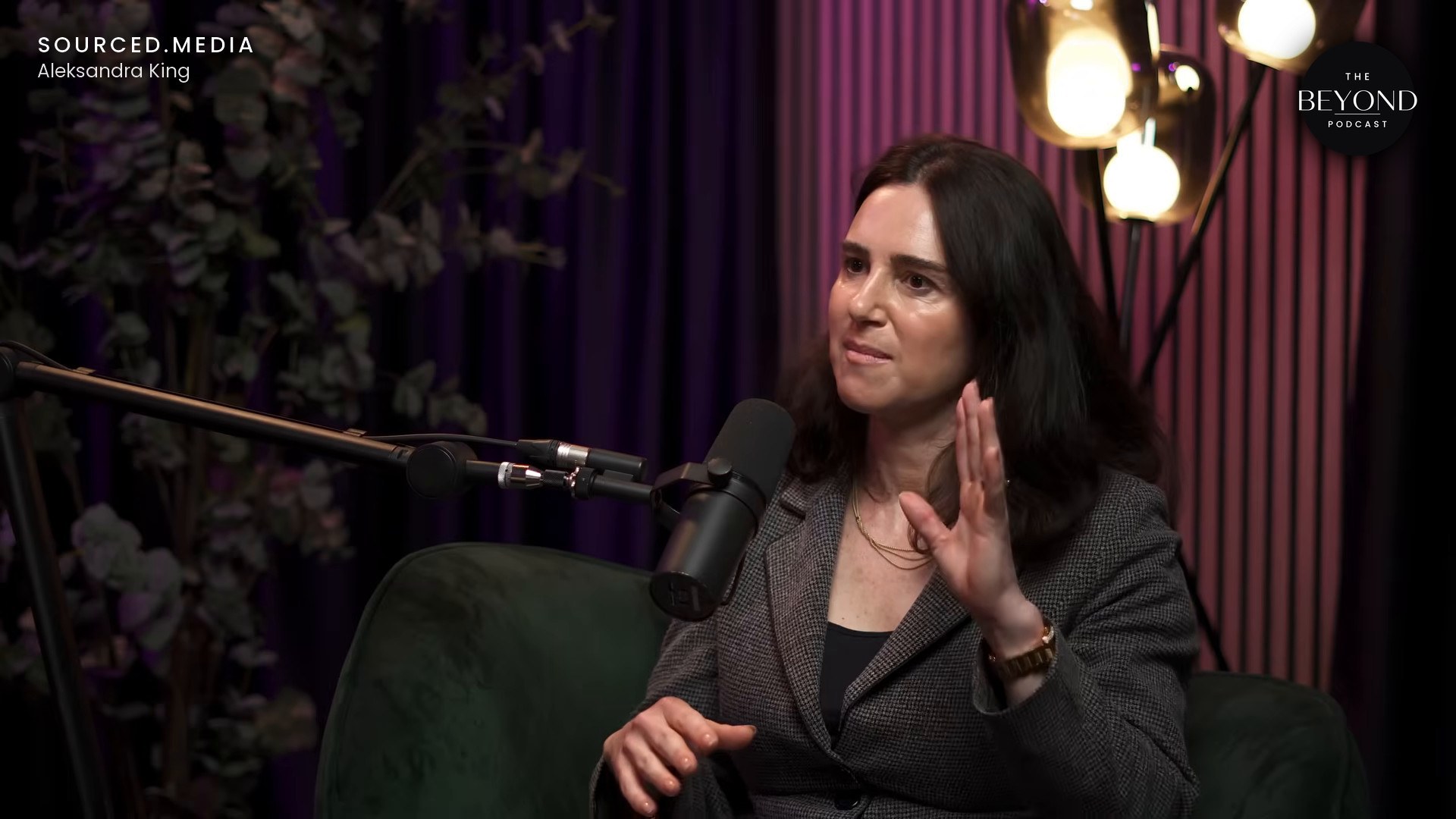
Robin Dunbar, evolutionary psychologist
Story
Robin Dunbar, the evolutionary psychologist behind Dunbar's number, on the 150 people a life can hold and what keeps them close
Robin Dunbar, evolutionary psychologist
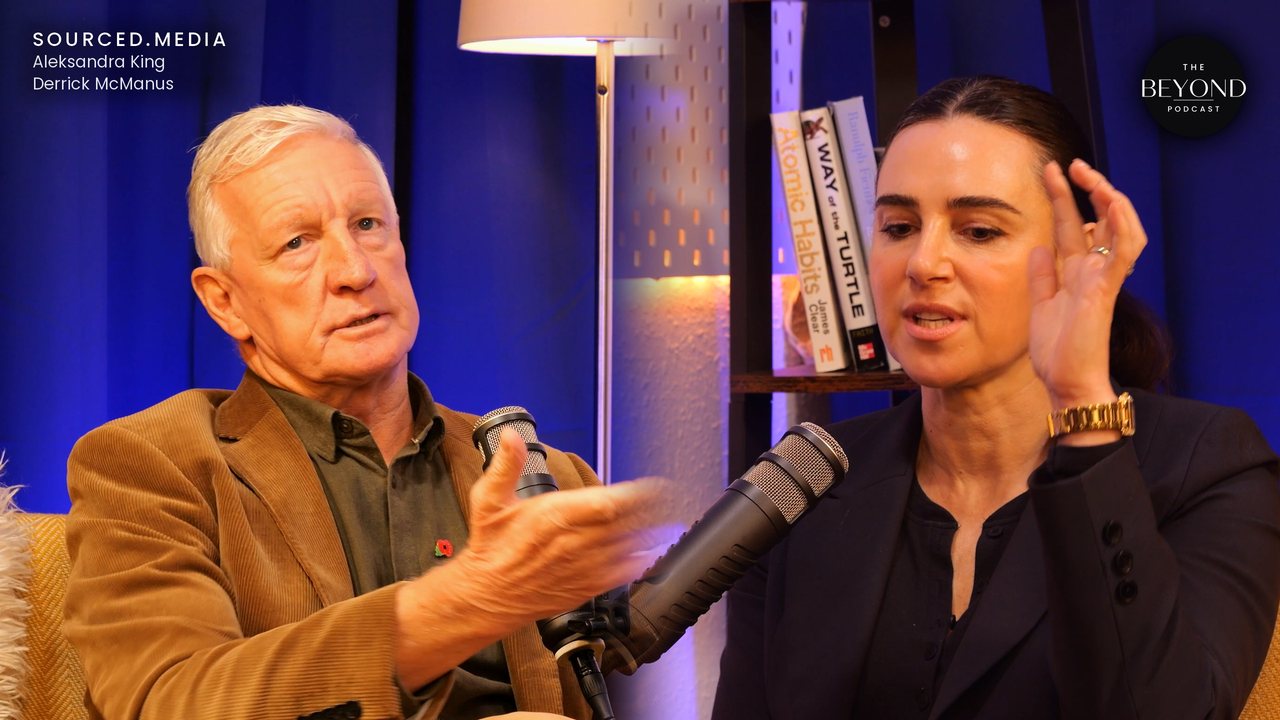
Robin Dunbar, the evolutionary psychologist whose name is attached to the 150 friends and family most people can keep, talks with Aleksandra King on The BEYOND Podcast about how those relationships are layered, what a new close friend costs in hours, and why gossip, trust and singing hold people together.
 Robin DunbarEvolutionary psychologist at the University of Oxford; the scientist behind Dunbar's number
 Aleksandra KingPodcast Host and Producer, The BEYOND Podcast
- Source
- The BEYOND Podcast, hosted by Aleksandra King, with guest Robin Dunbar

Takeaways
- The limit of 150Most people keep about 150 friends and family, from about 100 for introverts to about 250 for extroverts, with about 500 acquaintances beyond them.
- Layers at fixed numbersFive shoulders to cry on, a sympathy group of 15, about 50 weekend barbecue friends and the 150 who come to weddings and funerals.
- Time is the priceTaking a stranger into the closest 15 costs about 200 hours of face-to-face contact, and somebody else has to be dropped to make room.
- Similarity predicts staying powerFriends and partners who share the seven pillars, from humour and music to moral views, last longest, and the first four to six weeks of contact predict how long.
- Gossip keeps networks workingIn its original sense it is the chain of information that lets people keep up with their 150, and trust is the thing no close relationship survives losing.
- Singing breaks the ice fastestAn hour of community singing leaves complete strangers feeling as though they have known each other since primary school.
Robin Dunbar, evolutionary psychologist, told podcast host Aleksandra King on The BEYOND Podcast about friendship and Dunbar's number. Robin Dunbar, the guest on this episode of The BEYOND Podcast, is the evolutionary psychologist behind Dunbar's number. It is the limit of about 150 friends and family that most people can keep in their lives. Aleksandra King opens by asking him for the maximum number of friends one should have. He answers with the figure that carries his name and a test drawn from the Christmas card list.
From there the conversation moves through the layers inside the 150, the time each layer demands and the cultural markers by which people choose their friends. He explains why boys and girls keep friends in different ways and why a new romance usually costs two relationships. He also shows why Shakespeare never crowds his stage.
In the second half King turns to gossip, trust and the family rifts that rarely heal. Dunbar sets each one against the size and the dynamics of the human social world. He closes on the fastest way he knows to turn a room of strangers into friends, which is an hour of singing together.
What is Dunbar's number, and who counts among the 150?
Dunbar puts the limit at 150 people, and he is careful to count family as well as friends. One way to picture the group, he says, is everyone a person tries to keep in contact with at least once a year.
In the old days, when people sent Christmas cards, it was exactly who you sent Christmas cards to.
 Robin Dunbar
King asks about people with 300 or more friends on Facebook. He points to the last census of 61 million Facebook pages, where the average came to 149. Those who list more, in his account, are counting acquaintances, the people they go for a beer with after work but would never invite home.
150 you would invite home.
The acquaintances run out to about 500. Beyond them lies a wider ring of about 1,500 faces to which a person can put a name, among them presidents and royalty. Those relationships run one way only. The 150 itself varies with temperament, from about 100 for introverts to about 250 for extroverts.
How are those 150 friends and family arranged?
Inside the 150, Dunbar finds a series of gradations that shows up clearly in who people phone or post to most often. The layers fall at very specific numbers, starting with an inner five he calls the shoulders to cry on. They are the support group that picks a person up when their world falls apart.
Beyond the five sits the sympathy group of about 15, the people whose death would leave a person genuinely upset. Next come about 50 weekend barbecue friends, the guests for a birthday in the garden in summer.
Then your 150 is what I call your kind of bar mitzvahs, weddings, and funerals group.
The layers can also be read in frequency of contact. The inner five are usually seen at least once a week and the rest of the 150 at least once a year. Asked whether he has five such people himself, he says he does not, because men keep their friends in a different way.
Girls have much more intimate, dyadic relationships.
Boys, in his account, live in a clubby world. A friend who moves abroad is soon replaced by the next member of the club, out of sight and out of mind.
What does it cost to make a new close friend?
King asks how someone can make another person like them more, and more quickly. Dunbar's answer is time spent together, and he puts a figure on how much of it a close friendship needs.
Bringing a stranger into at least the 15 layer, a person's regular social clique, takes about 200 hours of face-to-face contact. He is frank about the effort involved.
It's hard work.
The cost runs higher than the hours alone, because the circle has no spare room. Somebody has to fall out of it when somebody new comes in. Romance shows the effect most clearly, since a new partner arrives from outside the circle and takes up twice the time of an ordinary close friend.
You drop two people.
Usually, he explains, the two are a family member and a friend. The inner circle of five typically holds two members of the family, such as a brother, a sister, a parent or a grandparent.
King remarks on how expensive romance turns out to be once it is counted in hours. Dunbar agrees that the price is a high one.
From the recording
Why do people choose friends who resemble them?
Friendship, as Dunbar describes it, rests on homophily, the preference for people who are similar in sex, age, personality and background. Alongside those fixed traits sit markers that people learn from the community in which they grew up.
What we're looking for is somebody who resembles us as much as possible.
He lists the sense of humour, the music, the hobbies and interests and the moral and political views that make up the seven pillars of friendship. He likens them to a supermarket barcode of who a person is. Everybody looks for the closest match to themselves, which leads to what he calls the Jane Austen problem.
The problem is, Mr Darcy has a choice.
Most people end up with the curate instead. Many friendships, and even some romantic partners, are in his view friends of convenience until somebody better comes along. Similarity also predicts how long a relationship lasts, and his team measured it in phone call logs from very big samples in three countries.
It turns out that we could predict both how long the relationship, the friendship would last and its intimacy, let's say which layer it would lie, on the basis of the frequency with which that person was called, phoned, in the first four to six weeks.

Transcript
Robin Dunbar: Well, that's because friendships are on a scale of intimacy, or emotional closeness. So if you think about the 150 friends and family you have, actually, you can easily identify within them a series of gradations of friendship. You can see this beautifully in terms of who you phone most often, or who you post to most often on Facebook, for example. Robin Dunbar: It turns out there's a series of layers that occur at very specific numbers. So there's a layer of five, what we call the shoulders-to-cry-on friends, which are like your support group, as it were, that you go to at times. Aleksandra King: I love that, the shoulders to cry on. Yeah, it is, it is. Robin Dunbar: When your world falls apart, they're the people who will pick you up and put you back on your feet. Then out beyond that, there's a layer at 15, which is known as the sympathy group, because they're the group of people who, if they died tomorrow, you would be genuinely upset about. Not just sorry that they've died, but you would be genuinely upset, and that seems to be about 15 people. And then beyond that, there's a layer at about 50, which I always identify as your weekend barbecue friends.

Listen
Robin Dunbar: Dunbar's Number, Gossip and the Limits of Friendship
The player loads when pressed.
Why are some people better at friendship than others?
Dunbar says that people are not all born with the same social skills. Managing friends, families and organisations depends on cognitive abilities that vary from one person to the next. The first is mentalising, the capacity to follow a chain of what other people are thinking, which King compares to chess.
He finds the clearest evidence in Shakespeare, who never overloads his audience.
The number of speaking parts he has on the stage at any one time is never more than four.
The average person can hold about five mind states, their own included, and the range runs from about three to about six. That range shapes the stories and even the jokes that people prefer. The second ability is inhibition, the restraint that stops someone taking the biggest share of the cake and driving everybody away from the table.
Temperament plays its part as well, and introverts, among whom he counts himself, want to be sure that their small group will come when disaster strikes.
So they'd rather have fewer of them and invest more time in each one, and that means they have smaller networks.
Extroverts, in his account, trade on social confidence to hold more and weaker relationships. Their networks run beyond 150, while the average emotional closeness is much weaker.
Why is gossip good for relationships?
In King's experience of parents chatting together, gossip often means somebody being run down. She asks why he has called it a good thing. He answers that the wicked sense of the word is relatively recent.
It's not the original meaning of the word gossip.
The word is a corruption of godsib, the peer group equivalent of a godparent. A godsib was one of the people who look after a person and with whom they spend their time.
In its older sense, gossip meant passing time with neighbours over the garden fence. Nobody can know everything that happens to all of their 150, or even to their closest partner. People rely on others to pass the news along.
So what we rely on is a chain of information flow, i.e. gossip, through the network created by our 150s.
Families do this especially well, in his view, because their many interconnections work like a spider's web. The flow spares people blunders such as congratulating a couple on a marriage that ended the next day. It also warns them when a friend or a leader has changed for the worse.
The negative side is easily exploited, and he notes that people who overplay it tend to be shunned, because nobody can trust them to keep a secret.
Watch the full episode

Watch the full episode on YouTube (opens in a new tab): Robin Dunbar on The BEYOND Podcast · the episode page on the show’s site (opens in a new tab)
Why does losing trust end a relationship for good?
Dunbar names two causes of a terminal breakdown, a loss of trust or overexploitation. In the second, one person does all the work while the other keeps borrowing and never pays anything back.
They're always borrowing stuff off of you, never paying you back, these kind of things.
Trust holds organisations together in the same way, from a little club of dog lovers to a sports club run by volunteers or a big business. He adds that a group needs a leader once it grows beyond about 40 or 50 people, because below that size everything can be done democratically.
Any group that tries to be democratic in that sense that's bigger than 50 simply doesn't survive.
Families fall out for the same reason, sharpened by competition for a parent's attention and, at the end, for what the parents leave behind. When King asks why families fight so badly, he calls the death of the parents the big test case.
Within the inner core of siblings, parents, grandparents and perhaps cousins, a quarrel goes deepest of all.
When you fall out with them, it is catastrophic almost always.
These are deathbed reconciliations only.
Friendships that sour tend instead to fade as people stop seeing each other, and that gap leaves room for a repair once enough time has passed.
Has modern life outgrown the 150, and what brings strangers together fastest?
A hundred years ago, Dunbar says, most people lived in small villages of a couple of hundred, where everybody was in everybody else's 150. Moving for university, for work and for new cities now leaves people with little pockets of friends in many places.
In effect, your 150 is being pushed up towards 1,500 people.
Time cannot stretch to match, because every relationship carries a time demand set by its layer. A good regular friend from the 15 layer who goes unseen for about two years becomes just an acquaintance, somebody a person once knew.
Because if you don't invest that time, that relationship will decay inexorably.
Asked for one tip for better connections, he points to a social toolkit of laughter, singing, dancing, rituals, feasting and storytelling. Of these he singles out singing as the icebreaker.
An hour of community singing, he explains, leaves complete strangers feeling as though they have known each other since primary school, and nothing else works as fast.
Singing triggers the endorphin system, which is what provides the emotional raw feels component to relationships, and it does it very, very fast, much faster than anything else.
Eating together, in his account, is probably the second best way to the same end.

About Robin Dunbar
Robin Dunbar is an evolutionary psychologist at the University of Oxford and the scientist behind Dunbar's number. It is the limit of about 150 friends and family that most people can keep. His research measures how relationships are layered, how much time each layer demands and what makes friendships last or break.
He came to Britain at the age of 12 and describes himself as an introvert. In this episode he draws on studies of phone call logs, Facebook pages and community singing to explain how friendship works and why it fades.
The BEYOND Podcast and Aleksandra King
Aleksandra King hosts and produces The BEYOND Podcast, a video interview podcast. This episode is on YouTube in full, with its own page on the show's site.
King tests each of his findings against her own experience. She draws on a garden party for about 50, the gossip she hears among parents and the people who never answer her messages. Her questions keep the research tied to everyday choices about whom to see, how often and how far to trust them.
Aleksandra King, host and producer of The BEYOND Podcast and co-author, with Elliott King (opens in a new tab), of Marketing Wins (opens in a new tab).
Cite this page “Robin Dunbar, the evolutionary psychologist behind Dunbar's number, on the 150 people a life can hold and what keeps them close”. Robin Dunbar, evolutionary psychologist, in conversation with Aleksandra King, The BEYOND Podcast, 18 September 2025. Sourced.media. https://sourced.media/the-beyond-podcast/robin-dunbar/story/ (permanent identifier https://sourced.media/id/C_XRD0HJG19K)


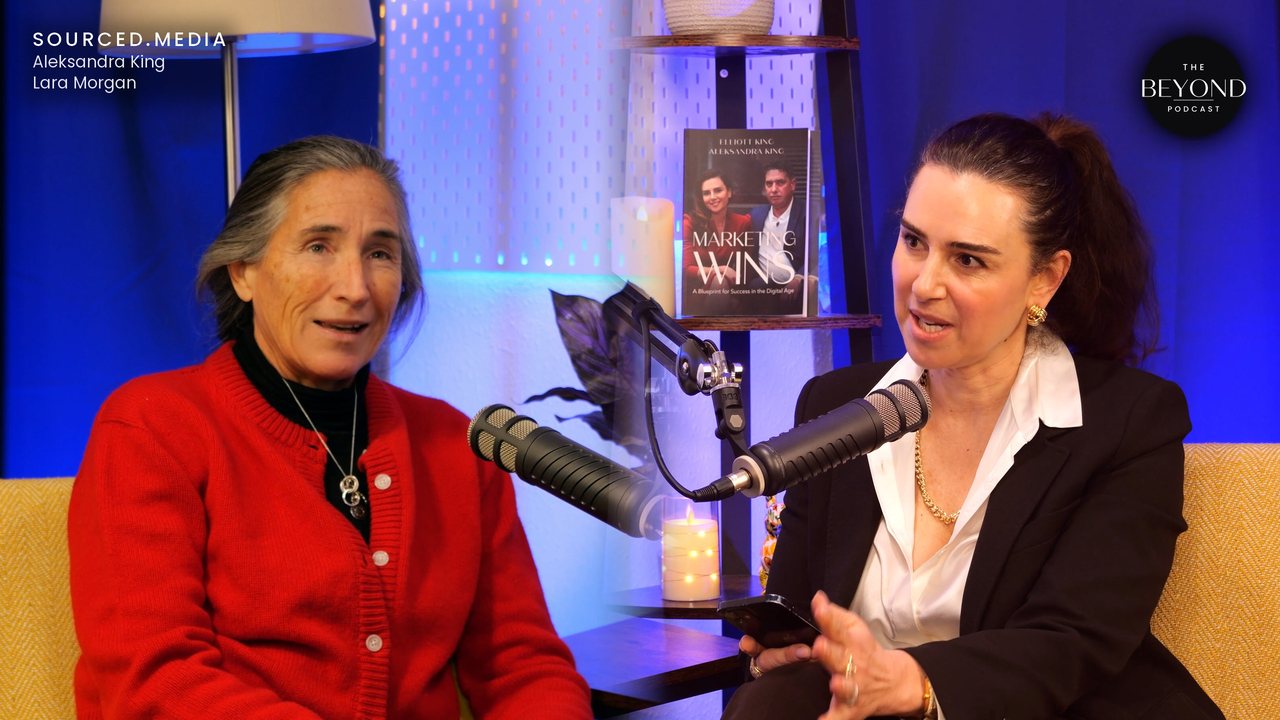

 Aleksandra KingHost