
Former STAR Group officer and founder of Human Durability · Season 3, episode 9
The synopsis: Derrick McManus and Aleksandra King on The BEYOND Podcast
Derrick McManus in conversation with Aleksandra King on The BEYOND Podcast: the 15 minute synopsis of the episode, cut from the conversation itself with no narration.
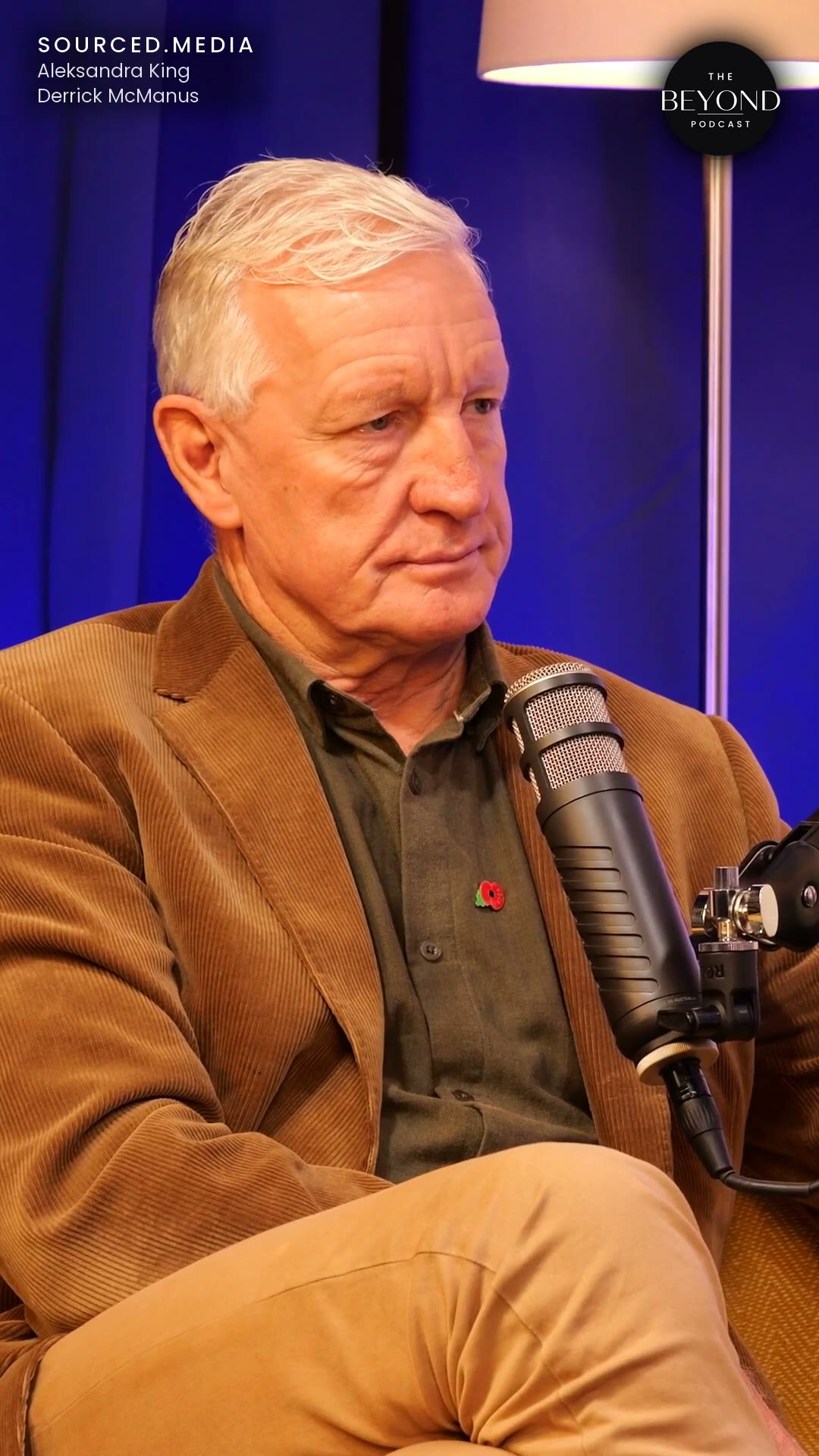
Derrick McManus and Aleksandra King on The BEYOND Podcast
Transcript
Derrick, let's go back to Tuesday the 3rd of May 1994, in Adelaide, near the Barossa Valley. You wake up in the morning: what does it feel like? An ordinary day. That day was a very ordinary day. I had my cousin, who was a builder, finishing off a veranda at the back of my house. It was going to be finished that day. I had a conversation with my wife before I left for work, and she said to me, "When you get home tonight, we're going to have a cup of tea, scones, jam and cream underneath our new veranda." It was a very ordinary day. Good weather, beautiful weather, and it was May, so it should have been cold, but it was actually a nice day. So nothing out of the ordinary, but it became a very different type of day. It became a very out of the ordinary day. So at what point did things change? The majority of the day was a very ordinary day. Even when we got called to say we had a high-risk arrest, that was our job. Who called you? I laugh wildly, because I was actually at work, but I had a lot of sporty involvement while I was at work, because we got paid to stay fit. So I was actually out playing police basketball at the time that the boss of my section made a phone call and said, "Derrick, you need to get back here, we've got a high-risk arrest in the Barossa Valley." And they said it was with the offender, Grosser. I had been involved in two jobs with this person in the past, so I knew exactly who it was. When that call came in, most people think, "Oh my gosh, that must have been scary." Not a chance. We were trained for this, and this is the work we love to do. So when I got told there was a high-risk arrest with Grosser, it was, "Excellent, more work." In fact, just a little anecdote: we were sitting watching TV in the meal room of the STAR Group office, and there was a news briefing of a hijack of a plane in Indonesia, and they said they were going to fly the plane to either Perth or Adelaide. Everybody in our office started going, "Adelaide, Adelaide." Now, we know it's dangerous, we know it's high-risk, but we train for it, and we want to be able to use those skills. If you go into these things nervous, then you're not going to be at the high performance that you need to be. So you need to go in there with full confidence, trained. And all of you are feeling that? Even the poor videographer? The videographer knew that he had our protection. He was never going to go in deep; he was always going to stay back. So he had our protection. Now, I've just been thinking through what I've just said, that we're all excited, but we are risk managers, not risk takers. There is always that edge of, "This is dangerous, it needs to be treated seriously." But we go in confident, knowing our skills, our training, the distractions that we have, and our tactics. So I move up to this glass sliding door, and I know that there's a gap in the curtain; it's about 400 millimetres. 400 millimetres? Yeah, about that. And I know that there's a possibility that I could be seen, but it's a minor possibility: risk manager, not risk taker. The chances of being seen are minimal. However, unfortunately for me, where we were going to come in through his office, he was standing in the hallway at the back of that with a loaded rifle, waiting for us to come in. From his vantage point there, he could also see the sliding door where I was, which was just fortuitous for him. He's glanced across there, and he saw me in the gap. Did you see him? You didn't see him. So he saw you, but you didn't know that at the time. So according to you, there's no one there. In the back of my mind, there's always a chance. But the sun was coming from my right-hand side, the window's on my left-hand side, and it's dark inside the house, so that door, that glass door, becomes a mirror. So I can't see in. And that's just an assessment that I knew was a thing. But the next thing I know, I'm just falling to the ground. Okay. So you now know, years later, and in the process of going through it, where he was. At the time, you didn't know. But you felt there's a chance that he could possibly be there. But you needed to check; you had to make that assessment. So you made the assessment, and then you're on the ground. That was the only association in your head at this point: I'm on the ground. Did you know what happened to you? So even before I reached the ground, I'm starting to fall, and I'm berating myself. This is happening in slow motion, and I'm falling, and I'm berating myself for being so stupid. How can I be falling? There was absolutely no reason for it, in my mind. And halfway to the ground, I looked at that sliding door again, and there were small round holes in the glass. And then I heard the sound of gunfire in the distance. But I hadn't felt any pain, I hadn't felt any impact, anything. No pain. Just the feeling of falling, and getting all worked up and angry with yourself that you're falling. Absolutely, berating myself. Before I tell you this next bit, remember, we are highly trained for what we do. We know exactly what we're doing, and we're allowed to have thoughts outside the square while still doing everything we need to do. So I'm falling, I'm berating myself, I have no idea what's happening, and I hear the sound of gunfire, the small round holes, and before I hit the ground, the thought that runs through my head is: small round holes, sound of gunfire, me falling stupidly, I must be getting shot. And the thought that runs through my head then is: "Derrick, don't be too hard on yourself, because if you're getting shot, it's quite acceptable to fall over." That is literally what I thought. As I say, it's thinking outside the square while still doing everything you need to do. That's the scene that ran through my head. That's crazy. As I leaned against the wall, because my forearm's broken in two places, my hand folded backwards along my forearm. I just look at that, this scene runs through my mind, and I think to myself, "Damn, this is not a good day." Now, this is not a disregard of the seriousness of the impact. It's just that I was so well trained physically, mentally and emotionally that I had a realistic expectation this is a possibility that could happen. And if it does happen, there are four things that I need to do to be able to control my mind, my body, my physiology, and remaining calm was one. Because, let's be really clear, anyone else, when you're putting your hand and it's going, would go screaming, absolutely freaking out beyond belief, and probably fainting, literally losing their mind. Just the sight would make some people pass out. Naked Gun, or whatever it was: this is not a good day. I've just been shot, and my hand is folding back along my forearm; this is not working out well for me. But I never disregard the seriousness. It's at this point that I really need to set my mind on making sure that I'm going to be okay. I've come up with a philosophy of sustained optimal performance. The thing that kept me calm at that time is that in STAR Group, in any special forces, we are trained to operate at 100%, 100% of the time. If I had tried to sustain that peak performance at that time, I would have been pushing myself, I would have been rushing, I would have been trying to do more than I was capable of. My heart would have been racing, my blood would have been pumping, and because of two severed arteries, I would have been dead within minutes. If I'd just gone into pessimism, "I've been shot, my life's going to be terrible", I wouldn't have had the strength to keep on fighting. Not the physical strength, the mental strength. Because there's nothing to look forward to, so why bother fighting? This sense of optimism, that I'll get back to my kids, I'll be able to interact with them, and maybe I'll get a gold medal, gave me that something better to look for. In my mind, at that time, I was never going to go back to what I had at the moment, but there was still something better than where I am right now. And that's where we need to get that sense of optimism. We may not be able to get perfection, but what can be better than where we are now? And then keep building from there. And then do you get some help after? Do they eventually come scraping you off? Does the ambulance come? I'm lying on the ground for two and three-quarter hours. And at two and three-quarter hours, I've been consciously monitoring my body. My legs have closed down, my arms have closed down, and the pistol has fallen out of my hand because I don't have the strength to hold on to it. So I know that blood is coming into short supply. And at 2:45, my vision closes down. Now, instead of my vision going to shades of grey or black, as a pragmatic copper expected it to, my vision went to an absolutely pristine white. Not a white tunnel, just this absolute white, a white-out, an absolutely pristine white. And at that point I started thinking, "Is this what they talk about in religion?" I'm not a religious person, but it runs through my mind, "Is this what they talk about, heaven?" You've seen heaven? Absolutely. But you were going, at this point. Absolutely, and that's what's running through my mind. From the moment I got shot, I was absolutely omni-aware that this is life and death. I could die within moments, or sustain optimal performance and last as long as I can. But this was the crux: I am now either going to die, or, because my vision's closing down, there's not enough oxygen going to my brain, and I could have oxygen deprivation of the brain, and my brain's going to start deteriorating. Many of my mates say it did, but I don't think so. But this is the point where I start fighting my hardest. I start moving my body the little bit that I still could, and I start speaking out loud to myself, saying, "Derrick, don't give up. Derrick, keep on fighting." And at that point, within 30 seconds to 2 minutes, two rifle shots are fired from outside the house, back towards the house. A dump of adrenaline into my body: this is my mates on their way back. I know they're coming to get me. And my vision comes back up, but I'm passing in and out of consciousness. because of operational safety, every copper was told where he was. So the irony is, as a victim, I'm not allowed to know where he is, but I knew exactly where he was. And I still know where he is now. And you still know. And the question that gets asked most here is, how do you feel about that? 85% of my personality, my mind, is very relaxed. He's a coward. He will not be proactive in taking offensive action against anybody, and so I feel quite comfortable. I also have the privilege of having third-party removal from it: he didn't shoot Derrick McManus. He shot the cop who was walking down the road side of his house. Once it got to court, it became very much about Derrick McManus, but he didn't shoot Derrick McManus. So there's that little bit. So 85% of my mind is very comfortable that he's probably never going to be a threat to me. 15% of my mind says, "don't be complacent." Never give up on that vigilance: you cannot predict what a coward's doing. A brave person has predictable actions. A coward is not predictable. Absolutely erratic. They act in the moment. They take opportunities that you just don't expect. A scared animal is a very dangerous animal. A cornered animal. Yep. And that's exactly what he was: he was a cornered rat, and he responded that way. The people I'm more concerned for, with him walking around Adelaide, are my children. Because I know that if he runs into my children, and we don't hide on social media or anything, if he meets my children, I feel that he would want to get right up into their faces and say, "I want to tell you my side of the story." And so I have sat down and discussed this with my children: "If this happens, this is how you might feel, this is how you might be able to respond, these are the things that you can do." I'm sure they're well trained in mindset, and in controlling our own minds. My mind sometimes goes out of control, and my kids start lecturing me: "Dad, this is what you teach, this is what you need." Absolutely, they pull me back into line every time. Natural, it's only human. And I know, I'm sure, that in your life you've had, since then, moments where you've had to use that process. I like to think that I use it every day, but for everyday scenarios. That process applies: I talk to kids in schools about the challenges of being bullied and getting through your maths work and all that sort of stuff, and the process applies as much to their challenges as it does to the SAS; I've got to talk to the SAS in February. I talk to CEOs about their challenges. The process is universal. And it's about going beyond resilience, and it's about sustaining optimal performance. Derrick, it's been incredible, mind-blowing in every way, and I want to thank you for your time.
Derrick McManus, Former South Australian Police STAR Group officer and founder of Human Durability; Aleksandra King, Podcast Host and Producer, The BEYOND Podcast
Cite this page The synopsis: Derrick McManus and Aleksandra King on The BEYOND Podcast. Sourced.media, updated 5 November 2026. https://sourced.media/the-beyond-podcast/derrick-mcmanus/synopsis-video/
 Derrick McManusGuest
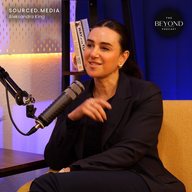 Aleksandra KingHost
 Human Durability
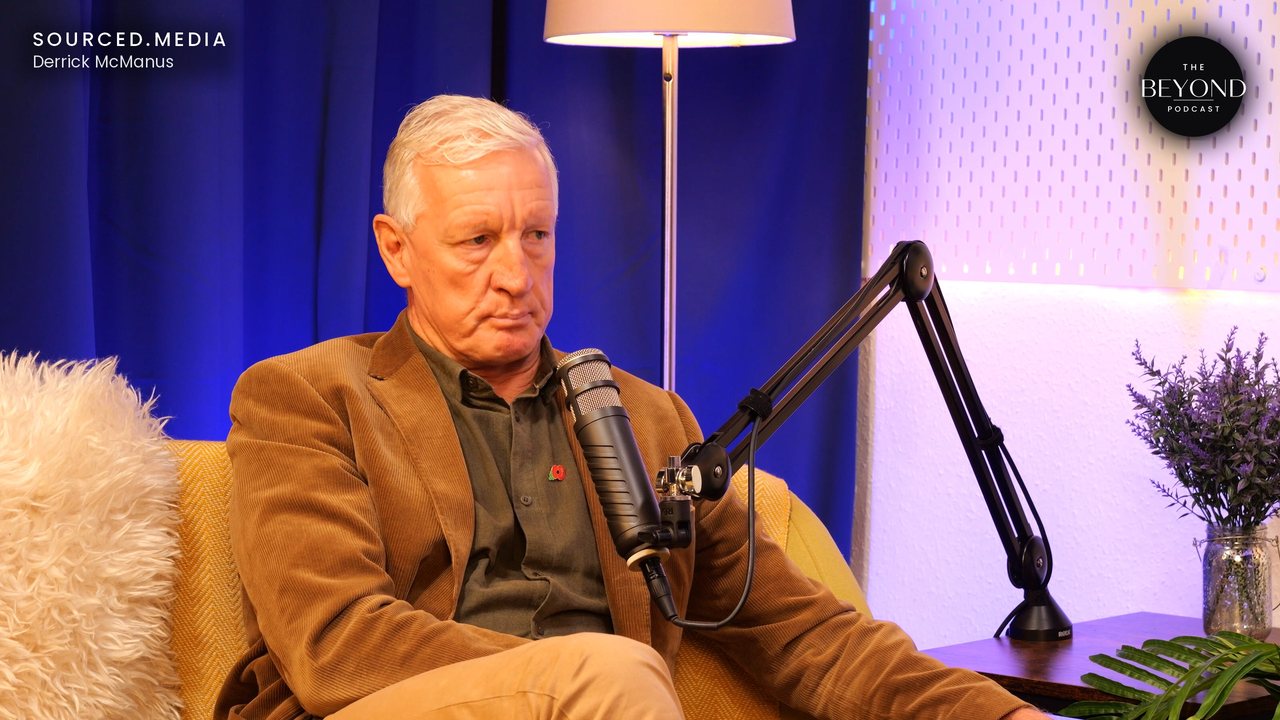
 Derrick McManus