founder of Pacific Direct · Season 3, episode 11
Episode · S3 E11
Lara Morgan on The BEYOND Podcast
founder of Pacific Direct
Lara Morgan: Building Pacific Direct to a £20M Exit
 Lara MorganSerial entrepreneur and wellness brand investor, founder of Pacific Direct
 Aleksandra KingPodcast Host and Producer, The BEYOND Podcast
Lara Morgan, founder of Pacific Direct, in hotel supplies, talks with podcast host Aleksandra King on The BEYOND Podcast about building and selling a business. In 1991 there were no jobs, so Lara Morgan made one out of sewing kits and shower caps, a hundred calls before she would let herself have a drink, and a granny flat in Bedford. In conversation with Aleksandra King on The BEYOND Podcast, she explains the discipline that built Pacific Direct and sold it for £20 million.
- Source
- The BEYOND Podcast, hosted by Aleksandra King, with guest Lara Morgan
Where does success in business come from?
 Lara Morgan
On The BEYOND Podcast, Aleksandra King asks Lara Morgan why she has succeeded, and Morgan begins by declining the label. She grew and exited a global hotel supply company with a team she credits generously, and finds the reason in how she was raised.
I don't see myself as successful; I see myself as doing the best I can do.
Morgan then says that falling down and getting up, off a horse or at the bottom of the class, matters less than doing her best. Her biggest leadership learning, she adds, is probably to ask for what she wants, and to have humility.
What is it like growing up when a parent goes bankrupt?
Asked by Aleksandra King what her father's bankruptcy did to her, Lara Morgan answers with the years before it. Her family had come from a good salary at a big computer business to what she calls an odd life.
Really annoyingly, my dad took a long time to go bankrupt.
Her grandparents paid the school fees, and a bursary followed when her parents ran out of money. Just as she finished her A levels the bankruptcy arrived, which is where the pinch on her own plans begins.
Did Lara Morgan go to university?
Lara Morgan's parents sent her to private school at a time when the family did not have much to spare. Her grandparents ended up paying for it, and a bursary followed once her parents ran out of money.
I was paying rent back to my parents two weeks after I finished my A levels.
Aleksandra King then asks how being surrounded by immense wealth at boarding school affected her self-esteem. Morgan answers with a quiet determination that nothing would stop her being the best she could be.
What makes a good salesperson?
Lara Morgan was eighteen, just out of school, with no interest in babies, when Edward Keller, owner of a baby food brand, wanted to sell more tins. She listened, and her suggestion, a bib or a mat perhaps, began her education in selling.
Sales isn't about a push. It's about a relationship.
Morgan adds that she had just had a call of that kind with one of her team on the way to the recording. She doubts that anyone selling what they do not believe in does it successfully for long.
Why invest in a product people say they don't need?
On The BEYOND Podcast, Lara Morgan has told Aleksandra King that belief in the product is a must, and that she backed a bag for its waterproof base. Here she turns to Scentered, her scent brand, and the test for anything she invests in.
The world doesn't need more bags, but it needs better bags that last much longer.
She goes on to say that the things she backs are also practical and appealing, and that products flourish because people come back to them. A product may end up some way from the first idea, as Scentered did when its balm was made smaller.
Why do people lose resilience and determination?
On The BEYOND Podcast, Lara Morgan tells host Aleksandra King about a balm built on scent to shift the mind, which she made too big. That mistake leads her to what resilience, persistence and determination depend on.
Resilience, persistence, determination: you will have none of them unless you see a return on your invested effort.
She turns at once to a customer who told her she had saved her life, and whose loyalty to her brand runs deep, which is the return she means. It is not, she adds, the first time she has heard it.
Why is it important to set ambitious goals?
Aleksandra King has put it to Lara Morgan that the way she talks to herself is harsh. Morgan answers with goals, with the question of why anybody would have an average one, and with a household joke about anyone who misses the podium.
If you don't come in the top three, you sleep in the tree house.
Morgan came 10th in the world in triathlon, and she has had to sleep in the tree house herself. A missed podium, she goes on, is something to recover from, by finding a different way and being better next time.
What makes a new product worth bringing to market?
Lara Morgan sets one standard for anything she takes to market, including a business she has lately been asked to invest in. The sustainability part of that standard comes from the business that made her money.
I don't want to just bring more stuff; the world doesn't need it.
She exited that business nearly 18 years ago, which she counts as a miracle, and the little bottles have since given way to dispensers on the wall. That exit leaves her room to take wellness into hotels in a very different and thoughtful way.
What did Lara Morgan sell first?
Aleksandra King, the host, asks whether there was a moment Lara Morgan decided to scale the business, and the answer is that she was not thinking that far ahead. She goes back to the year she started out and the job she made for herself.
It was 1991 and there were no jobs, so I had to make a job.
On the way back she worked out how many kits and caps it would take to make anything, and the answer was disappointing compared with where she had been. She meant to keep at it for a while, with no experience to draw on.
Listen
Lara Morgan: Building Pacific Direct to a £20M Exit
The player loads when pressed.
How many sales calls a day did Lara Morgan make?
With no experience, Lara Morgan worked her first year in business from a cold borrowed office and set herself a morning rule of a hundred calls, which could mean a hundred rejections, before she allowed herself a drink.
For a while I set this ridiculous target: no drink until I'd made 100 calls.
She goes on to say that even after two years she had no idea where the business would go. Her ambition was no bigger than paying the bills and having enough for her games and sports.
Where did Lara Morgan start her business?
Asked by Aleksandra King what drove her on, Lara Morgan says it was security, meaning a family, a marriage and a certain standard of living. Having made good money as a young salesperson in Hong Kong, she wanted to upgrade from the flat she owned.
A friend said, "You're not going to buy a bloody castle," so I bought a manor.
She explains the sale with a rule of her own. When the children coming home is the problem, the home is what goes. Selling made her a digital nomad, with no wish to follow the rule book.
Why is business momentum so hard to maintain?
In conversation with Aleksandra King on The BEYOND Podcast, Lara Morgan turns to KitBrix, one of the businesses she has invested in. KitBrix has had its best year yet, she says, with new business arriving from Spartan, DEKA and Ragnar Races in the States.
We've got momentum, but momentum isn't a pure sport.
After the riding accident she did the stock count and tidied one of the warehouses herself over Christmas. She says the work is good for her fitness and sets the business up for the year ahead.
Watch the full episode
Watch the full episode on YouTube (opens in a new tab): Lara Morgan on The BEYOND Podcast · the episode page on the show’s site (opens in a new tab)
How many quotes should you get before making a decision?
Starting out, Lara Morgan sought local experts in each field she needed and built a community in the process. How she chose her first set of lawyers shows the method she applies to everything.
Ask, get three quotes, meet three styles, then make good decisions, and sometimes combine all the learnings.
Meeting three of everything was how she chose when, by her own account, she had no idea what she was doing. Nearly 40 years on, the relationship that began with Nick Davis still gives her a lawyer.
Why should you ask experienced entrepreneurs for help?
Aleksandra King, the host, has been recalling the rejections before her first yes as an interviewer, and how that yes hooked her. Lara Morgan replies that the grey-haired entrepreneurs she wants to interview should celebrate her success and open doors, provided she asks.
If you don't ask, you won't get.
Lara Morgan offers the borrowed line to anyone thinking about taking the leap. She goes straight on to say that she does not do guilt, and to describe a course exercise that sets where a person is against where they should be.
How do you involve your team in a five-year plan?
Lara Morgan has just described an exercise from a course, writing down where things should be in five years' time against where they are now. She pairs it with a second method, learnt at Stanford, that she calls walking the wall.
You get your team to walk the wall with you.
Morgan runs it with her team on large sheets of paper, and hopes the same people are still there in five years' time. She goes on to say that this is where women struggle, because they do not take the risk of trusting.
What to do when a buyer says your price is too high?
Lara Morgan has just described sending treacle to someone who would not speak to her. David Tyler, in her telling, had said her prices were high, and her answer took the same form, a tube of Savlon with a note attached.
I can help with the beating, but I can't help with the price.
She adds that the tube gave Tyler something to laugh about for 11 years. Her reason for sending it is the need to be better and different, and she sees no point in being boring.
Should you put yourself out there in business?
 Aleksandra King
, who hosts The BEYOND Podcast, steps in here with a point of her own. Her guest, Lara Morgan, has just made the case for being better and different, and King sets that against an attitude she sees in the UK.
In the UK, people say not to put yourself out there too much.
She adds that she also runs a marketing business, where her own clients sometimes get shy about the same thing. Lara Morgan answers that everyone gets shy, and that she has been through those emotions herself.
How do you reward yourself when money is tight?
Near the close of her conversation with Aleksandra King on The BEYOND Podcast, Lara Morgan turns from selling to a habit she recommends alongside it, celebrating by rewarding oneself on whatever scale the money allows.
In the early days, when I had no beans to rub together, it was leg waxing.
Sized to the means of the moment, the reward lets the habit begin long before there is money for anything grander. Aleksandra King closes the episode there, thanking her for her time.
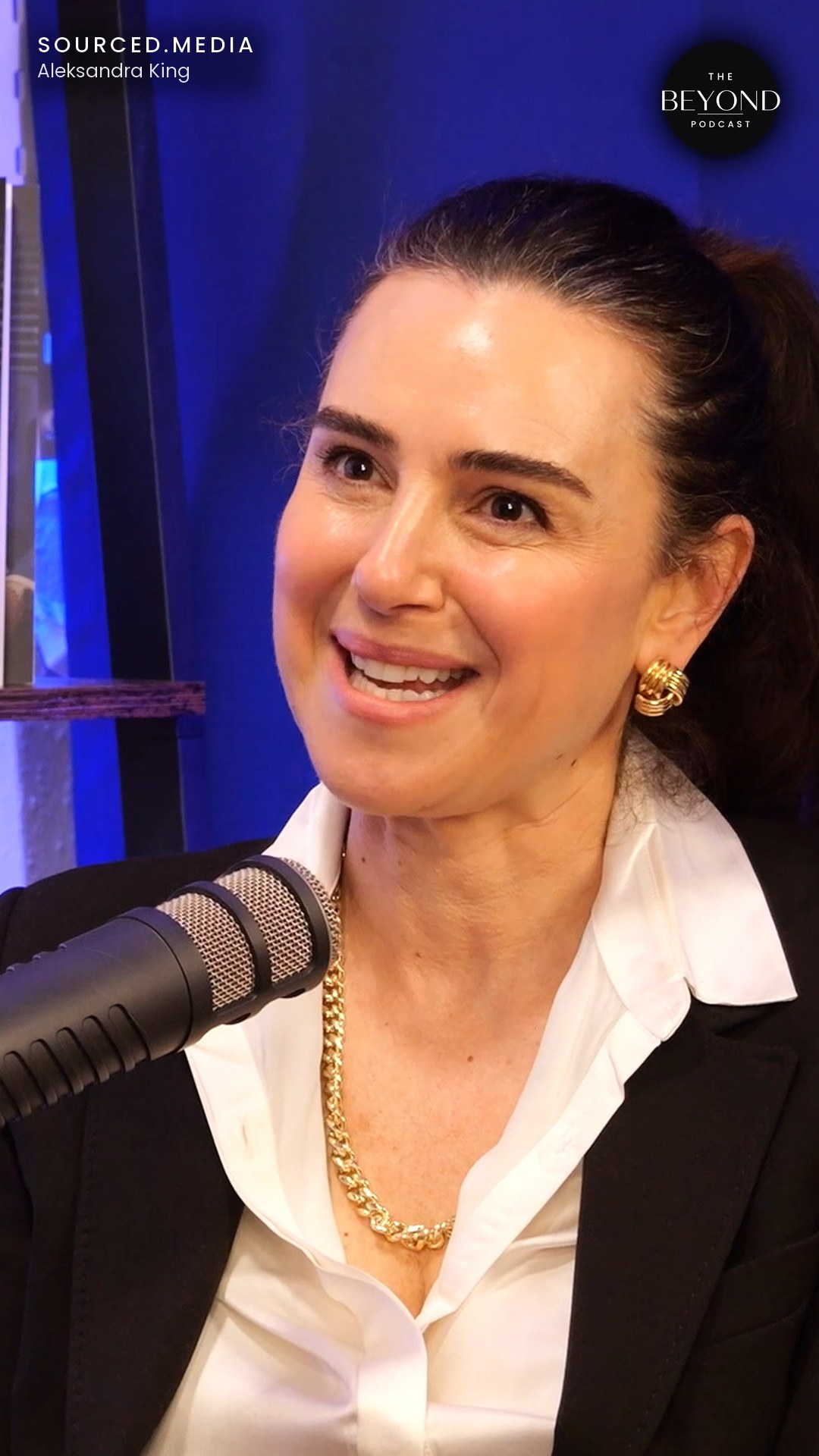
Transcript: Lara Morgan, founder of Pacific Direct, on The BEYOND Podcast with Aleksandra King
The full conversation between Lara Morgan, founder of Pacific Direct, and Aleksandra King, host of The BEYOND Podcast, published on 17 June 2026. Each paragraph names the speaker and the time in the recording. The transcript and the captions are lightly edited for readability: hesitations, repeats, false starts and slips of the tongue are removed, and every point is kept as the speaker meant it. The audio is unedited. Download the transcript: Markdown, WebVTT, SRT.
Introduction: defining success and overcoming childhood adversity
Watch from 0:00 (opens in a new tab)From to in the recording.
Aleksandra King, host of The BEYOND Podcast (): Before making money, did you want to prove something?
Lara Morgan, founder of Pacific Direct (): I wasn't going to get it from anyone else.
Aleksandra King (): You've seen your parent going bankrupt. How did that not make you afraid of going into business?
Lara Morgan (): It was more: I'm going to show you that if you couldn't do it, I can. I'm Lara Morgan. I sold a business for 20 million quid that I owned 99% of.
Aleksandra King (): Why are you successful?
Lara Morgan (): Two ears, one mouth. If you don't ask, you don't get. I will not employ salespeople that aren't sportspeople.
Aleksandra King (): I hear you, because you've got to put yourself in really uncomfortable situations.
Lara Morgan (): I wouldn't have a drink until I'd made 100 calls, which might mean I'd been rejected 100 times before I got a drink in the morning. There is no rule book. I have one life, and I am going to squeeze the hell out of every opportunity. I've spent an awful lot of time living life. What you don't want to do is spend any time regretting. Team is everything, absolutely. You're not going to do this alone. If it gets the job done, learn that it doesn't bloody matter that it's not your way.
Lara Morgan (): You cannot learn if you're not making mistakes. If you are surviving and keeping the lights on, you will thrive, because you're years ahead of the person who's still a startup. What's the worst thing that can happen?
Aleksandra King (): Lara, why are you successful?
Lara Morgan (): You asked me why I'm successful, and my humility kicks in, but I don't see myself as successful. I see myself as doing the best I can do, and I'm not couching that in any fluffiness, because I'm by no means perfect. But I have been lucky enough to exit a very successful business that an amazing group of people helped me grow. We're a global hotel supply company, but I think the success comes from an international upbringing, and a parental determination on my parents' part to make me understand that hard work pays off, and it always has.
Lara Morgan (): An education gifted me the ability to deal with failure: falling down and getting up, whether it's off a horse or in a classroom being at the bottom, it doesn't matter. What matters is that you're doing your best. So I think success comes from a whole number of skills, but the biggest one in my leadership learning is probably: if you don't ask, you don't get. And have humility, because without humility we have nothing.
Aleksandra King (): I like that: if you don't ask, you won't get. And then you've had that international upbringing and a work ethic. And you touched on failure, which is really the second question. You had a dose of that failure, or what you can call a failure; things happen in business, but this was from your father, who went bankrupt. That must have had a profound effect on you.
Lara Morgan (): Really annoyingly, he took a long time to go bankrupt. By which I mean that from about the age of 12, we were very conscious that we didn't have lots of extra, and my dad was working in Asia, trying to build his computer hardware sales company. And we had this kind of odd life, where we'd come from him working in a big computer business with a good salary and all the rest of it. And I was then sent by my parents to private school. They were determined to try and keep me in education.
Lara Morgan (): My grandparents ended up paying for it. Then I got a bursary because my parents ran out of money, and when my dad went bankrupt, I'd just done my A levels, as they were in those days. I wanted to go and do something like sports science at Loughborough, but I failed to be able to go, because we didn't have the money, so I just had to get a job and pay the bills, and I was paying rent back to my parents two weeks after I finished my A levels.
Aleksandra King (): How was it? Because you mentioned the Scottish boarding school, so obviously that's money. So you're surrounded by people with immense wealth, aren't you? So how did that affect your self-esteem? Did it give you a feeling of, oh, I don't have what the others have?
Lara Morgan (): Definitely a quiet determination that there's nothing stopping me being the best I could be. There was always a jealousy, I think, of other people's belongings. I'm laughing as I picture this pair of hideous yellow trousers that I desperately wanted. I was lucky in the sense that I had very good support from my godmother, which gave me a bolthole in the Borders of Scotland, and from my grandparents, who were also there. But if they embellished me with a fiver, that changed my life.
Lara Morgan (): When I went back to school, I would keep the fiver, and then I would do things like make stuff last. So I had a pair of Kickers shoes, and I wore those school shoes for four and a half years. Right? I never asked my mum and dad for more school shoes. And that was learning to look after things. I desperately wanted a pair of great lacrosse gloves, so that was my birthday present, and I was a pretty decent runner. I always wanted the best trainers, but I never had them. So those things are childhood shapers.
Aleksandra King (): For sure. For sure. So you were conscious of the fact that you've got all these wealthy kids around you. You've got to look after what you've got, because no one's giving you anything extra. But did it instil any sort of fear in you, or any sort of worry about money, that you can have it all and then lose it all, or not?
Lara Morgan (): No, because I don't think at a childhood age you have that complexity. Albeit, like every teenager, I worked in the school holidays when I was 16 at a market research company, going out onto the streets of East Croydon with my aunt, going, "Do you want to come and taste these new snacks?" They were actually Cheezy Wotsits. They were delicious. And I had a bin bag of them, which I really did try and consume. Then working at McDonald's, where I can still say "two all-beef patties, special sauce, lettuce, cheese, pickles, onions on a sesame seed bun" very quickly, because you got free fries.
Lara Morgan (): Yeah, I did that. I worked in 7-Eleven. And I bought my first watch out of the money that I saved up. So, you can call me old-fashioned, I don't care, I think they're really good grounding values. So you can imagine that my children have not been handed it on a plate.
Aleksandra King (): Yeah. Yeah. So you learned the value of money, I guess, and budgeting, yes. And you didn't absorb the negative side, because you've gone into business. So if you've seen your parent going bankrupt, and this is really what I'm getting at, how did that not make you afraid of going into business, for example? Did you not think, "Oh, you could go bankrupt"? Does that not really cross your mind, of what if?
Lara Morgan (): Actually, the benefit was, albeit my dad went bankrupt, he was also quite a challenging character, and it was more, "I'm going to show you that if you couldn't do it, I can." And equally, because I was the girl, and my brother, an older brother, there was quite a lot of misogyny, in these days' language. But I remember being very direct with my dad and explaining that I also had an opinion and I also had a brain. But the irony that they sent both my brother and me to great schools and really suffered doing it was never not appreciated. But the conflict then, when we came out, of the different path of support or otherwise, was something I reflect on.
Aleksandra King (): Yeah. I mean, because I also went to a boarding school, and yes, your parents make sacrifices as well, to allow you to go to these schools.
Developing a sales instinct and the power of active listening
Watch from 7:34 (opens in a new tab)From to in the recording.
Aleksandra King, host of The BEYOND Podcast (): But then, of course, there's something in the school upbringing that's different to the upbringing at home.
Lara Morgan, founder of Pacific Direct (): Very. I loved school, and their parents. I was free at school.
Aleksandra King (): You got freedom, yeah.
Lara Morgan (): And I also manipulated the rules, of course, even though you don't. So that's, of course, where you learn a bit of enterprise. I traded alcohol, and I made massive margins on cigarettes, off the charts. And so those early trading opportunities to embellish my income were very important.
Aleksandra King (): Right, okay. So you had that hunger, a hunger for making money, and determination in your personality. You wanted to prove something.
Lara Morgan (): I wasn't going to get it from anyone else. Right? And so I think the challenge for lots of exited entrepreneurs is when they look at their own kids, they go, "How am I going to manage this, because I know what it is to be hungry?" That's it. And when I say hungry, I mean hungry. I mean sitting for seven hours on a train from Edinburgh to London without the money for a cheese toasty, which I was literally drooling over. But you can see that for a 17-year-old sports person who's bloody hungry, you don't want to be like that.
Aleksandra King (): Yeah. Gosh, I can feel it.
Lara Morgan (): Literally, I can feel myself salivating now. It's ridiculous, but it's not. And I don't believe that you build a business just because you want to make money. And that's a hunger that we need sometimes.
Aleksandra King (): Cool, yeah.
Lara Morgan (): That's not what it's about. For me, it was security, right? Freedom to make choices. Choices is my driven word. I have the choice to do anything I like. How I spend my time is a choice, and who I spend it with.
Aleksandra King (): Yeah. I've had lots of different types of entrepreneurs in here, and there is another one, actually, Michael Howard, who's very similar to you in the sense that he also grew up in poverty, and a similar sort of thing, the hunger, and also a similar concern: what about my kids? How can I make them hungry?
Lara Morgan (): But you can also be spoilt and yet feel that you have poverty, right? Because when I got home, I went to play golf. I learned to play golf, very good golf, as a child. So there was that kind of contrast, of seeing and living in a five-star environment at the golf club.
Aleksandra King (): Yeah. You see that.
Aleksandra King (): What rubs off on you is that if you see that wealth, you think, "Well, they've done it. I can do it." It's normalised as well if you're around it, right?
Lara Morgan (): Yeah. And also there are just some things that you look at and you go, I'd like to be able to buy lovely flowers, fresh flowers.
Lara Morgan (): Because it makes a place. It makes a scent. It makes an atmosphere. I'd like to have the choice to have nice fabric or nice environments. But they're not the be all and end all, because equally I've travelled fifth class, scrimped and saved, and spent nine and a half hours on a sodding bus at £6.50 instead of getting the train.
Aleksandra King (): Yeah. Gosh. Well, talk about flexibility, but I guess in your childhood you've got that flexibility. You had this, and then you didn't have this, and you've had to adjust, and it's turbulent, it's emotional, it's stressful. It's not the most calm of upbringings.
Lara Morgan (): But I don't think, as a child, you understand stress at that age. It's not. For me, that was just a motivating, positive thing, and I don't think stress is negative by any means all of the time. I think it's learning to handle stuff. I think it's using your brains to get round a problem, and I think we need to learn that there are resilience things that come through the negatives. Life is not perfect. Nobody owes you a living, and I think we need to be more clear that you have to get off your backside.
Aleksandra King (): Yeah. Okay. We're getting into all these things. Okay. So you started working very young, and you realised you were good at sales, right? There was something in it. What was that moment?
Lara Morgan (): When did I really believe I knew I could sell? Because I'd worked in Hong Kong. I was thrown in at the deep end: I got given a book by the guy that ran the company, and he said, go and sell to those top 500 companies in Hong Kong who are in the book. I literally shook in receptions, literally physically fearful. And then I just went with the view of two ears, one mouth, and tried to solve customers' problems. Because if you listen to what the customer wants, and you are genuinely and authentically looking to add value, you'll never fail.
Lara Morgan (): And you should never sell something you don't believe in. So I went to this place. Edward Keller owned a baby food brand, and they wanted to sell more tins of baby food. And at this point I'm 18 years old, just out of school, no idea, no interest in babies. I just listened, and then it occurred to me: maybe a bib or a mat. It's not rocket science to use common sense. It's a really valuable thing. And again, you're brave enough to speak out, so that's the ability to make suggestions, but also the ability to listen.
Lara Morgan (): I'm not perfect by any means, but that's when I started to learn that sales isn't about a hard thing. It's not about a push. It's about a relationship, and about putting yourself in the shoes of someone else to understand their goals and aims, because you will always make a decision based on what's good for you, and then for your brand, and then for your business. But if I do your job well by helping smooth the path, then ultimately I'm a salesperson. I literally just had a call like that with one of my team in China on the way here.
Aleksandra King (): So I understand the concept of believing in what you sell. Of course, there are many people who just sell and don't believe in what they sell, but then there's also the whole question about ethics.
Lara Morgan (): I don't think they do it successfully for long.
Aleksandra King (): Yeah. Probably not successfully for long. It must be very difficult. You'd have to be an immense, incredible liar. You have to have lying skills. It's never going to work.
Lara Morgan (): Yeah. In the end, you can't offer a sea view if you're 40 minutes from the beach on top of a hill. It's not a sea view.
Aleksandra King (): Yeah. That's true. That's true, and eventually you get found out, because customers are not silly.
Lara Morgan (): And you just spend too much time going backwards as opposed to going forward. I've made some real mistakes recently where I've been trying to discover a route and path for a particular brand that we have invested in, and it's been my biggest challenge. But also, the market changes, and you've gotta see what's going on, and it's been tough for the businesses. Everything's tough at the moment.
Aleksandra King (): Everything is tough. Everything is tough, which is why you have to have this resilience.
Lara Morgan (): Yeah, and you've also got to have an absolute belief that the world doesn't need another bag, and yet I invested in KitBrix because it has a waterproof base, and it is genius. And it literally gives you a feeling of relief, because you can put it on any surface, right? So there's a practicality. But I know the world doesn't need more bags, but they need better bags that last much longer. With Scentered, it's almost like a T Ford concept, where Henry Ford brought the motor car, and people went, "We don't really need that."
Lara Morgan (): We've got horses and carts," and he's pushing water uphill. And I feel that with things I really want to invest in, that make a difference, they've got to be almost like when we build trains: actually, it's a bloody nuisance, but then we realise they actually make a difference.
Aleksandra King (): They're pretty cool.
Lara Morgan (): Yeah, that matters. And then things flourish because people come back. And actually it may not be what you thought it was going to be initially. So I did stupid stuff with the brand Scentered by making the balm too big, and now it's a pocket rocket size. Pocket rocket means something quite different in America, but I think it's funny. You can Google it. But the idea that I can change my mindset through scent, which is scientifically proven, and then the idiot Lara made the balm too big, so it wasn't really pocket size, seems such a daft mistake.
Lara Morgan (): But it was very well-meaning at the time, very intelligently applied. We talked about it. Resilience, persistence, determination, but you will have none of those things if you don't see and gain a return on your invested effort.
The athlete mentality: why sportspeople excel in business
Watch from 15:32 (opens in a new tab)From to in the recording.
Lara Morgan, founder of Pacific Direct (): A lady told me recently that I'd saved her life.
Aleksandra King, host of The BEYOND Podcast (): Really?
Lara Morgan (): That's pretty cool, right? In fact, it's not the first time, and in fact, it blows my mind. But that's how strongly she feels about the brand Scentered, and she's loyal to us.
Aleksandra King (): Well, that's the kind of testimony.
Lara Morgan (): And she's just going, "Holy cow." Yeah, yeah, yeah. Amazing. I'm still rolling, and that's two months ago that she and I had a conversation. I'm such a drip. I'm in floods of tears. But that's the meaning of a great product.
Aleksandra King (): But you want to do it for the right reasons. You want to do it for the right reasons. What I'm sensing as you talk, though, is, I suppose, a sportsman mentality, because you obviously love your sports. But I'm sensing you're quite tough on yourself. You are the sort of person who will punish yourself. When you're running up a hill, you're not going to give yourself any breaks, because you can say, "Oh, Lara, that was daft. That was this." So the way you talk to yourself is really harsh.
Lara Morgan (): Is it harsh? I think it's grounded. I think you've got to have goals. And why have average goals? It's that aim for the moon, you might land on the stars kind of thing. But also, I do come from a sporting background, and even in my own house we have a joke that if you don't come in the top three, you sleep in the tree house. So you've either got a podium. I came 10th in the world in triathlon.
Aleksandra King (): I was going to say that.
Lara Morgan (): And I had to sleep in the bloody tree house. Because let's set some goals. Let's set some expectations.
Aleksandra King (): That's incredible.
Lara Morgan (): And just because you don't make the podium, it's not the end of the world. Find a different way. Be better next time. So it's this endless reiteration and path testing: how do I go faster in cross country? I look for the bits that aren't quite as muddy so that I'm running on stable ground, I get better grip, I go faster. So that's in my head when I'm thinking: how do I make this business work better? How do I scale it? And I think, and hopefully your listeners will buy into this, I will not employ salespeople who aren't sportspeople. Because you have to turn up. You have to be disciplined.
Aleksandra King (): And I love that. That's interesting.
Lara Morgan (): The skills you learn bring so much to sales competency. Not everybody in sports is suitable for sales, but there is an awful lot of skill set.
Aleksandra King (): I hear you, because you've got to put yourself in really uncomfortable situations. I hear you. That's the thing. You've got to push through the pain. It's a mentality. It's good training. I completely, completely understand. And it is strategy as well, because you're right: if you can shave off a few seconds by avoiding that bit, you might have to run a bit longer, but ultimately you'll have
Lara Morgan (): Gains. And Brailsford: the sum of small gains makes you go faster on your bike, or in your life.
Aleksandra King (): Okay, okay. So you realise you're good at sales because you listen to people, you get into their emotion, into their head, you're understanding their needs, and you're offering problem-solving and a legitimate solution that is the truth, so therefore you can't lose, because it is the way it is. So you're actually using credible evidence and fact, and you're not making things up.
Lara Morgan (): Without question. I've never worn a face mask, right? A sleeping face mask. I'll tell you this because I think it's funny. A few months ago I was approached by some people to invest in a business, which we're hoping to close on. Just because it's not for me. If it's better and different. That's a real underpinning: it has to be better and different. I don't want to just bring more stuff, right? The world doesn't need it. And then there also has to be a sustainability thing, because I sold millions and millions of mini shampoos and shower gels.
Lara Morgan (): That's how I made my money, and of course we didn't know as much then. I'm talking about exiting that business nearly 18 years ago, which is a flipping miracle. But we didn't know then. We now know what we know, and dispensers go on the wall, and thank God I've exited, because it leaves a massive gap for me to do wellness in hotels in a very different, thoughtful, meaningful way. But with my approach to everything, and this sodding face mask: originally I wasn't even going to. I took it on an aeroplane, and I've travelled a lot. When I say a lot, a lot, a lot: 221 nights in a year.
Aleksandra King (): I'm sure. I'm sure you have.
Lara Morgan (): But the mask makes a difference. There's something about the blackout of the Sommo proposition that is just worth investing in, because it's going to make people's sleep lives better. And I love this saying, which is: if you don't have your health, you have one problem. If you have your health, you have hundreds of problems. And that's a deeply grounding thing.
Aleksandra King (): That is a deeply grounding thing. Yeah, I love that. I love the power of that.
Lara Morgan (): You can't buy health. So you've got to look after this singular engine you've got. And if you're not looking after your engine, you're pretty disgraceful, because you're mad.
Aleksandra King (): Yeah, yeah. Okay, we're going to get into how you looked after your engine, or didn't. But you started this company, Pacific Direct, very young, in your early 20s. And you started it basically by yourself.
Lara Morgan (): Yep. One-man band for two miserable, lonely, hideous years.
Aleksandra King (): Because you were determined, and you wanted to do something, and you wanted to build something, and you wanted to prove yourself, and all these things that we spoke about. And you had a really good mindset, work ethic, sportsman mentality, and you're like, "Okay, I'm going to do it." And then you do it, and then you get to a certain level. And this is important: I really, really want to understand the answer to this question fully. Did you think you would be able to grow it big at that point if it still carried on being a one-man band with some assistant, or did you really realise at a certain point, "I am going to scale now because I'm at my capacity"? I'm only asking this because sometimes business people can get a bit ahead of themselves, can't they?
Lara Morgan (): So I never really thought that far ahead. It was 1991. There were no jobs. I had to make a job, so I got a job selling some ridiculous sewing kits and shower caps that were made in China.
Building Pacific Direct from a one-woman band to a global empire
Watch from 22:04 (opens in a new tab)From to in the recording.
Lara Morgan, founder of Pacific Direct (): Did I want to sell them? No, not particularly. I wasn't that excited about it. But they were a job, and I knew I could go and test the market, so I potted off down to the Dorchester based on Granny's strategic advice. I just came out with the idea that they might buy some. I thought I was off to the races, and then I realised that they're about 20p. Well, actually 18.9p. And we sold 10,000 of them, which is 2/10 of nothing and barely pays any bills.
Lara Morgan (): So I did my maths as I was going back down Park Lane, and I thought, "Oh, I'm going to have to sell a lot of sewing kits and shower caps to make anything." It was really disappointing compared to where I'd been before. So I just thought I'd give it a bash for a while. But actually, I'm in that ridiculous position where I had no experience. I'm 23 years old. I had all the luck with me because I didn't know what I didn't know. It's dangerous to know stuff, and now I'm slower, and I'm stupid, and I'm redundant, and I'm far less brave.
Aleksandra King, host of The BEYOND Podcast (): You see what I mean when you talk to me?
Lara Morgan (): But you reflect, and you just give it a go. You do your best. Sometimes I would make literally 100 calls. In fact, I set this ridiculous target over a period of time where I wouldn't have a drink until I'd made 100 calls, which might mean I'd been rejected 100 times before I got a drink in the morning. And it meant that I sat in this cold borrowed office. It was miserable. But these are the things that make you.
Lara Morgan (): And yet we did £108,000 worth of business in our first year. We did 360. I say we; this is the royal we. I'm laughing. Until the end of two years, invoicing 360K with a very high order book going into year three at 80K, I had no idea where this would go. I didn't have a big ambition. It was paying the bills and having enough to play my games and sports.
Aleksandra King (): Yeah, yeah, exactly. It was about priority. So you reach that point, but then what? What, what? Why?
Lara Morgan (): Then you're living life. You realise it's expensive. You've got aspirations, and there was always this niggle, if I'm reflecting honestly, that I just wanted to show others what I could do, and that I could, importantly, not rely on any person.
Aleksandra King (): I really like this.
Lara Morgan (): I owe nobody. I owe nobody anything, and I don't want to borrow. In fact, to this day I've borrowed nobody else's money, except I've used bank money: as in bank terms, overdraft, factoring, begging for a larger overdraft, continuing to beg. And in those days I wouldn't give personal guarantees. I didn't have any money to give a personal guarantee, although there was one stage when I did put the house up, for six months, but I told my husband after the six months, so he never knew that we had the house on the line.
Aleksandra King (): It just sounds wild. It's crazy to me, because you've also got the bankruptcy that happened, but it's not crossing your mind to go, "Oh, I could lose it. I could lose the house. I could lose this. I could lose that."
Lara Morgan (): Yeah, the bailiffs.
Aleksandra King (): "Like my dad did."
Lara Morgan (): They came to Hong Kong, but they were my dad's bailiffs; they weren't my bailiffs. And you just compartmentalise, right?
Aleksandra King (): Yeah, yeah, you compartmentalise.
Lara Morgan (): And I had a job to do.
Lara Morgan (): And when we put the house up, it was because of September the 11th. And we were doing well.
Aleksandra King (): It's not your bankruptcy. Okay, so just to be clear, you took it to a point, and then the ambition and hunger of wanting more made you go.
Lara Morgan (): It was about security. It was never about the money. It was about: I want to have a family, I want to get married.
Lara Morgan (): I want to have a certain standard of living. I already had my own flat, but because I'd made quite a lot of money as a young salesperson in Hong Kong, I wanted to upgrade. So the business started in a three-bedroom flat in Bedford, a granny flat.
Lara Morgan (): It then went to a sort of three-and-a-half bedroom semi. Then I bought a thatched cottage. After the thatched cottage came the rectory, and then a friend of mine called me up and said, "you're not going to buy a bloody castle," so I bought a manor. Genuinely. I think that's funny. But my point is
Aleksandra King (): I love it. I love it.
Lara Morgan (): Is that you're making stepping stones, and my family have had the most amazing privilege to live in this unbelievable home that we sold a little while ago. Because if you have a problem with your kids coming home, sell the home. So I became a digital nomad two and a half years ago.
Aleksandra King (): Wow. Gosh, I love it. I love it because there is a drive to you. You're like an athlete that's just been let out onto a track, and you're just going.
Aleksandra King (): Well, and you're going.
Lara Morgan (): Yeah, but also, I don't want to follow the rule book, because there is no rule book. I have one life, right? And I am going to squeeze the hell out of every opportunity that I can. But in doing so, I live by my own values and compass, where I'm trying to put everything back into my world.
Aleksandra King (): Okay, let's talk about your values. What are your values? What is your compass?
Lara Morgan (): Working hard. Do unto others. And I'm sometimes hypocritical. At the moment, like many businesses in Britain, we're really cash tight, so we're not paying our bills on time. That hurts. It also annoys me. But I'm lucky enough to have a great supply chain that's also supporting me. And I think being honest, really honest, about how it's going. In the first business, even though September 11 happened, we never went bankrupt; never went backwards, rather. And we never refinanced anything.
Lara Morgan (): We just grew and grew and grew. But because I play a different role and I haven't spent enough time, and COVID really screwed investment groups like mine. I had a spa supply company, a hotel supply company, a luggage company. Everything shut. It was bloody miserable. But from a values point of view, try and do to others as you would have done unto yourself. In fact, always. And respect people. I learned at my godmother's, who had an amazing Scots guy who did the dustbins, called Danny, who had a broad Scots accent.
Lara Morgan (): Everybody has a value. I could hardly understand him. But everybody's got a value in life. So Danny would come for lunch when he came out to the farm to get the bins. I was in a very competitive school where I was definitely not the top of the class, but I brought different things, and I was definitely good at cross country. That mattered. So it's what matters to you, right?
Aleksandra King (): It does matter. That matters.
Aleksandra King (): It matters a lot.
Lara Morgan (): Yeah. What matters? Other values? My family are at the heart of everything, and I'm delighted to say they seem to keep coming back and visiting, and we keep meeting up. And the health piece is always at the heart of that. So whether it's sailing or skiing or something ridiculous that we get together to do, that lights my fire.
Aleksandra King (): Beautiful. I love those. Beautiful values. And how do you maintain your resilience?
Overcoming mass rejection and finding local mentorship
Watch from 29:18 (opens in a new tab)From to in the recording.
Lara Morgan, founder of Pacific Direct (): I think practice makes perfect. You build it in, you fail a lot, you keep making mistakes, you just keep getting back. And actually, as you build that kind of armoury, it gets easier to be an idiot.
Aleksandra King, host of The BEYOND Podcast (): Yeah, you're right. You're right.
Lara Morgan (): And I've been wrong lots of times.
Aleksandra King (): It's actually true.
Lara Morgan (): Yes. And also as a kid in the old days, you had to ask the time, when your number one and only belonging was a Sony Walkman, and I would have died to pay for the batteries for it, right? So I would ask other people the time until I had made enough money to buy my own watch. So I think it's incremental gains, and now, fortunately, Gate8 is paying a dividend. It survived COVID. It's a great brand, and it's a wonderfully engineered product by Alastair.
Lara Morgan (): KitBrix has had its best year yet, and we're picking up business from Spartan and DEKA and Ragnar Races in the States, and we've got momentum. But momentum isn't a pure sport, right? There's going to be a QC issue. There's going to be a member of staff who's not well. One of our team had a horrendous riding accident at Christmas time. And so everything goes tits up.
Lara Morgan (): And never lose the ability to pick up boxes or turn up and tidy the shed, so I spent Christmas doing the stock count and tidying one of our warehouses.
Aleksandra King (): Yeah, back to the basics.
Lara Morgan (): Because it's good for my fitness, right? It's actually reasonably warm inside some of the time, and it gets us set for the year ahead, which I'm really excited about.
Aleksandra King (): I love that. I love that. And with this podcast, it's something that's important to me: that it grows. I want it to do well. I want it to be valuable.
Lara Morgan (): But your infectious energy is what's going to say to somebody, "Please come to Uxbridge on a Friday morning in the pouring rain." Right?
Aleksandra King (): Yes, exactly.
Lara Morgan (): And I'm going to go, "Okay, I've signed up." And your energy.
Aleksandra King (): And I appreciate your time because you're a busy woman. You've got things to do. You're not going to, like you said to me.
Lara Morgan (): Yes, yes. Everybody has. But everybody has. And why is your time any less valuable than my time?
Aleksandra King (): True. But I don't know if we spoke about this before in our pre-podcast call, but when I started, I had to face rejection so badly. I just couldn't believe that people would say, "No." I'd say to friends, "Come on, you're a nutritionist. Come onto my podcast. We went to primary school together. You're going to love it." Ghosted. And again and again and again, I just kept getting rejected. I don't mean to sound arrogant, let's just use the word arrogant, but I hadn't been rejected like that before. I really had a slap in the face.
Lara Morgan (): But you see, that's where sometimes, I guess, there is a kind of enterprise class versus a corporate class. And there's a smug bastards group on both sides, right? And sometimes you don't know what you know until you actually go, "Actually, I'm giving this thing a whirl." And the joy and my luck of starting earlier than most means that I think I owe society a great deal, because I got help, right? And I got help because I asked.
Lara Morgan (): And I was strategic about my ask, and this is a real lesson for people: I knew nothing, so it was very easy for me to ask anyone for help. But actually, I tried to get a little bit organised in my mind about it: well, I know nothing about this, so let's learn about that. So I'd speak to someone who I really respected in that field, and then I'd kind of suck the blood out of them, like you should with a non-executive director, and then you move on.
Aleksandra King (): As I'm doing with you.
Lara Morgan (): Right. But the point is, you want to have that relationship where there's an understanding that we're going into this together. And by the way, it's always a two-way street, right? I can always give and I can always get. And there's never an occasion where any exchange should be other than mutual, mutual equal value, blah, blah. So I think it's also the bravery of being able to approach anybody of any age and stage. At my hockey club, there was a guy called Brian Woodward, who was the chairman of this, that and that, and he became mayor of Bedford.
Lara Morgan (): But I just went up to Brian in the bar one day and said, "Look, this is who I am, but I understand you're in recruiting. Could you tell me how I go about it?" I have no idea what I'm doing, right? In everything, I have no idea. So I just kept picking off the Brians in this world who were experts in these different fields. And actually doing it locally was immensely lucky and powerful as well, because you started to build a community.
Lara Morgan (): I remember when I interviewed my lawyers. I went to meet three different lawyers. This is, by the way, my random approach to everything that isn't so random. Ask, get three quotes, meet three styles, and then make good decisions, and sometimes combine all the learnings.
Lara Morgan (): And Nick Davis, who was my first accountant, was just thoroughly good; I liked his style and had a gut feel about him. No, he wasn't an accountant, he was a lawyer. And I still have a lawyer from that original relationship, over 30, nearly 40 years ago.
Aleksandra King (): Yes, so don't be afraid to ask, and don't be afraid of that rejection. And the resilience, because I really love that I had that experience of all that rejection initially, and then when the right person says
Lara Morgan (): The buzz, right? Now you're hooked, aren't you? And you think, "Wow, that's hooked."
Aleksandra King (): I'm hooked.
Lara Morgan (): I've done one.
Aleksandra King (): And that was amazing.
Lara Morgan (): And now aim higher.
Aleksandra King (): By the way, yes. And then you get them, and then the other ones, and this and that. But it's a sharpening thing. It was so important for me to learn and be rejected.
Lara Morgan (): But also, I think it's incumbent on the more elderly, grey-haired entrepreneurs and others that you want to interview to celebrate your success and to introduce you to others.
Aleksandra King (): It was so important.
Lara Morgan (): But if you don't ask, you won't get, right? And so if anybody, again, is thinking about taking the leap, I loved this quote, which is something about, and it won't be right, but you can spend an awful lot of time living a life; what you don't want to do is spend any time regretting it. So I don't do guilt. And as a female, when I learnt, with a Dale Carnegie course, about this thing where you can write the as is versus the should be, right?
Lara Morgan (): And you class where you want to be in five years' time in writing, and then you go, "So where are we now?" And you do this. Then I've got this other skill set, learnt at Stanford, which is you walk the wall, which is you write, right, "In five years' time, this is where we want to be. What are the things we have to do?" And we break it down, we chunk it into periods of time, and we go, "So in that case, the first absolutes are these targets and goals," and then you've got the next set of targets and goals.
Lara Morgan (): Yeah. But you don't do it on your own. You get your team to walk the wall with you and to write things on large bits of paper, and it's bringing the team on the journey, and then hopefully they'll be here in five years' time and we'll get really drunk together, or whatever is our flavour, because I don't drink very much. But whatever the effort is, team is everything. And you're not going to do this alone. So that's also where women are shocking.
Lara Morgan (): Because they don't trust; they don't take risks in terms of the risk of trusting. And they are appalling at this idea that you have to bloody fill in the box the same as everybody else. If it gets the job done, just because it's not your way, learn that it doesn't bloody matter, and also have the humility, like I did, to realise nine out of 10 people are going to do it better than Lara, right? Nine out of 10 people are going to do it better, because I am not an expert in most fields. In fact, nearly every field.
Aleksandra King (): Don't say no, no.
Lara Morgan (): Nearly every field, I am not an expert in. So how can I grow my business by pretending to be an average?
Aleksandra King (): No. But of course, yes, that piece. No, you can't be.
Lara Morgan (): It ain't gonna work.
Aleksandra King (): And that, I suppose, is the difference between carrying on with that one-man band thing, which was still successful, and it would have remained on that level.
Lara Morgan (): I could not go from 360,000 to 880 without Rachel.
Team dynamics: empowering growth and sharing the profit pot
Watch from 37:46 (opens in a new tab)From to in the recording.
Aleksandra King, host of The BEYOND Podcast (): Yeah.
Lara Morgan, founder of Pacific Direct (): And then without Margaret. Margaret stayed with us for 17 or 18 years.
Aleksandra King (): And that's the difference.
Lara Morgan (): Rachel, 10, 11.
Aleksandra King (): That is the difference. And then you've had to take your culture and your brand, those values we spoke about, plus your resilience, and instil that into everyone in the business, because they have to operate in a way that's functioning: it's effective, it's efficient.
Lara Morgan (): So in the early days of a business, I think a great way to reward is that everybody shares in the pot. Of course, salespeople will be on a commission scheme that's highly motivational, but everybody should share in the profit pot. Then everybody starts to treat stuff completely differently, as if it's their own. And again, one of my big mistakes was probably not having a shareholding structure for all until I exited my first large chunk of Pacific Direct's shares, and then we had a management pot, and I learnt so much during the exit.
Lara Morgan (): But, like yesterday, we're negotiating the final stages of this Sommo eye mask, partly also because it's going to leverage another brand of mine called Scentered, in mindful wellbeing. We have Sleep Well. But the guy who's doing the deal for me will take a share of my shares.
Aleksandra King (): And you're comfortable with that?
Lara Morgan (): Because he's a genius, and I'm not. And he's doing all the modelling, and it's really dull, and I don't like box filling, and I don't like bloody contracts. And if he can do that, together we triumph.
Aleksandra King (): Together we triumph, yes. And it's team reward for team effort.
Lara Morgan (): But we won't be perfect, he won't be perfect, I won't be perfect. Together we muddle through. We'll no doubt make the odd mistake. I think we've got a good deal, I think it's fair. Fairness matters, right?
Lara Morgan (): And so do consistency and precedent, and this is really important in business. You cannot have one rule for one and one rule for another, like we do with our current political system.
Lara Morgan (): But let's not go there.
Aleksandra King (): No, no. We're going to avoid UK politics enough. But okay, so you've gone into, what, a wellness space. Why? Why?
Lara Morgan (): Like I said to you, the engine piece and the joy of activity and sport has always been my release. Each child swam in my tummy 365 miles or more. That's first thing in the morning, pretty quickly, I have to say.
Aleksandra King (): Wow. Impressive.
Lara Morgan (): I am swimming pool rage. Even nine months pregnant. So the importance of movement, and the importance of great products that make time to play, is really important. So, the idea that you can have an item that motivates your mindset with Scentered, a great piece of luggage that gets you out of bloody baggage control quickly so you can get to your destination. That's the most tangential little connection, but I love it, because I don't like waste. Time is the most valuable commodity, other than health.
Lara Morgan (): I can't buy time, but I can design time in: time savings. So when you look at KitBrix, it's functional. When you look at Parker, it's utterly genius, because I learnt from the DryRobe investment, which was a very successful exit. I wrote the strategy and employed the first member of staff with the guy that built that. His mother invented the coat; it's a stroke of genius. The idea that I can invest in products, and I've got one in my mind's eye that I think could reduce the NHS bill, makes me very excited.
Lara Morgan (): And I mean really reduce it. So if we think about the power of movement, and we've all got elderly friends, parents, relatives, hopefully, the power of balance is everything, and it comes from your core. So everything I do in my investment has an end goal of dying ungracefully at 127 years old, having squeezed everything out of life.
Aleksandra King (): You really do mean it, don't you?
Aleksandra King (): You really do mean it.
Lara Morgan (): But for mindset, right? Yes. I have to get up and go. So sleep is critical. So I've now got a mask company that can help me sleep better. I've got a fragrance company that sets my mind for the day ahead. I've got a yoga company that helps me balance. I've got a kit bag company that gets me moving and allows me to keep my stuff, wet and dry, on my shoulder running for planes and trains. And I've got an outdoor coat that keeps me warm in performance when I get there, and I'll attach the odd other thing along the way. But that's the thinking.
Aleksandra King (): Yeah, but it's so cool, because I love the way that you've designed your businesses around all the cool stuff that you like.
Lara Morgan (): No, but private equity people all go, "Oh, you're all in one area," and I'm like, "Is the only area that we should invest in our health, if we're just doing it for fun?" And by the way, it's not all fun all the time, because the journey isn't bloody perfect. It's too much, and I've been overstretched because of COVID and whatever. It's not a perfect journey, but aren't I lucky that I don't have to be private equity? I can do what I like.
Lara Morgan (): It's been averagely good and hard work, and we're starting to get results, and what I'm really proud of is making sustainable products that can be refilled, reused or repurposed. But most importantly, the most important part of our sustainability journey is to make stuff that lasts.
Aleksandra King (): Okay. So what you're describing are passion businesses, businesses that you believe in, that match your lifestyle.
Lara Morgan (): That have a cool USP.
Aleksandra King (): But also when you speak, even now, it's like you're indirectly selling the businesses. You're selling. You believe in them. I want to know what you feel about selling. For the person watching now, how important is sales?
Lara Morgan (): It's everything.
Aleksandra King (): Should you be selling?
Lara Morgan (): Disproportionately, every day, all the time, every connection, every network. My friends will be going, "She really means this." And it's like, who do they know?
Aleksandra King (): She really does.
Lara Morgan (): Who do they know that I need to know? Do you know? Are you connected? Can you link? And I do relax on the bike, and I am involved in the most amazing group of people. We've made £2 million for charity with One More Child. And the charity was called Ride25.
Aleksandra King (): Congratulations.
Lara Morgan (): We cycled from London to Azerbaijan. We are mad. It's brilliant. We're now in India. It's changed my life. It looks after my health. But even on the bike ride, sometimes you come across someone who goes, "You should meet," or, "I'll introduce you to," and you're like, "Get in." God. But strategically you can manoeuvre yourself to places. You can attend the right talks. I went to Dubai recently to meet Joe De Sena of Spartan, who I've met before, but I wanted to physically hand him a product. And I knew he was doing a speech at Global Wellness, so I went. And it's working. We've just sold him some product.
Aleksandra King (): Those in-person meetings can be valuable.
Lara Morgan (): Everything. Not just valuable. Priceless.
Aleksandra King (): Priceless.
Lara Morgan (): Don't sit on your arse and sell.
Aleksandra King (): I watched an interview of yours; not an interview, a speech of yours, at the London Business School.
Out-of-the-box pitch tactics and busting the “polite” British reserve
Watch from 45:00 (opens in a new tab)From to in the recording.
Lara Morgan, founder of Pacific Direct (): Uh-oh.
Aleksandra King, host of The BEYOND Podcast (): Yeah, I know. I really liked it. You did speak about the importance of meetings and communication, and about your team.
Lara Morgan (): But be original, right?
Lara Morgan (): So, send someone a, I mean, I sent Jane Brightwell a tin of treacle. Like golden syrup, but treacle, literally gungy, thick, you can't. And I put a Post-it note on it saying, "Trying to get hold of you is like running through this stuff. Try it." And she rang me. I had already rung her 917 times.
Lara Morgan (): She wouldn't speak until I sent her treacle.
Aleksandra King (): Can I just say, this is very un-British of you, though, isn't it?
Lara Morgan (): I don't give a toss. And I am not. I am hugely nationalistic, right?
Lara Morgan (): But ultimately, I sent empty boxes of chocolate to people. I sent Savlon to David Tyler, who said my prices were high: if he went into a procurement meeting and presented them, he'd get a beating. And I said, "You know that I've met your brief," blah, blah, blah, blah, blah. And 11 years after the event, when he did give me the business, he called me up and said, "I've still got the tube of Savlon you sent me." Because what I said to him in my Post-it note was, "I can help with the beating, but I can't help with the price." And he laughed about it for 11 years, having this bloody tube of Savlon. Because you've got to be better and different. Why be boring?
Aleksandra King (): Yeah. I think you've also just got to be prepared to put yourself out there, go the extra mile and go almost against it. I mean, this is a global podcast, so Americans are going to hear us, Brazilians are going to hear it, people from all over the place. But in the UK specifically, for those that don't know, there is this thing about, "Ooh, you shouldn't really put yourself out there too much. You shouldn't."
Lara Morgan (): What a load of shit.
Aleksandra King (): I've got clients. I've got the podcast, but I've also got a marketing business. So in the world of marketing, I have got clients that will get a bit shy sometimes and go, "Ooh, do you?" So we all get shy: "Shall we really?"
Lara Morgan (): I have sweaty-knickered moments.
Aleksandra King (): Yeah. "Shall we really?"
Lara Morgan (): Don't you think I'm afraid? I've been through those emotions.
Aleksandra King (): No, of course.
Lara Morgan (): My heart's jumping out of my chest. I shook in the reception.
Aleksandra King (): But you've got to say to them, "Listen, your personality, please do run the business. Please do these things, but let me take your products to market, please."
Aleksandra King (): I mean, "I won't be shy, and I will be brave. Can I just do it?" And you've got to almost ask permission, because they go, "Ooh, is that not going to be a bit," and you go, "Trust me. Go."
Lara Morgan (): But you know this.
Aleksandra King (): And then they do, but they get, well, you really have to.
Lara Morgan (): But that's also why. Where's your value, really? An awareness of your skill set is really important. I've already made it clear there are millions and millions more things that I cannot do than I can. So if I stick to my lane, and I fudge my way around the other stuff and employ amazing people to do it, and I listen and learn enough to be dangerous. Often there are great inventors, and I'd like to think of myself as somewhat of an inventor, but I'm certainly not great.
Lara Morgan (): Listening to the brains of the many will always evolve the product better, right? But inventors are often not able to sell their product; meet some of the investments I've invested in. And yet, I think selling is one of the most powerful tools, 'cause I never have a ceiling.
Aleksandra King (): But Lara, I don't know if you've encountered this one. There's what you said about the skills and trusting the people to do that, but it's almost a mentality of not even wanting to put the business out there too much, in case the business is seen as too out there, or too in the limelight, or trying to grab the limelight. And you think, "Well, hang on."
Lara Morgan (): Why? Aren't you proud of what you're doing? Why wouldn't you be wanting to shout to the rooftops?
Lara Morgan (): And if you can't shout to the rooftops, and you're having that level of doubt, is your product or service not good enough? I mean, what are you?
Aleksandra King (): I think the products and services, I mean, with the clients I work with, I know that, well, they have incredible businesses, and I will stand by them all the way. So I've got to work with British businesses, and it's a cultural thing that they sometimes are,
Lara Morgan (): It's reserved, right?
Aleksandra King (): Reserved, polite, very English.
Lara Morgan (): I'm never impolite. But you know, your perception that I'm pushy is your perception.
Aleksandra King (): No, the clients, right?
Lara Morgan (): But that's what, you know, that quiet, shy and retiring person who is a little bit embarrassed and says, "I can't do that": well, there are lots of things I can't do either. But if you want to run a business, the one absolute is you either back a great salesperson, or you bloody do it yourself.
Aleksandra King (): But they will say, "Should we really do this?" Or, "Should we really put ourselves here?"
Aleksandra King (): Or, "Should we really do that?"
Lara Morgan (): What will you do?
Lara Morgan (): This stupidity of standing still is not going to grow your business.
Aleksandra King (): But then, when you get it right for them, you do say, "Just trust me with one. I'll do this thing." And then when they see the sales, they're like, "That worked. Okay. But don't tell anyone. Don't, don't."
Lara Morgan (): What are you worried about?
Lara Morgan (): It's a competitive world, you know. It's time to grow up.
Aleksandra King (): Yeah. I think British businesses need to be, whereas you find with American businesses it's much more up there.
Lara Morgan (): Put your big pants on. Get out there.
Aleksandra King (): Yeah. Or it's like, you'll suggest to a client, you'll just say, "Well, why don't you do a thing on LinkedIn or whatever?"
Lara Morgan (): I don't, really.
Aleksandra King (): And it's, "Oh, no, I couldn't do that." There's a shy, there is a reserved,
Lara Morgan (): Look, not everybody's going to love you. There are apparently eight billion people. Some of them might like you. Some of them might love you. You can't shag all of them. Just get on with it.
Aleksandra King (): Life's too short.
Lara Morgan (): So laugh at life. Know there are rules. Of course, I've ruffled feathers, and some people find me too direct. I'm like, you know what, it's not my problem, as long as I'm not rude. That's unacceptable. You shouldn't be pushy to the point of rudeness. One of my salespeople, on the way here, said to me, "What do I do about this?"
Lara Morgan (): And I said, "Well, this lady's trying to pick different sizes so that she can customise, believe it or not, somebody's name on each of our parka products in America." Shirley said, "I don't understand why she's not come back to me." And I said, "Shirley, do you know how difficult it is getting 30 chief executives to tell you their size and, not being funny, the name they want on their coat?" Do they want their nickname? Do they want their ski name?
Aleksandra King (): It's gonna be a big deal, isn't it?
Lara Morgan (): Right? I've got a friend who's called Emma Bag, so I sent her a bag with embroidery of the word bag, right?
Lara Morgan (): I guessed, but then I've known Emma for 50-something years. Right? Sometimes you're going to get it wrong. She loves her bag, I'm glad to say. But I might have got it wrong. So what? Why don't we all live by that Dale Carnegie saying, "What's the worst thing that can happen?" Because the truth is, and very sadly at the moment, usually somebody doesn't die. Most of the time you ain't killing someone.
Aleksandra King (): You ain't killing someone. That's such good advice for today's times, because we are all living in fear, and we all think, "Oh, no, I can't do this, and I can't take that risk, and I can't put myself out there, and I can't start up a business."
Lara Morgan (): Well, you can't go anywhere, then. Oh, really?
Aleksandra King (): And "I can't go to credit."
Lara Morgan (): You can't progress.
Aleksandra King (): And it does stop you, doesn't it?
Lara Morgan (): Yeah, yeah. If you don't fail, if you're not making mistakes, you cannot learn. It isn't a perfect world. Nobody owes you a living. Have a go. What's the worst thing that could happen?
Aleksandra King (): Yeah. As long as someone doesn't die, you can find solutions. You can use that brain to come out of it, right?
What's the worst that can happen? Navigating extreme market turmoil
Watch from 53:11 (opens in a new tab)From to in the recording.
Aleksandra King, host of The BEYOND Podcast (): You can work it out.
Lara Morgan, founder of Pacific Direct (): That's the goal.
Aleksandra King (): It will be okay.
Lara Morgan (): And by the way, it won't be okay all of the time.
Lara Morgan (): Life's like that: highs and lows. Why do we have mental health issues?
Lara Morgan (): The world's not a perfect place. Some people have a rougher journey than others.
Aleksandra King (): Okay, talk to me about genuinely the worst thing that you encountered in a business, the hardest moment. Because in that London Business School,
Aleksandra King (): Of Economics, you said you would have sold Pacific Direct for 50p. How bad did it get for you to make a statement like that? Is that your lowest moment, where you really, really, really,
Lara Morgan (): It's always, yeah, definitely. It's usually, and always, related to people. People are, stating the bleeding obvious, all different. They don't all have the same values. They don't all necessarily understand or buy into your vision. Some people just want a job, and they haven't had the joy of my upbringing, which gave me an international outlook. So I have to have perspective, that we're not all the same. But I said to my husband, I even know the road I was driving on in Bedford at the time, going into work and feeling very low.
Lara Morgan (): It's those moments when you look back and, of course, sometimes you go, "God." I bet I said to you before the recording, there's a coffee shop owner who said to me this week, "I'm serving coffee." Things are that tough, right? He's trying to reduce overheads. He's got a number of places in London. He said, "I've never seen so many people come through here, and we have quick words or we know each other, and it's so tough." And it is those moments. And we said to each other yesterday, I said, "Let me tell you, if you're even still in business, you've survived. So hang in."
Aleksandra King (): Wow. That's a good way of putting it.
Lara Morgan (): Because for those that survived, genuinely at the moment, if you are surviving and keeping the lights on, you will thrive, because you're years ahead of the person that's still a startup. And obviously there's the tech side, but I know little to nothing about tech dev. But I do absolutely buy into the concept that it takes time to build, which is of course why 76% of businesses, or something like that, fail by the time they're three years old, and another 74% of those that get to five years have failed, out of the ones that have survived at that point. So it takes gumption, it takes bouncing back, it takes miserable bloody days.
Aleksandra King (): It does. But talk to me about your lowest moment.
Lara Morgan (): I can't think of one, because it's always been a people one, and it's a private matter when you've felt that someone has behaved in a way that just doesn't meet your values. And dishonesty.
Aleksandra King (): Dishonesty.
Aleksandra King (): Yeah. It's horrible.
Lara Morgan (): Yeah, but very honestly, I have personally experienced an inability to cope recently. Unfortunately, let's call it a recovering inability moment. Not that recently. But where there's just so much, so much coming at us during COVID, that you might let someone down. And as long as you can go back to them, or you make up for it, or you try and keep up, or you communicate, then hopefully you're held in better stead. But it's when someone buries their head in the sand and they're lying, right?
Lara Morgan (): Yeah, that's horrible, that's annoying, right?
Lara Morgan (): That's right up there with the top annoying factor.
Aleksandra King (): I do find dishonesty, lying, tough, because I just think, well, it's also hard. Why can't you just say the truth, and then we can deal with it?
Aleksandra King (): Even if it's horrible, horrible, horrible.
Lara Morgan (): Right, right. So do the decent thing and talk. And there's a lot of misery at the moment because people owe people money. People are coming to the end of their tether. And sometimes it must be very, very hard, because you've put everything in and you lose everything, right?
Lara Morgan (): That's where I've seen my father do that.
Lara Morgan (): Right? So I will never get to that, where I've put it all in. But for people building a business, my turning point, I guess, was when I put the house up because of September the 11th: hotel occupancy went from an amazing skyrocket to nothing.
Lara Morgan (): So if you're a soap seller, you're not putting any soap bars in bedrooms, because there are no bums in beds, so there's no need to wash them. That's the way I look at it, right?
Aleksandra King (): Yeah, yeah.
Lara Morgan (): So that was a disaster, and I had to go to the bank, and I gave them my house as collateral.
Aleksandra King (): Oh my gosh. That's so hectic.
Lara Morgan (): But I was lucky. I came out the other side. When I reflect now, it never occurred to me that a second version of September the 11th could happen. And I did make a commercial and mindset decision around "Are we going to war?" And about three, two years ago, I went through "Do I just liquidate?" So you have to have a consciousness around the world. But I can't change political will. I'd like to give back in a humanitarian way in due course.
Lara Morgan (): That's why I need to stay fit and healthy, so that I can go and serve soup in Gaza. I have some other goals and aims, but right now I think I can do more for humanity by inventing product that makes a difference. And with the Scentered brand, we're trying to help mental health causes, but you can't sell mental health solutions. So you sell mindful wellbeing balms that either help you sleep or whatever.
Aleksandra King (): Calm people down.
Lara Morgan (): And the end result you have to believe in, but my God, has it been a tough journey to find out what the right strategy is.
Aleksandra King (): And no one's,
Lara Morgan (): So it's not perfect for me.
Aleksandra King (): No one's going to tell you. Yeah. No, well, you're very brave. You're still fighting it.
Lara Morgan (): What the hell am I doing this for? Yeah, I know.
Lara Morgan (): I ask myself that. I ask myself that every day. It's tough.
Aleksandra King (): It's tough, because a lot of business people, even some of the most successful in the world, tend to go into property really. That's what they tend to do after they get out of their businesses.
Lara Morgan (): Look at Alan Sugar. He's done that, but he's an entrepreneur that's done that. Corporate guys have always had a salary.
Aleksandra King (): Yeah, that's true.
Lara Morgan (): Somebody's always paid their living. It's the entrepreneur class that bleeds, and the government's leaning into them, and we are meant to continue to pay to keep the lights on. What's that about? That's not fair.
Aleksandra King (): Yeah. You've got to cultivate. It's a responsibility, I feel, of a decent government to cultivate, to give some healthy soil to these entrepreneurs to grow the businesses,
Aleksandra King (): To create this stuff, right?
Lara Morgan (): The other bit that stops people growing is the lack of sharing reward. If I say to you, "People do what they're rewarded to do," would you agree with me?
Lara Morgan (): Right. So why haven't you got a reward structure that motivates and pays?
Lara Morgan (): It's insane. And then these stupid bloody business owners are wondering why people won't bleed like they will. Well, guess what? They don't own the shares. They have a job.
Aleksandra King (): They don't do that.
Lara Morgan (): Right? They don't owe you a living.
Aleksandra King (): Can I say, I've worked with some massive corporates. And it's funny, because some of the biggest companies, turning over huge, huge amounts, actually treat their salespeople very, very badly.
Lara Morgan (): Which they're mad to, because it's their economic engine.
Lara Morgan (): That's insane.
Aleksandra King (): And I was quite surprised at the level of it. It's almost even,
Lara Morgan (): But I wonder whether there's a jealousy, because the truth is we can't deliver without operations. But the truth is, in this situation there is no chicken and egg. Without a bloody purchase order, you do not have a business. So you'd better respect the sales mechanism, because without selling something, you have nothing.
Continuous learning and the Formula 1 approach to scaling
Watch from 1:01:11 (opens in a new tab)From to in the recording.
Aleksandra King, host of The BEYOND Podcast (): They're often not respected as they should be.
Lara Morgan, founder of Pacific Direct (): I agree.
Aleksandra King (): They're not as valued as they should be.
Lara Morgan (): But it's a profession.
Aleksandra King (): It's such an issue.
Lara Morgan (): But that's because stupid humans, in my opinion, reflect on the sales class as a homogenous bunch. Right? And there are service sales. There are all different ways of selling, right? There are the door-knocking guys who learn to be some of the best salespeople in the world because they're used to having the door shut in their face.
Aleksandra King (): The door shut in their face. I have a friend who's
Lara Morgan (): Genuinely. He made a shed load of money, and that's how he started. And then there's the insurance salesperson and the estate agent that we don't tend to love, and the banker, because they're annoying and they look like a Shylock. But let's be grown-up, right? These are all services that we need. It's how we behave.
Aleksandra King (): Yeah, totally. So if you were considering backing someone, another business or a person, what would you be looking for?
Lara Morgan (): I'm not investing in anything any more. I don't need to.
Aleksandra King (): Or what have you looked for in people?
Lara Morgan (): Oh, that's a great question. Having learned the lesson through some of my investments, I'm looking for another Alastair Campbell.
Aleksandra King (): Right, okay. Well, not many people are going to know who that is.
Lara Morgan (): So not the one that some people will think of. But my Alastair is the guy that owns Gate8 Luggage, who's one of the nicest human beings I've ever met in the world. But he's also an engineer. He's very different to me. He's not a born sales guy, but he's a born servicer. He's a lovely, kind, generous-hearted person. I have learnt to my hardship that, as I said to you, we are all so different, and I make the assumption that everybody wants to put into life. There are some people that are so self-centred.
Aleksandra King (): Yeah, I know.
Aleksandra King (): Some people just want to watch TV, you know? And just chill out, so that's okay.
Lara Morgan (): Or they just want to be famous.
Aleksandra King (): Or they just want to be famous.
Lara Morgan (): And they want to over-pretend that they can do something. I've seen that in one of my investments, and it is really sad, the appalling difference in the spirit of one human being to another. So that's been a lesson. And that's partly why I don't want to go through the journey again of the guessing game of the frog. I don't need more people or friends in my life. I need to maximise what we're trying to do. And a friend of mine also said to me yesterday, "You are remembering to prioritise." It's funny, because I teach people to prioritise all the time, and it's great to have a friend that goes, "don't forget you two need to be living," because I'm working really hard.
Aleksandra King (): Yeah, you are. You are, but I can also tell that you hold yourself to a high standard. You're hard on yourself. You expect yourself to perform. You expect those around you to perform too. You want them to,
Lara Morgan (): Have you read the book?
Aleksandra King (): To your standards.
Lara Morgan (): Have you read the Jim Collins book Good to Great?
Lara Morgan (): If you haven't and you're listening to this, you shouldn't be listening to me. You should be listening to Jim Collins, Good to Great, and any of his writings. And the idea that,
Aleksandra King (): I'll write it down so I know.
Lara Morgan (): It's really important. And there was a real wave of it, I guess, 10, 20 years ago. I'm so bloody old I don't remember. But there's Who Moved My Cheese, Eat That Frog, all of Dale Carnegie, the Dale Carnegie book How to Win Friends. These are books that are far more important than what I can bring, right? But equally, I read all of those books, and I keep reading books, because it's really important. And it's difficult now, but I get joy out of reading and turning pages, and I mean physically, because I spend lots of time on the screen.
Lara Morgan (): In the old days, when I travelled a lot, I used to read books and write in lines, even though my mother would loathe me for it, because you shouldn't write in books, but I do. And then I'd photocopy them, which is illegal, but I do that too, because I then want to give someone an idea from the page of the book, so I just send it to them. These days I take a picture with my phone, but in those days we didn't have that.
Aleksandra King (): No, no. Okay, so for people listening, what's the message you want to leave people? We've got all kinds of people. We've got people in jobs they might like or really dislike, people that are thinking about starting a business.
Lara Morgan (): If you're in a job you don't like, stop whingeing and move. But it's tough at the moment.
Aleksandra King (): Wanting to start a business?
Lara Morgan (): What are you waiting for? What's the worst thing that can happen? Don't live in a world of regret.
Aleksandra King (): In a business, but afraid to scale, or what stops them?
Lara Morgan (): Stop being an idiot. You can't do it on your own. Stop being an idiot. You're not going to do it on your own. You can't scale a business as a one-man band. There are only 24 hours in the day, and by the way, consultants are screwed because of AI, so they'd better find a different way.
Lara Morgan (): And always look after the finances, which I've said forever.
Aleksandra King (): Always look after the finances. That's a good one.
Lara Morgan (): Know your numbers. Know your numbers. Our cashflow might be extremely tight, and I might have to beg the odd supplier to give me a bit of breathing space, but we will duck and dive and find a way through. But we are now on the up, and of course, you have no money to grow, and then you start selling, and you need money to grow, and that's just the nature of business. If you're in a product business, you need more stock, and you need different colours. You've got to bring out newness, and it's just relentless. But welcome to it, and if you don't like the relentless, get a bloody job.
Aleksandra King (): Get a job.
Lara Morgan (): But respect that you should still put everything you can into your little company that is helping you pay your living, pay the mortgage and pay for the roof over your head, because those that lead carry that responsibility first and foremost every day of their lives, if they're doing the right thing.
Aleksandra King (): There is something I forgot to talk about with you. There was something you said about almost running your business like the way that a Formula 1 car,
Lara Morgan (): Oh, I love that analogy.
Aleksandra King (): It's looked after, so let's do that.
Lara Morgan (): Picture. No, not just looked after.
Aleksandra King (): Right, okay.
Lara Morgan (): But picture the importance of changing four wheels on an automobile fast, meaning Formula 1. Picture the team and how many players, and picture the idea that in 1950, and there's a video if you Google it, there were three guys with massive hammers and spanners trying to beat the wheel off in a motor race. And it must have taken them a week and a half to get those bloody tyres off. We're now at sub two seconds. How did that happen? If you ask any crowd of humans, they'll tell you it's down to teamwork and practice and finance for the team, and so maybe motivation, reward for going faster, and technology, because they measure stuff and they review it, and maybe different fabric, so innovation, so they can move quicker.
Lara Morgan (): But down to maybe having a short bloke carrying the tyre so he gets there quicker. Would you believe it? Or shoving in the stocky, fast, strongest one, moving the tyre lever quicker to get the wheel on. Every ounce, every singular ounce of a team should always be looking for the sum of small gains. And that's my vision, which is if Formula 1 can do it, why can't my team have that vision?
Aleksandra King (): Yeah, totally. So as the entrepreneur, you're the one in the driving seat. You're the Lando Norris that's just won that competition, and as he said, he couldn't have won it without the team. And he couldn't. And then you've got the engineers that figured it out. You've got the guys that are doing the wheels. And then you also let the car do its races, its laps.
Lara Morgan (): But you're also having to listen to feedback. Yeah, feedback. So that is, by the way, criticism. Grow up.
Aleksandra King (): Yeah. Grow up.
Lara Morgan (): Take it. Right? Just take it. Call it feedback, but you know it's criticism. Well, nobody likes it.
Aleksandra King (): Because you might lose any business.
Lara Morgan (): Nobody likes being told that they're not any good. But just look at it as an opportunity to go, "I'm going to be better."
Aleksandra King (): No, no. Well, some criticism matters and needs to be taken seriously, and you adjust.
Aleksandra King (): And some really doesn't.
Lara Morgan (): And some really doesn't. But make a choice. Just listen and then respond accordingly.
Aleksandra King (): But don't let it offend you. Respond accordingly.
Lara Morgan (): Yeah. Don't let it drag you. What are you doing? If it's dragging you back, who's winning?
Aleksandra King (): Yeah, true, true.
Lara Morgan (): Who's winning if something gets you down?
Aleksandra King (): And then also with a car, which brings us back to the thing about the wellness: that car does its race, and then it goes and it's nursed, and it rests, and it has its scented whatever it might be, and has that break before it can go again. And I think that's also,
Lara Morgan (): But we need to rest.
Aleksandra King (): Yeah, we need to rest.
Lara Morgan (): And recuperate. I'm hoping that when people listen to this, and I said to you at the time, if they use Lara20 and I promote my goods, it's because when I'm teaching about selling, everything is a sales opportunity. So you can get a discount with Lara20 on a website of mine, I think, and if it doesn't work, email me or Instagram or whatever you want to do. Work hard to find someone. But celebrate also by rewarding yourself. In the early days, when I had no beans to rub together, it was leg waxing. So you can start small.
Aleksandra King (): Lara, it's been amazing. Thank you for your time. I know that I've learnt something, and I hope everyone watching has really taken in and is going to absorb your work ethic, your beautiful ability to be resilient and that go-getter attitude.
Cite this page Lara Morgan, founder of Pacific Direct, in conversation with Aleksandra King, The BEYOND Podcast, 17 June 2026. Sourced.media. https://sourced.media/the-beyond-podcast/lara-morgan/ (permanent identifier https://sourced.media/id/C_NN1A6DB46R)