founder of Success Is A Formula · Season 3, episode 18
Episode · S3 E18
Dr Grant Murrell on The BEYOND Podcast
founder of Success Is A Formula
The Psychology of Reading People, Building Trust and Success | Dr Grant Murrell
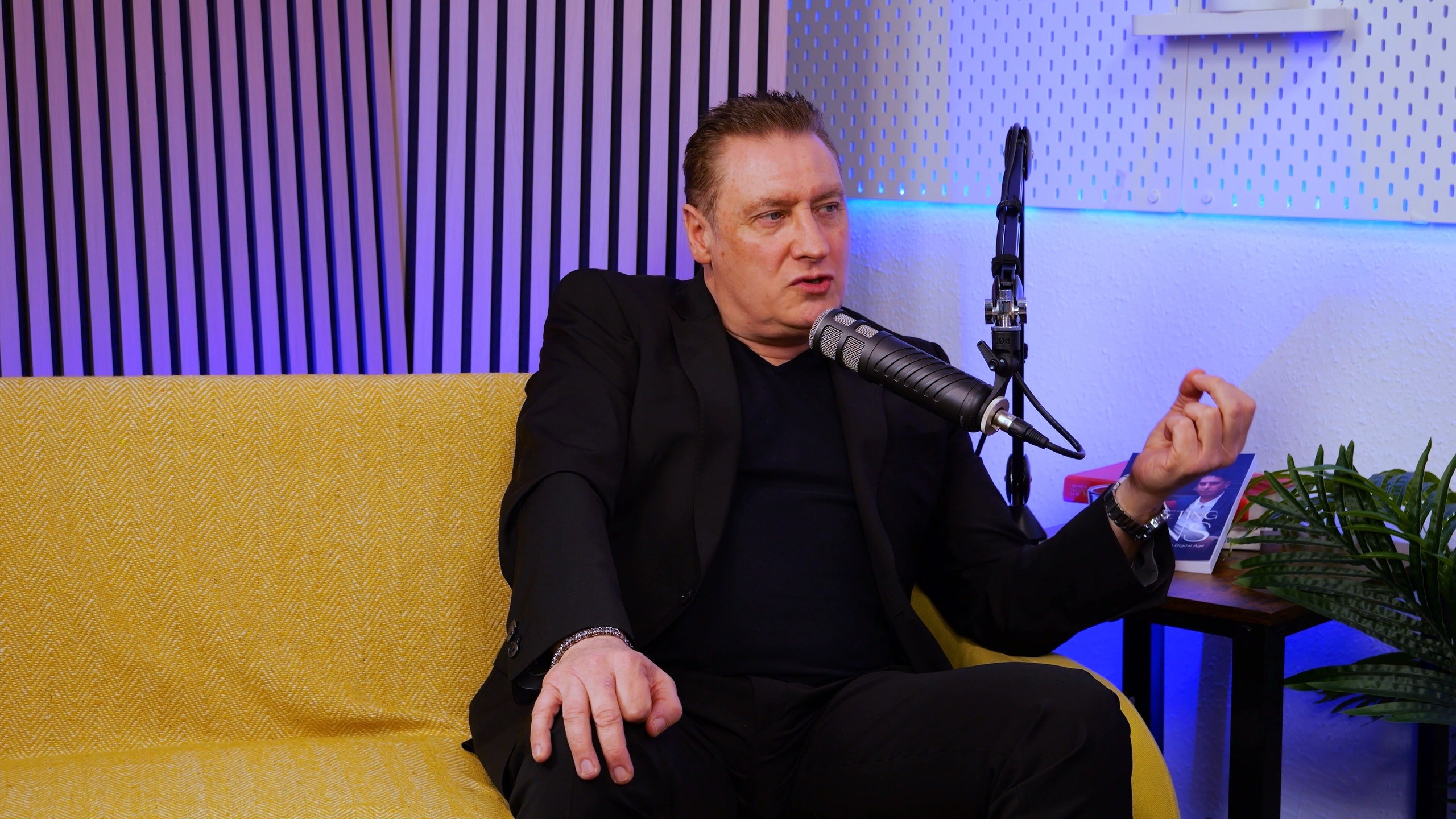
 Dr Grant MurrellSpecialist in hypnotherapy, neuro-linguistic programming and human behaviour; founder of Success Is A Formula
 Aleksandra KingPodcast Host and Producer, The BEYOND Podcast
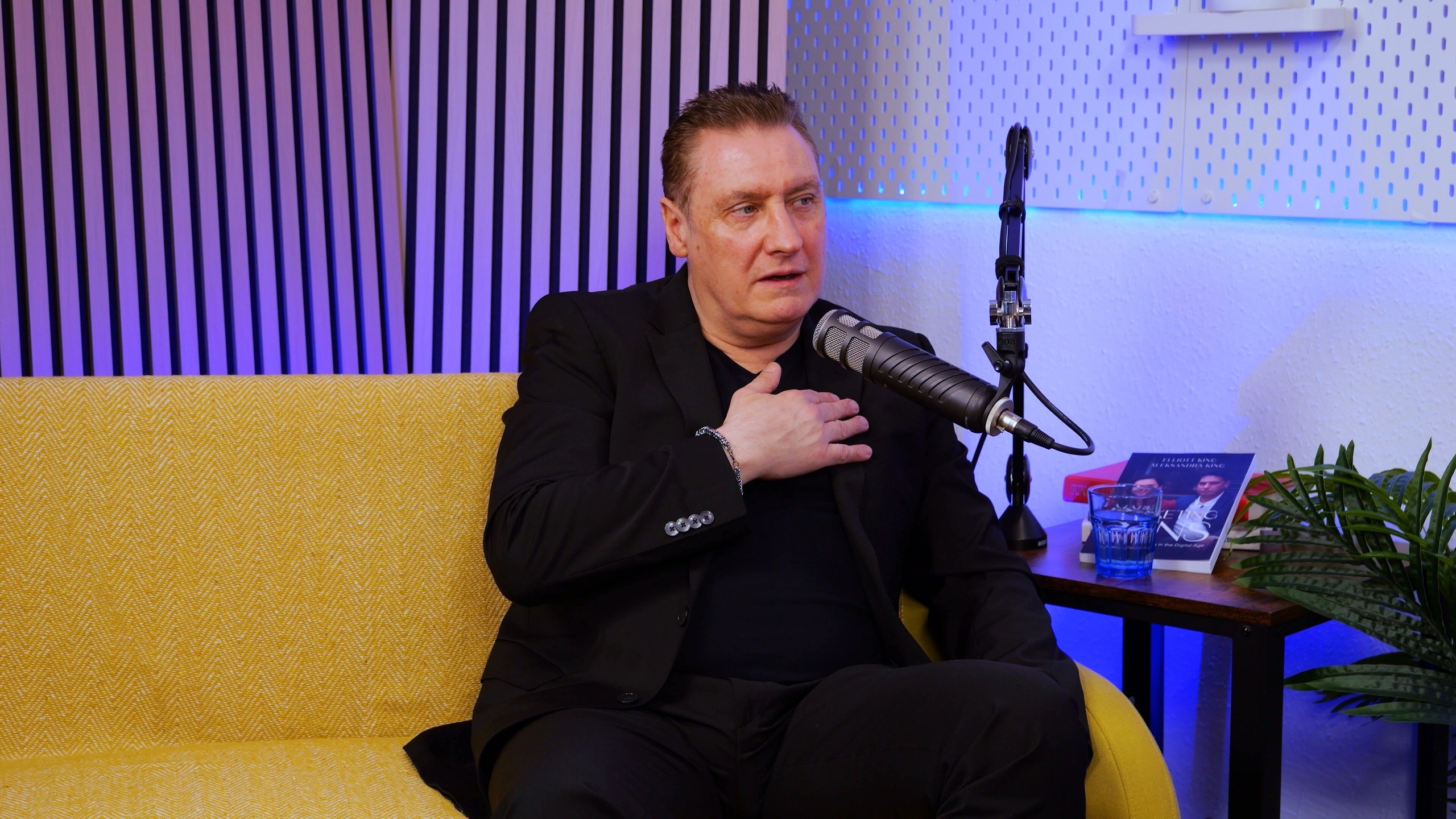
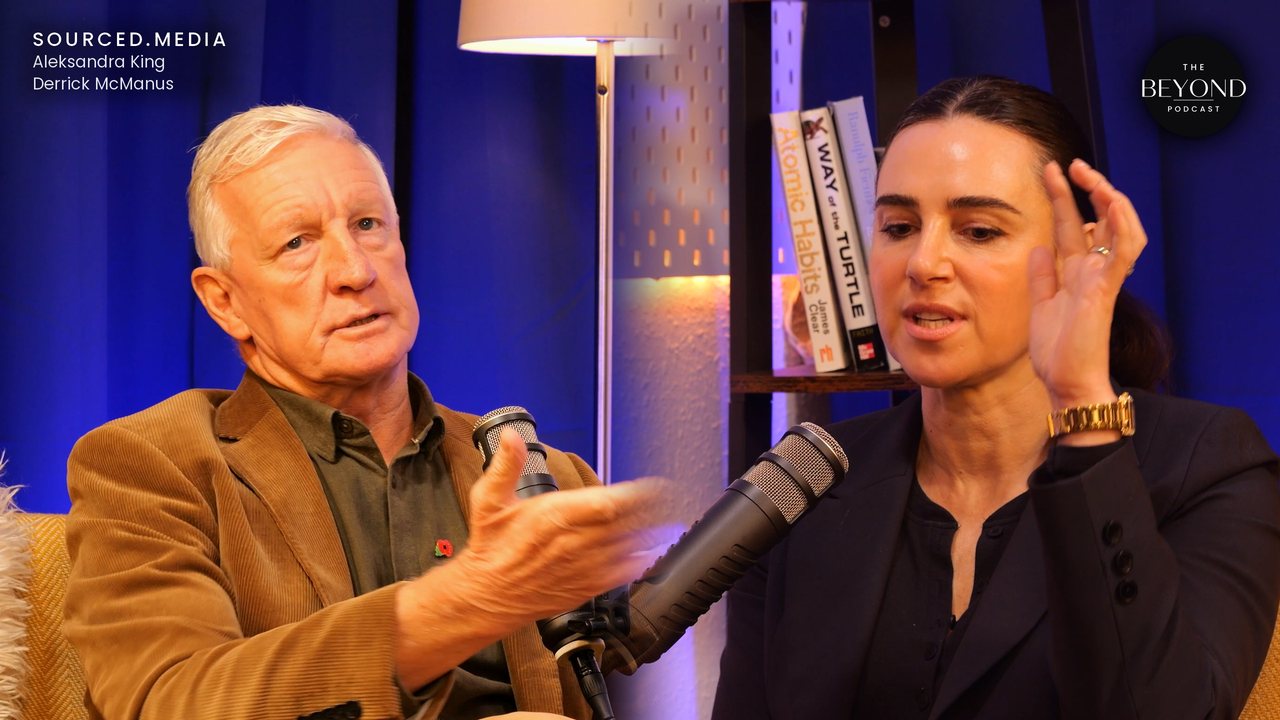
Dr Grant Murrell, founder of Success Is A Formula, in business and life coaching, talks with podcast host Aleksandra King on The BEYOND Podcast about reading people, building trust and success.
- Source
- The BEYOND Podcast, hosted by Aleksandra King, with guest Dr Grant Murrell
- Full episode
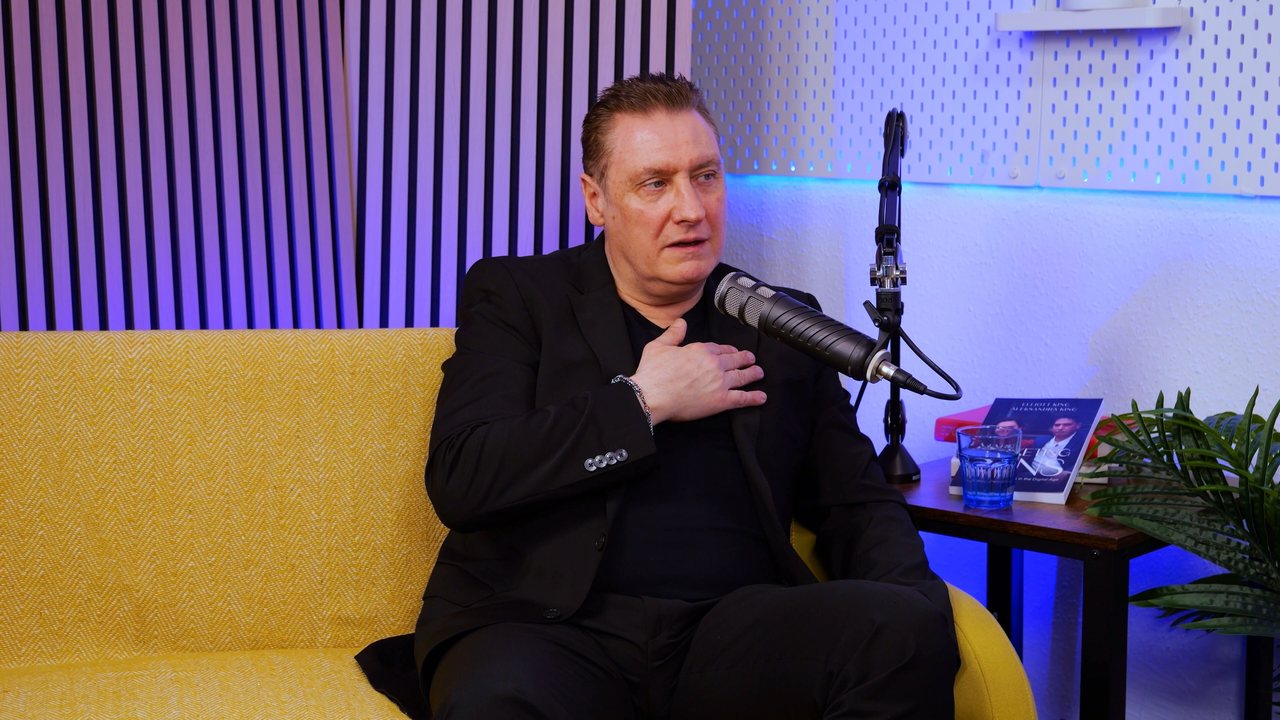
Why am I scared of public speaking or being on camera?
 Dr Grant Murrell
, talking with Aleksandra King, traces the fear of speaking in front of others back to the tribe, where fitting in kept a person alive and being pushed out was the danger. He reads stage fright today as that same instinct at work.
This is not about me; this is about legacy.
Murrell goes on to say he does not care if he stutters, gets a word wrong or sneezes, so long as the information gets out. By that measure the stage belongs to the message and to as many people as it can reach.
How can a mistake become a signature sound?
Dr Grant Murrell tells the story of a guitarist who gave his instrument to a guitar tech for a service between tours. The tech took it apart, cleaned it and, handing it back, said the guitar had been made wrong from the beginning.
It was that beautiful accident of being a little bit different that made that signature sound.
Murrell carries the story straight into the world of AI. He recalls a conversation with an AI expert colleague about what AI does, then describes a company run by AI, one that hires a human whenever it wants to learn something new.
How do you stand out in the age of AI?
Dr Grant Murrell has just described a company run by AI, which hires a human whenever it wants to learn something new, podcasting being his example. With AI a learning machine and information easy to find anywhere, he asks where any one person still stands out.
There's only one person who can be you, and that's you.
He still calls modelling a great thing to do, then returns to a guitarist discussed earlier, who learned his techniques from other players and added something of his own. That addition made the playing unique, which for him is why congruence, being oneself, matters.
Why do people need a sense of purpose?
The conversation has turned to the people who would give a kidney to get what they want, and what sets them apart. Dr Grant Murrell takes that into his coaching, where it becomes the question of what a person absolutely must do, whatever happens.
No one does anything unless there's a sense of purpose to it.
He follows it with a run across the road and back. Asked plainly, a person agrees, but told the elixir of life waits on the far side, the same person sprints. On his theory, the purpose behind the task sets the pace.
What would you do if money didn't exist?
In conversation with Aleksandra King about values, Dr Grant Murrell offers the analogy he always uses to test whether a person is doing what they really want to do, and then answers it for himself.
What I'm doing is pretty much what I'd be doing if there was no money.
His own answer is the work he already does, which he calls his purpose in life. With no money in the world, as the analogy has it, what remains is the values he and Aleksandra King had just been discussing.
What should you do when everything you touch goes wrong?
For a long time Dr Grant Murrell has kept one strategy for the days when everything he touches goes wrong. On such a day he does nothing beyond what the diary demands, and the signal he acts on is the energy he can feel.
I can feel that the energy is wrong.
When the vibe runs the other way he does not stop, and in that stretch of calls and deals, he says, he closed two directorships. He agrees it is an energy thing, and his reading of it decides whether he pulls away or presses on.
How do you share an opportunity without being pushy?
Dr Grant Murrell has been arguing that if he held something that could give someone health, a career or fulfilment, keeping it to himself would be selfish, and sharing it would be his duty. Here he marks where that duty ends and the choice begins.
What you do with it is up to you. Please do your own due diligence.
He intends to take a close look at the opportunity himself. He goes on to say that a person should sell only what they fully agree with, and that most people are in sales in some form, persuading a child to eat vegetables included.
Should you sell something you don't believe in?
Turning to selling, Dr Grant Murrell gives a rule and then widens the category it covers until it takes in most people. Convincing children, political persuasion and professional services all count as sales on his account, and so does everything in the room.
You should never, ever sell anything you don't 100% agree with, and you don't need to.
His reason comes a moment later, practical as much as moral. Selling something the seller does not believe in affects their sales and, as he puts it, their soul. With a whole range of things to sell, he urges selling the one that resonates.
Does helping other people come back to you?
Dr Grant Murrell walks into a networking meeting asking how he can be of value to the people there, and calls that karma. Whoever he helps may never be able to repay him directly, and the return tends to arrive through someone else they help.
What goes around does indeed come around.
In his telling the same principle runs through relationships, where giving the best of oneself to someone makes that person feel safe enough to open up and give their best in return. He suggests everyone should look at life that way.
How do you decide which ideas to pursue?
Somebody described Dr Grant Murrell as a fast-forward, backward thinker, a label he accepts as true. When the host, Aleksandra King, asked him to explain it, he set out what happens in his head when a person brings him an idea.
All I've got to do is work backwards and reverse-engineer the process.
He goes on to apply the same test to a person, asking whether they are going to have children and, if not, wishing them success elsewhere. He then calls himself a very big thinker who looks at big things.
Is it normal for high performers to procrastinate?
Dr Grant Murrell has been describing someone he knows who could, if he wanted, go far higher in his career, and he turns to the question of what keeps people where they are.
That's okay, to an extent, because some very high performers are procrastinators.
He goes on to describe such procrastinators as contemplators, and he marks the point at which fear takes over as the limit of that allowance. In the illustration he reaches for, the best architects may muse on a design for weeks before they begin.
What does it mean when you keep hitting obstacles?
Dr Grant Murrell tells Aleksandra King that he was extraordinarily ambitious, able to make things succeed through sheer determination when they had every reason to fail, and that ambition is no longer his god. What changed, he explains here, is how he meets resistance.
I now think there is something better out there waiting for me and I'm not seeing it.
He goes on to say that when the same problems keep showing up in someone's life, it is because that person is failing to listen. The problem comes back, he adds, until they finally hear it, because that is where their purpose lies.
Watch the full episode
Watch the full episode on YouTube (opens in a new tab): Dr Grant Murrell on The BEYOND Podcast
How do you read people?
Dr Grant Murrell has been describing a sense of timing he feels energetically, of when to go and when to put the brakes on. He turns that reading outward, to anyone he looks at.
You can see where people are, where they need to go and where they need to tread carefully.
The conversation moves to networking, where the same reading applies, and the other person is either open to what is being said or closes off into a roadblock. The question that follows is how body language shows whether a conversation is working.
How can you tell if someone really knows their subject?
Aleksandra King asks Dr Grant Murrell whether the calmest person in a conversation is the one with the most power. Murrell's answer allows for enthusiasm and then rests on what happens when someone is asked a deep, thoughtful question.
If you ask a deep, thoughtful question, they won't need to say too much.
Murrell's example comes from his networking days, when he carried folders and new people filled their workbooks. A fellow director who had been there from day one had only a few lines in his book because, as Murrell saw it, he already knew the rest.
Why do the most experienced people talk the least?
At a conference where the new people had filled their workbooks and were writing on the covers, one director who had been there from day one lost his book. When Dr Grant Murrell found it, there were about four lines written inside.
His cup was already full.
Murrell applies the same reading to his own time in sales at 17, making calls. He knew he had a professional on the other end of the line by the way they listened to the pitch.
Do some people really have no values?
Dr Grant Murrell would rather reward people for better choices than punish them, and he traces behaviour back to their environment. An ex-criminal who runs a charity built on the lesson of his own mistakes wants to bring Murrell in to talk to people.
When people say they have no values, yes, they do; they just have different values.
He goes on to concede that people have their reasons, in the places they were born, the environments they came from and the experiences they have had. He then sets all of that against the limited time anyone has on the planet.
How do you break a big goal into smaller steps?
Dr Grant Murrell has just told Aleksandra King that every goal reached deserves a celebration, because the dopamine it releases sends the brain looking for more. Here he turns to the goals themselves, and to a method he admits he overlooked for years.
Take a big goal and chunk it down, because then you will never fail.
The stages matter because each one reached counts as a success in itself, and he goes on to say that success breeds success. From there he turns to sports psychology.
Can you be successful and still feel trapped?
As the conversation closes, Dr Grant Murrell tells host Aleksandra King that she really can live the life of least resistance she has just spoken of, and so can anyone watching, if they make the decision and work on themselves.
For most people it was the top of their game, but they were trapped.
He goes on to say the client remembers every step of their journey together and is liberated now. The trap he describes is one most people would call the top of their game, which is why the decision and the work on oneself matter.
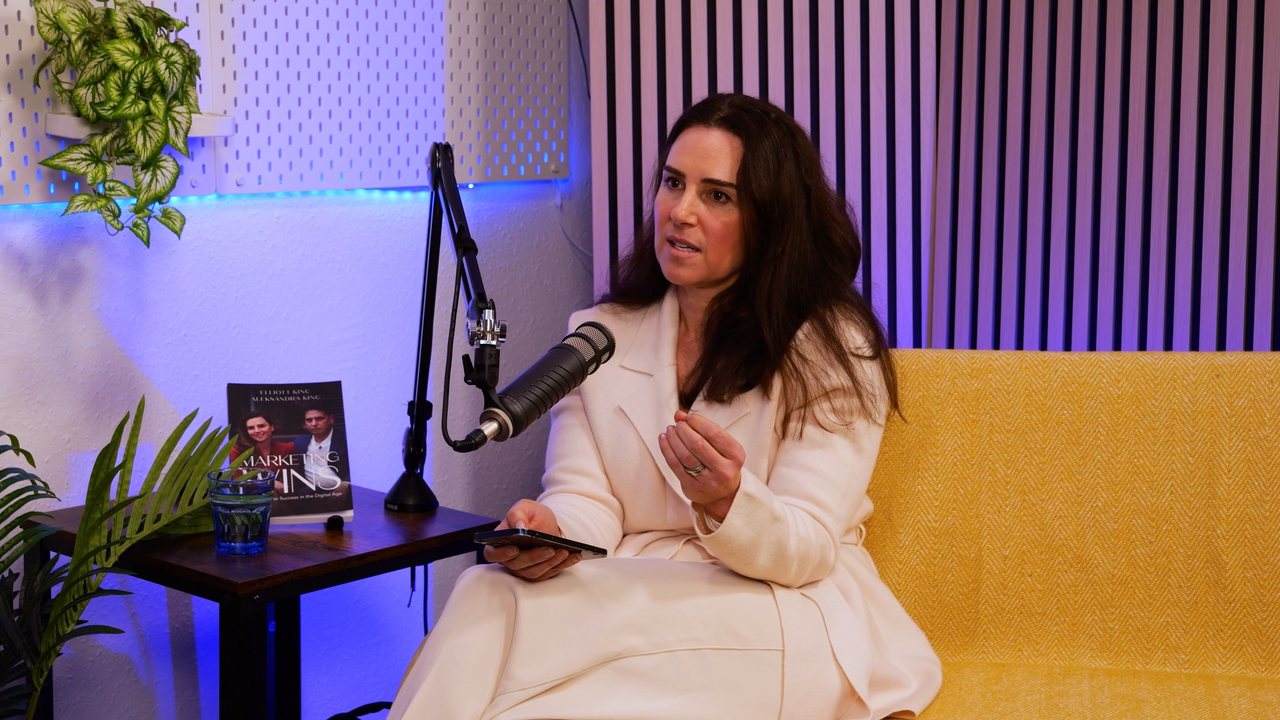
Transcript: Dr Grant Murrell, founder of Success Is A Formula, on The BEYOND Podcast with Aleksandra King
The full conversation between Dr Grant Murrell, founder of Success Is A Formula, and Aleksandra King, host of The BEYOND Podcast, published on 23 September 2026. Each paragraph names the speaker and the time in the recording. The transcript and the captions are lightly edited for readability: hesitations, repeats, false starts and slips of the tongue are removed, and every point is kept as the speaker meant it. The audio is unedited. Download the transcript: Markdown, WebVTT, SRT.
Cold open: what's coming
Watch from 0:00 (opens in a new tab)From to in the recording.
Aleksandra King, host of The BEYOND Podcast (): When I met you, just the way that you approached me, I felt like you'd known me my whole life. I don't know what you were NLPing with me, but whatever it was, it worked. And I thought, "I want to learn that."
Dr Grant Murrell, founder of Success Is A Formula (): It's not just about learning cool new tricks. It's about becoming. My name is Dr Grant Murrell. I'm a specialist in hypnotherapy, neuro-linguistic programming, human behaviour and body language. In essence, I'm a cognitive coach. Every time you grow, there's a challenge that did not exist. If we want to be that person, up here, we have to be willing to change something.
Aleksandra King (): Some of our viewers are really competent, but they're just ever so slightly underperforming. So what would you say to them?
Dr Grant Murrell (): Who do you want to become? What do you really want to do? Because this life is not a dress rehearsal. If there were no money in the world, what would you be doing?
Aleksandra King (): How do you read people's body language to know whether the conversation is working or not? I think you said it: if your feet point towards the person, you're open to the conversation.
Dr Grant Murrell (): We always look at what I jokingly call the central communication department: the face, the head. But people fake them. You've often seen people go, "I'm really interested," and they're really not. But we can see it's fake. What's going to indicate a lot is the feet.
Aleksandra King (): What's holding people back from earning more money?
Dr Grant Murrell (): We become what we think. You have to become a different version of yourself to get there. Yes, you're still you.
Aleksandra King (): I do have to make a confession. The conversation, Grant.
How Grant and Aleksandra met
Watch from 1:34 (opens in a new tab)From to in the recording.
Aleksandra King, host of The BEYOND Podcast (): Dr Grant, I'm very excited to have you on. We've met before. We've worked together before, and I know how good you are.
Dr Grant Murrell, founder of Success Is A Formula (): Thank you.
Aleksandra King (): I know you're terrific. So I brought you on because you're an absolute treat to have on this podcast. It's all about the mindset to be successful, and you know how that's done.
Dr Grant Murrell (): Yes, that's it. We know what's going on under the bonnet, or under the hood, as they say in the US.
Aleksandra King (): When I met you for the first time, it was actually at a course. You remember, yes. And just the way that you approached me, the way that you asked me questions, the way that you listened, I felt like you'd known me my whole life. Yes, I did. I don't know what you were NLPing with me, but whatever it was, it worked. And I thought, "I want to learn that."
Dr Grant Murrell (): You want to learn that?
Aleksandra King (): I want to know. I want to know. So, I don't know, did you do that on purpose?
Dr Grant Murrell (): No, and that's a key point. We've all heard the concept of the 10,000-hour rule.
The Bond suit: success is about becoming
Watch from 2:43 (opens in a new tab)From to in the recording.
Dr Grant Murrell, founder of Success Is A Formula (): Once you've done something for 10,000 hours, see, the whole essence of this is that it's not about something. Yes, you've got to learn it. But it's not just about learning cool new tricks. It's about becoming. We're not human doings, we're human beings. It's about being. Let's use the analogy of the James Bond movies. In the first James Bond movies, as you know, James Bond used to wear a suit from Savile Row. And the director said to, I think it was, Sean Connery, there's that suit, and they had three of them, I think.
Dr Grant Murrell (): And he said, "I don't want you to take that suit off. When you go and make a coffee, you keep it on. When you're watching a movie, when you go to the bathroom, I want you to keep it on." He said, "Because when you walk on and say, 'My name is Bond, James Bond,' I want it to look like that suit belongs on you."
Aleksandra King, host of The BEYOND Podcast (): Oh, I love that. I love it.
Dr Grant Murrell (): You see what I mean? So let's use that analogy.
Aleksandra King (): I love it.
Dr Grant Murrell (): I guess when we were teenagers, a lot of us went through awkward fashion changes, looking for things. And sometimes we wore some things that weren't exactly right for us. And it showed, and we knew it, and we looked awkward. This is what I'm talking about. But when you wear something that fits you like a hand in a glove, people go, "Oh, wow, that's you." It looks like it's moulded to you. That's what I mean. So it's not about something you do. It's about something you become.
Aleksandra King (): Something you become. So you've become really good at reading people, at understanding people, at speaking to people, changing people for the better. I suppose you are using your skills for the greater good, which we're going to come to, because these skills are some skills, aren't they? I've got a lot of questions for you. So I'm going to try. There's a lot to learn, but I've essentialised them to things that I know people are going to benefit from quickly, directly.
Aleksandra King (): So I'm going to start going through them, but I know that it will never be enough to get to them. There's never enough time. We're going to try our best. So, starting: what's holding people back from earning more money?
What holds people back from earning more
Watch from 5:04 (opens in a new tab)From to in the recording.
Aleksandra King, host of The BEYOND Podcast (): What's holding people back?
Dr Grant Murrell, founder of Success Is A Formula (): Great question. What's holding people back from earning more money? It's two things, really. One, let's be honest: some people don't want it.
Aleksandra King (): No. Some people don't.
Dr Grant Murrell (): So here's the thing. If you say to someone, "Hey, would you like some more money?" and you haven't got to do anything for it, most people would either do it, "Yeah, I could do with a nicer car, I could do with a nicer house, send the kids to a nicer school," however, most people would do it if they haven't got to do anything for it. If you said to me, "Would you like a yacht?" I'm like, "Yeah, okay." But yachts aren't a big thing to me.
Dr Grant Murrell (): If you said, "Would you like an aeroplane?" Yes, I really, really want one. I fly and I love aviation. But if you're going to give me a yacht and pay for it, yes, why not? But I wouldn't really go out of my way to get one. It's not a big thing. So some people don't want it, or they're comfortable where they are, and there's nothing wrong with that. But probably the answer that you're looking for is belief. I talked earlier about that Savile Row suit looking like it's you in the James Bond movie.
Dr Grant Murrell (): Looking like you belong. It's not something you do. It's not something you put on. It's not a performance. It's who you really are. That's my point: it's about identity. If people don't identify themselves with that kind of person, that's it.
Aleksandra King (): What do you mean? So if you think, "Oh, I'm not a rich person," or "I am a type of rich person"
Dr Grant Murrell (): Then that's what you become. We become what we think, quite simply. We say, "Be careful what you eat, because it gets inside you."
Aleksandra King (): Absolutely.
Dr Grant Murrell (): Be careful what you read, because that gets inside there. Be careful who you keep company with, because that gets inside there. Your environment is hugely, hugely important. If you look into Japanese culture, on New Year's Eve it's difficult to get Japanese people to go out, most of them. They're indoors. You know what they're doing? They're cleaning. They're cleaning the house to get rid of things, to make way for welcoming new opportunities.
Aleksandra King (): Wow. When you were saying all that, I literally had goosebumps all the way down my arms. It's just so powerful.
Dr Grant Murrell (): Well, it is about opportunity. It's about taking things seriously and putting things that you need. So it's who you see yourself as. And how you get someone to be, let's say, a six-figure performer, that's fine. It's completely different to the strategy you use to get them to seven figures, to eight figures, to nine figures. You have to become a different version of yourself to get there. Yes, it's still you. It's still you. It's got to be congruent, but there are different ways. The expression I use is that every time we grow, there is a challenge.
Dr Grant Murrell (): So if you think of this, if anyone out there has taken on a new job: you take on a new job and a new promotion, and it's a bit of a struggle at first. "Oh, I've got to get this right. I've got to do it." And you do it. And you're, "Oh, God, this is tough," and you're working hard. After six months or a year, you're like, "What was the fuss about? It's easy." Then you get that promotion or that new job or that new career, and it's harder again.
Dr Grant Murrell (): And while you're growing into that, you think back to that job you did a year ago, and you think, "God, that was so easy." Because you grow. Every time you grow, there's a challenge that did not exist. It didn't come onto your radar when you were there. So every way you go, look at a relationship, or an affair of the heart, where you go into different stages of a relationship, there are new challenges that didn't exist. Different depths of perception, of understanding. And that's about us.
Dr Grant Murrell (): So if we want to be that person, up here, we have to be willing to change something. It doesn't mean give up your soul. It doesn't mean that. It's far from that. It's really, in fact, getting closer to the real you. It's taking layers off.
Aleksandra King (): So really, is this where the term small-minded comes from? It's a horrible thing to say, but if you're small-minded, if you're not thinking big enough, is that what you mean?
Dr Grant Murrell (): Well, yes. I kind of look at it in reverse, Aleksandra. It's like when people ask me, "Oh, what more new things do you need to learn?" In fact, quite often it's unlearning. It's taking layers off so that we get closer to the real you.
Aleksandra King (): And also the way you look at it, I'm like, "What's going on?" You're looking at my body language and you're analysing me. I know what you're doing.
Dr Grant Murrell (): Not consciously. That's the thing. You pick up on this after a while. No, totally.
Aleksandra King (): You know when you're in the presence of greatness. So, you have a lot of really successful people watching now. They're doing well in their jobs. They're doing well in their careers. They're running companies, whatever it might be. Even in universities, some of our viewers are younger. And they are competent, really competent, but they're just ever so slightly underperforming. So what would you say to them?
Life is not a dress rehearsal
Watch from 10:11 (opens in a new tab)From to in the recording.
Dr Grant Murrell, founder of Success Is A Formula (): Who do you want to become? What do you want to do? What do you really want to do? Because this life is not a dress rehearsal. It's live. We're here. We're here now doing this interview. This is for keeps. This is it. This is live. You mentioned university. I know perhaps one of the smartest men I've ever met in my life. He has got PhDs coming out of his ears from top universities. And he asked me for advice on how to grow his business. He needs nothing.
Dr Grant Murrell (): He needs nothing. He's very intelligent. He's a very intelligent person. He knows lots about everything. He has a great way of learning and understanding. And quite often I'll sit with him and we do quizzes together on certain things. And he'll ask, and sometimes I'll come up with the correct answer. Sometimes he will. But if he gets an answer that I don't get, I'll say, "How did you arrive at that answer?" Because I want to see his operating system, how you got to that.
Dr Grant Murrell (): I'll see how you unwrap that. But yet, when it comes to his career, he said, "Can I ask you how to do this?" I said, "Yeah." If he wanted, he could go way, way, way, way higher than he does. But there's something that keeps us where we are. And I think that people know that they excel in certain areas of their life and not in others. For example, there'll be ways where you, and not just you, but anyone, will forge ahead with their life. They're a real go-getter.
Dr Grant Murrell (): They do things quickly. And there will be areas, let's be honest, where we may procrastinate, just a little bit, because we're not all the same across the board in all things. Yet when we think of it, that's okay, to an extent, that's okay, because there are going to be some very high performers who are procrastinators, or you could say contemplators. But it reaches a point when that fear is taking over. It was once said that if you get some of the best architects in the world and say, "Do a design," perhaps the not-great ones will start working on it straight away.
Dr Grant Murrell (): You'll say, "I want a house next to a waterfall." And I heard this, and then I said maybe the best ones will muse around for a couple of weeks, not doing anything, and maybe a couple of doodles. And then they'll say, "Yeah, I thought about this. I'm going to build your house not next to a waterfall, but over a waterfall." And they'll take time to think of it. I can give a thousand analogies like this. That's an exaggeration, not a thousand, but a lot. But the point is, you take the time you need, but we're all good in certain areas, but we hold back in other areas.
Dr Grant Murrell (): So it really comes back to: what do you really want? Because life is not a dress rehearsal. And I ask people this question sometimes: if you knew you could not fail, if you knew you just could not fail, what would you go for?
Aleksandra King, host of The BEYOND Podcast (): I love that. And it's different.
Dr Grant Murrell (): That's unpacking. It really unpacks people. They're here, and I'm like, "Why don't you just go there anyway?"
Procrastination, fear and the tribe
Watch from 13:23 (opens in a new tab)From to in the recording.
Aleksandra King, host of The BEYOND Podcast (): So are you saying that procrastination is a form of fear, underlying fear?
Dr Grant Murrell, founder of Success Is A Formula (): Absolutely. With a lot of procrastination, and a lot of these things that hold us back, we're often frightened of getting it wrong, of being ridiculed, and that's a normal thing. There's nothing wrong with you if you get that. It's normal. We all feel this, because it's survival. Millions of years ago, when we lived as cavemen, we had to fit in with our tribe. We had to do that, because if we didn't, we got pushed out. If we got pushed out, one of our most fundamental purposes of life was not fulfilled.
Dr Grant Murrell (): We wouldn't get a mate. So it's important to us to be accepted, to fit in, because it's survival. It's not just ego, it's survival. However, these days it manifests quite often. When people want to speak on stage or speak on a camera or something and they get fearful, I sometimes push their buttons a little bit and say, "Oh, you're quite egotistical." And I say it with a little bit of love and a joke, because we're frightened of looking silly.
Dr Grant Murrell (): And that means maybe we're over-focusing on ourselves a little bit. But like here now, I'm really excited to be here, because I want to share this with as many people as I can. This is not about me. This is far beyond. This is about legacy. Long after I'm gone, this is the stuff I want to leave here. So I don't care if I stutter, mess up a word, say something wrong, sneeze. I don't care. I just want to get the information out there. The objective. You're very clear. The objective is bigger than you.
Aleksandra King (): Yes, bigger than the ego. And then it allows you to step into fear. And it's got to be.
Dr Grant Murrell (): And this reminds me. Years ago I used to be in a band, and yesterday I spoke to one of my greatest friends, and he wrote a song saying "faith in something bigger". And it is: your sense of purpose will outlive you. It's bigger than us. Your passion is a fire starter to get you started. The passion can burn out. Purpose burns. We've all heard the analogy of paper, wood and coal. Paper ignites very quickly, but burns out pretty quickly.
Dr Grant Murrell (): Wood takes a little bit longer and smoulders, and it burns for a while. Coal, on the other hand, takes a long time to ignite. But when it does, it's not easy to put out. It smoulders for an age. So perhaps we need all these things. We need the paper. This is how you make a fire, right? You need paper. You need wood. You need coal. So your passion, if you will, is like the paper, like the wood. Your purpose is the coal that burns.
Aleksandra King (): There's something I'm going to challenge you on here. I'm going to play devil's advocate right now.
Lone rangers and the miswired guitar
Watch from 16:29 (opens in a new tab)From to in the recording.
Dr Grant Murrell, founder of Success Is A Formula (): Yeah, go ahead.
Aleksandra King, host of The BEYOND Podcast (): The tribe thing, the fact that you do need it: you want the mate, and you don't want to get the cancellation and everything. I also think there's benefit in being a lone ranger.
Dr Grant Murrell (): I do too.
Aleksandra King (): Stepping away from the tribe, who can hold you back.
Dr Grant Murrell (): I love the fact that you've asked that, because I quiz myself about that. Okay, let's unpack this one. Right. Brilliant question. I watch documentaries, and I've been studying success since I was 14 years of age, in various forms. And yes, there's how to conform and do all these things and fit in and da, da, da, da. And that will keep you alive. But if you want to thrive, you might need to be an outlier.
Dr Grant Murrell (): I'm nuts about music, and I'm nuts about instruments and stuff. I geek out. Let me tell you about a certain guitar and a certain guitarist I won't mention. He had this guitar. On the guitar, where the sound comes from is a thing called a pickup. It takes the sound and it goes into the amplifier. And they always said this guy just makes that guitar sound different. Well, he had the guitar for years and it worked very, very well.
Dr Grant Murrell (): Like all things, they need servicing now and then. In between tours, he gave the guitar to his guitar tech and said, "Can you service it?" And he did. He took it all apart, cleaned it and made sure the soldering was in place. And when he gave it back, he said, "Oh, by the way, that guitar you had was made wrong from the beginning. One of the pickups was wired back to front and it didn't work."
Dr Grant Murrell (): He said, "So I put it right." The guitarist played it and said, "It sounds awful. Can you please put the mistake back in?" It was that beautiful accident of being a little bit different that made that signature sound. Now, here's the thing. We're in the world of AI, which is around us all the time. I was talking to one of my AI colleagues the other day, an expert in AI, and we said, in essence, what does the AI do? There are a thousand ways of explaining it.
Dr Grant Murrell (): And he said, and I think it's a very fundamental thing we've heard many times before, "It's great at doing the heavy lifting for most things." Now, there's an AI company out there that's run by AIs. When it wants to learn something new, the AIs hire a human. Crazy. You want to learn how to do a podcast? "Let's hire a human to show us podcasting. Tell us about how that works." And then they learn. And of course, AI is a learning machine, so it's easy to get information anywhere now.
Dr Grant Murrell (): So where do we stand out? It's about being a specialist. This is your DNA. I could study you and model you as much as possible and compete with you, and I would always come second. There's only one person who can be you, and that's you. There's only one person who can be me, and that's me. But you can become versions thereof. Modelling is a great thing to do; modelling is that technique. So let's go back to the guitarist.
Dr Grant Murrell (): Did he learn from other guitarists? Did he learn these techniques? Absolutely, yes. But at some point, he put a little bit in there, a little bit of his angel dust, a little bit of something from him that made it unique. And that's what we must do. That's why congruence is so important. We must be ourselves.
Aleksandra King (): Yeah, lean into being yourself and not trying to copycat your way.
Dr Grant Murrell (): But that takes bravery. It takes conviction to be able to unpack those layers, as I said, to get deeper to the true you.
Aleksandra King (): Okay. So what then separates a top performer? Let's say you've got two people, same everything, same talent, but one is a better performer. What is it in their mind that makes them the better performer?
Dr Grant Murrell (): I think, as a performer, they may not be thinking of performing. That may be the one thing. They do perform without realising it. Again, it's the purpose. They're thinking outside of themselves. They're thinking of the objective, the other person, the listener, the audience, the clients, the family, whatever the other thing is. So they come secondary to it. It's like a servant leader. They're thinking about that, and I think this is the reason. And also experience, but it's the sense of purpose.
Dr Grant Murrell (): They know what they're doing. They know why they're getting out of bed in the morning. They're not just getting out of bed and saying, "Let's see what happens." They're driven. They have a sense of purpose. They know why they want to serve. And that's what matters. It makes one person excel. It is when some people want it more. And that doesn't mean an aggressive want. Some people just go get it, and they'll murder anyone to get there. I don't mean that. It's selfless pursuit. Selfless pursuit.
Aleksandra King (): I shouldn't say this on the podcast, but I'm going to say this. I'm going to say it. I'm going to step into it. I had an ex-boyfriend who was one of those very ambitious people. He wanted to go to a really ambitious MBA school in America. There were certain things we were talking about: the approach to doing these things, how do you get there, what sort of exams are you writing, and da-da-da-da-da.
Aleksandra King (): We were talking, and I got the impression that he was trying to take a bit of the easy way through to something that I didn't quite like. I can't say exactly what it is, because of the person. But what he said to me, I will never forget. He said, "What you need to understand is that some people will give their kidneys to do this, to get this and to achieve this. They would do that. And you're not that sort of person, but I am." And I was like, "Yeah."
Dr Grant Murrell (): What so burningly needs to be done? What must they absolutely do, no matter what? No matter what. No matter what. This is something I talk about when I coach people, and I'll give you a tease of one question I'll ask them. When we talk about commitment, and people who listen to me coach will find this familiar, if I say to them now, "Hey, go on." I have a theory.
Dr Grant Murrell (): No one does anything unless there's a sense of purpose to it. If I said to you, "Hey, go on, run across the road and come back," you would say, "Wow, that's crazy." But if I said the secret of life, the elixir of life, is across the road to come back with, you sprint. You'll be gone. So you understand. If I said to you, "Run across the road and run back," you'd go, "Okay." If I said run across the road and run back because your family's life depends on it.
Dr Grant Murrell (): It's a different energy. It is whatever it takes. Have you ever seen a dog when a doorbell rings? It's just like, pfft, it's gone. Coffee cups will go everywhere. It will just go. That's what I mean. If we approached our life with WIT, whatever-it-takes energy, our results would be completely different.
Whatever it takes, or values first?
Watch from 24:00 (opens in a new tab)From to in the recording.
Dr Grant Murrell, founder of Success Is A Formula (): Yeah, please do.
Aleksandra King, host of The BEYOND Podcast (): I think what I'm trying to say is that whatever-it-takes energy is good. Whatever-it-takes energy. But within whatever it takes come values: values, ethics, morals. So, whatever it takes, what do you mean by that? What do you mean by that? What are you prepared to sell? Are you really prepared to sell your kidney? And if you are, is it really, really worth it? To some people, yes. But I'm not advocating selling organs. You know what I mean.
Dr Grant Murrell (): Yeah, I do. It's about values. You hit the key word there. It's about your value system. What are the values? If you're doing something that you really want to do, what are the values? What do you want to do? I always use this analogy. If there was no money in the world, if we didn't need money, didn't need it, what would you be doing? Now, what I'm doing is pretty much what I'd be doing if there was no money. I love this.
Dr Grant Murrell (): It is my purpose in life. I've found my purpose. And if there was no money, fine, great. This is what I do. And I think that's the thing. Too many people do things because "this, I think, is a smart idea", as opposed to "this feels like the right thing".
Aleksandra King (): And I guess where I'm leaning to, and I'm going to knit through what I'm trying to say, is that, yes, your mission: when I met you, I could immediately see your purpose in life. You've got it written all over you. It's all clear. You want to help people, and you do. You do help people, and it is what you're doing. And that's pure. It's credible. It's genuine. It's a beautiful, positive thing. It's when money becomes the god. And in some ways it can be very, very positive.
Aleksandra King (): You're using it positively to help people, to build nations, to make people's lives better. You can do it, but it can also be corrupt and be used in the drug trade and fraud and things like that. And that's also where the ethics, morals, values and things come in, where, if that's your god, if that's the objective, then how you get there, with the knocking over the coffee cup analogy with the dog, you can knock over a couple of things, but that's the objective.
Aleksandra King (): So it's this: with purpose should come some sort of connection to values and morals. It all connects. It's your sense of purpose, your values, what it is, your code of how you live your life.
Dr Grant Murrell (): I would do it, but I would do it this way. When I was younger, I was extraordinarily ambitious, extraordinarily ambitious. I would say it's not my god any longer. I was very, very, very good, through sheer determination, at making things work that shouldn't have worked. Things were broken, I fixed them and they worked, but they'd normally break a little bit later, and you'd give yourself a lot of anguish along the way. What I would do now: I'm a little bit more peaceful.
Dr Grant Murrell (): I was never aggressive, never, never, but I'm a lot more peaceful, whereby if things don't work, if I get a couple of barriers to things, I'll go, "Okay, fine," because I'm guessing this isn't for me. But the difference now is, where I felt I needed to get things, I now think, I guess there's something better out there waiting for me and I'm not seeing it. If you keep getting the same problems in life showing up, it's because we're not listening. Something's happening and you're like, "Okay, you didn't listen the first time, I'm going to give you the problem again."
Dr Grant Murrell (): And then sooner or later you go, "Oh, now I get it." And thank God you're listening. It's because your destiny, your purpose, is here, and somehow we get distracted and go there. And there's something out there, and I'm going to say something: people would call it God, they will call it the universe, they will call it whatever you wish to call that. And somehow, if we listen, if we tune in, it will take you back. Now, a couple of weeks ago, I had a bad day, one of those days when things just aren't working.
Dr Grant Murrell (): I was not in my flow. It just wasn't working. And I have a strategy, and I've had it for a long time: when I get days like that, I realise that, apart from the things in my diary that I have to do that day, outside of that, I'll do nothing. I will take a day off. I'll watch YouTube, I'll go for a drive, I'll watch Netflix, I'll stay away from things, because anything I touch, anything at all, is just turning wrong that day.
Dr Grant Murrell (): I can feel the energy. It's wrong. I haven't told you this, but last week I had completely the opposite, and I could feel the vibe. This is what happened to me in 48 hours: I was asked to be on two podcasts, I was asked to star in a movie, and I was asked to be an executive producer for a movie, which is an interesting one. Then 24 hours later, completely unrelated to this other thing, I was asked to be in another movie with some of the greatest people in my associated industries.
Dr Grant Murrell (): But I knew it was a special time. I could feel the vibe. Now, when I get days like that, I don't stop. All those calls, all those deals, and I closed two directorships in companies in that time.
Aleksandra King (): So what are you saying? You get days like that, you go, go, go? And if you feel the vibe, you don't feel the bad energy, you have to pull away? So it's an energy thing?
Dr Grant Murrell (): It's an energy thing. Not that I get resistance: I rarely, rarely get any resistance with things I do, but when I picked up the phone and said, "What about it?", it was "Yep, let's do it. Fine." Madness. Simple. And that's the point. Ride the wave. Now, here's the thing. A friend of mine who's a numerologist, who deals with your numbers, your date of birth, messaged me out of the blue the next day: "Hi, how are you?" I said, "Pretty good, actually." They said, "Yeah, thought so."
Dr Grant Murrell (): Looking at your numbers. And they know me. They know exactly the pattern of my life, and when to work and when not to work. And they're like, "Yeah, put the brakes on here," or "Just sit this one out," or "Now go, go, go." They know. And that's what I can feel energetically. And when I look at people, you're right, I know people. I'm fascinated by people. Human beings are beautiful things.
Dr Grant Murrell (): And when you look at them, you can see. You can see where people are. You can see where they need to go. You can see where they need to tread carefully. It's like the human sat-nav, the navigator in your car. You'll go along, "I'm going to go from here to there, from this city," and then suddenly there's a roadblock. It tells you where to go around these roadblocks so that you arrive at your destination on time, in great condition.
Reading the room: the feet and hips
Watch from 31:36 (opens in a new tab)From to in the recording.
Aleksandra King, host of The BEYOND Podcast (): I love this. And we're going to take that and use it now in a networking situation, where the humans themselves are either open to accepting what you're saying to them, or they close off and they go "roadblock". Because I remember when I met you at this course, there was this discussion about how you read people's body language to know whether the conversation is working or not. And one of the things, I think you said it, was the way that the feet are pointing. So if your feet point towards the person, you're open to the conversation. But when they start doing this, it's like they're running away.
Dr Grant Murrell, founder of Success Is A Formula (): And I used to teach professional networking for 16, 17 years.
Aleksandra King (): Teach us professional networking.
Dr Grant Murrell (): Yeah, professional networking. So when we go here, we always look at what I jokingly call the central communication department: the face, the head. We look at facial expressions and things like this, and slight tension around our lips. And we look at these things because there are a lot of cues there, if you know how to read them. But people fake them. You've often seen people go, "I'm really interested," and they're really not. But we can see it's fake. What's going to indicate a lot, though, is the feet.
Dr Grant Murrell (): So if you're talking to someone, and there's a door behind us here, right, and your feet are pointing towards the door, I'm guessing that you might want to get away from this conversation. It's like that.
Aleksandra King (): It's just so crazy that the feet will give it away like that.
Dr Grant Murrell (): The feet will. And if you're networking with someone and there's a group of people, and networking is a great thing, so let's say you're walking into a room and you don't know anybody. We've all had that: "Oh, go and network." I've been thrown into some situations. And so have you in your career, because you told me some astounding stories where you're thrown in: "Go in and, I don't know, sort it out. Go and make it yours." And you walk into this networking and you're not sure who's there. You've got the person with the stars and stripes on them, the person who's in charge. They've been given the authority. They're in charge.
Aleksandra King (): All right.
Dr Grant Murrell (): They're in charge, but they may not be the influencer in the situation. So you'll see a gathering of people, and people will be talking and looking at a certain person. Now, out of protocol, they might be looking at one person.
Dr Grant Murrell (): But notice where the feet and where the hips are going. I used to be involved with investigation, intelligence work, years ago, and stuff like this. So sometimes you have to investigate things. And there were rumours of, let's say, company directors having an affair, which could have been contravening their contracts and stuff like this. Or it could be something else. And you'd look, you'd look at people, and it's like, okay, you can see what's going on.
Dr Grant Murrell (): No way. You're watching the body language. You're looking at the cues, and you see things like that. And then some of the guys go, "Yeah, and that's the thing," and they look for agreeance, for confirmation, from you. Why did they look at that person? It's like, let's go. And then their feet would be angled like that. So we're looking here, but my body's angled over to Aleksandra. It's like, why is that? Now, it could be out of genuine respect.
Aleksandra King (): Absolutely. Right, so it's a good thing.
Dr Grant Murrell (): It's a good rapport thing. But it's a subconscious cue.
Aleksandra King (): The feet. I can't believe how important the feet are. And the hips don't lie. The hips don't lie. The hips don't lie.
Dr Grant Murrell (): It's like, "Oh, I'm really interested in you," but then the body really wants to get over here.
Why the calmest person holds the power
Watch from 35:13 (opens in a new tab)From to in the recording.
Aleksandra King, host of The BEYOND Podcast (): This is getting really interesting. So what about this, because it's something that I've heard a lot about recently: when you're talking to somebody, the one who is generally the most calm is the one who has the most power. Do you agree with this? Is it a thing? Do you look at it?
Dr Grant Murrell, founder of Success Is A Formula (): I do. I do tend to agree with that. There could be enthusiasm: people are just enthusiastic about what they're doing, and that's great. But if you ask a deep, thoughtful question, they won't need to say too much. They don't need to prove too much. And I always look at this. When I used to go to lots of networking, I used to take these folders. And I remember I was at one once.
Dr Grant Murrell (): I was a director of an organisation, but there was a director who had been there from day one. Day one. And everybody had the workbook. For all the new people in their first year, the workbook was full up. They were even writing on the cover; there was so much information. And one of these guys, who I know had been there from day one, had lost his book. And I said, "Oh, he's lost the book." And I found it.
Dr Grant Murrell (): And I wondered what he'd got in the book. There were about four lines written in it, because he knew the rest: "I've been to 17 of these conferences. I don't need it." He wrote about four lines. That's all he took away from the whole conference, because that's all he needed. His cup was already full. He didn't say too much. He was pretty quiet. But everything was worth it, within him. And that tells me everything about it. It's when people are listening. And I used to get this.
Dr Grant Murrell (): When I was 17 years old, trying to figure out what I was doing, I was always in sales. So, long before we had video calls, I used to be the guy on the phone bringing people in: "Oh, would you like an appointment here?" And I always knew when I had a professional on the other end of the line. And you know how I knew? Say anything, and they loved it, listened to my pitch, because they were interested.
Dr Grant Murrell (): And sometimes there'd be a pause. And I remember one guy said, "Grant, thank you very much. I'm not looking for what you're offering, but I really like your pitch, and I really like your style. Can I give you my number? And if you're looking for it, give me a call." Because they weren't offended. They were attracted. They were listening for that talent. And they were not saying, "Blah, blah, blah, listen to me, I know this and I know that." They were looking. They had nothing to prove.
Dr Grant Murrell (): But they were always looking at getting better. They knew everything, but they thought, "We could use this, bring it in." That was calm, and they were listening. So, yeah, absolutely. So I think confidence, and when someone's making a deep decision, they often go quiet, because you're tuning out what you don't need. This is a little bit like hypnosis. We say in hypnosis, you have to tune out what you don't need. So let's say I was doing therapy on you now.
Dr Grant Murrell (): And suddenly, just as we're about to, a train goes hurtling past. And you say, "Just tune that out. You don't need that." Because that's symbolic of life. Whatever we're doing now, I bet if I said to you now, "Have you got anything going on in your life outside of this podcast?"
Aleksandra King (): How long have you got? There are a thousand things going on.
Dr Grant Murrell (): But it's the art of tuning things out that you don't need at that moment, and tuning in to what you do need. And that's the key aspect. It's sometimes hard for people, isn't it? I find that.
Aleksandra King (): Well, insecure people will take on, probably, too many things that they shouldn't, which would wear away at them. And instead of using these things as information, and, like you're saying, to learn from something, to better yourself, you take it personally, badly, and it crushes you. And then you pivot away from it. I love this whole concept that life will teach you the lessons that you need to learn. You'll just keep getting served them. And then if you're advancing, like you were saying, from the hurdle, you take a step and you build up, then you're going to learn that little bit more, because you took that lesson and you've grown. But if you allow yourself to be insecure and too afraid, you become blinded to that growth, and you're blocking it.
Dr Grant Murrell (): You're always defending. I was once asked in an interview, I think it was a magazine I was interviewed in, and they asked me, "If you could rid the world of one thing, what would it be?" And I said, "Fear." Because ego is masked fear. It's a defence mechanism put up. That's why we're afraid of looking stupid. We're afraid of stammering. It doesn't matter. I want to know what's inside of you. I don't care how you present it. There are certain techniques you can use, but it's fear. If you get rid of fear, most people are beautiful. Even the prickly people.
Aleksandra King (): Prickly people. I love the way you put it: the prickly people. We all know them, right?
Dr Grant Murrell (): But even if you put away their fear, you will literally see their shoulders relax, and their face, and it's like, "I'm safe."
Aleksandra King (): I'll only like prickly people if they're nice to animals.
Dr Grant Murrell (): What's that?
Aleksandra King (): I'll only like them if they're nice to animals. If they're nice to animals. Animals are big for you, right?
Dr Grant Murrell (): Yeah. And us British, we're normally animal lovers.
Aleksandra King (): That's why I love British people. They are animal lovers. They love horses, they love dogs. They treat them well.
Dr Grant Murrell (): As I say, you unpack the prickly layers. It's okay to be prickly as long as you do have that soft core, and the basics are there, the good basics.
Aleksandra King (): It's normally that, yeah.
Dr Grant Murrell (): Most people, yeah. And I think our biggest job, and our biggest target, look, we're on this earth for X amount of time: we can go out and be difficult, or we can go out and help people.
Aleksandra King (): I love that.
Dr Grant Murrell (): It's really a decision. It's true, actually. It's really a simple decision.
Aleksandra King (): Yeah, it is, actually. And do you want to go back and think, "I did something good today," or, "I was a real pain today"?
Dr Grant Murrell (): Yeah. But if we go and be good to people, it makes them feel safe. If people feel safe, they relax. If they relax, they open up. If they open up, you can get into the real person and find that absolute brilliance, that latent potential that I talk about, that's inside of them. And they can live a happier life.
How to convince someone of something
Watch from 41:30 (opens in a new tab)From to in the recording.
Dr Grant Murrell, founder of Success Is A Formula (): Okay.
Aleksandra King, host of The BEYOND Podcast (): Let's go back to something you talked about: sales. But we'll change it a little bit, so not make it, "Oh, how are you good at sales?" Let's go to something more general, for people. So how can you be better at convincing someone of something? Something means a lot to you, and you want to convince them. How?
Dr Grant Murrell (): So something means a lot to me. And perfectly, it's exactly that. This comes back to what I was saying about purpose. If you have a sense of purpose: if I had something, and I knew it could change your life for what I think is better, if I got to know you, and I knew it's important to you, whether that be health, relationships of the heart, career, fulfilment, spirituality, whatever that thing is, if I had this thing, this elixir that gave it to you, it would be pretty selfish of me not to share that with you.
Aleksandra King (): I love that approach.
Dr Grant Murrell (): You see where I'm going? I would consider it my duty to share that. Whether you want to take it or not is entirely your decision. The choice is yours. But I should. And I did this last night at about midnight. A friend of mine came back to me, and I said, "I'm glad you've come back. I had this wonderful opportunity come up and I really wanted to share it with you. What you do with it is up to you. Please do your own due diligence."
Dr Grant Murrell (): But, "I'm going to take a very close look at this, and I wanted to share it with you." I've done my bit. That's the way I see it. So, right, in the world of sales, if that's your question: you should never, ever, ever be selling anything that you don't 100% agree with. And furthermore, you don't need to. Because in the world of sales, and most of us out there are in the world of sales, one way or another, whether we're selling an idea or a concept to children, that eating vegetables is better than eating fast food, whether we're a politician selling a methodology, a statement, a maxim to somebody, or whether we're selling a car, or whatever it is you sell in your business: web design, accountancy, consultancy, whatever it is you do.
Dr Grant Murrell (): Everything's sold. Look, this microphone has been sold. This sofa, these clothes we're wearing, the table: everything has been sold. Nothing's given free. Everything's bought. So therefore, if you want to sell, there's a whole range of things you could sell. Please, please, please don't sell something you don't believe in. It will affect your sales. It will affect your soul. You can sell anything, so if you find anything that you really, really resonate with, please sell that, because you'll be living your life more on purpose.
Aleksandra King (): I had someone in here talking about fraud.
Dr Grant Murrell (): Yeah, I saw it.
Aleksandra King (): Fraud, yes. So, that episode.
Dr Grant Murrell (): Fantastic. Fascinating.
Aleksandra King (): A comment came on from someone, you probably know who you are, saying, "Oh, well, I'm in fraud. It's no big deal." And I just, yeah, they're in fraud?
Dr Grant Murrell (): Yeah, yeah. They've admitted to it.
Aleksandra King (): That they're in fraud. They work in fraud. They're actually committing fraud.
Dr Grant Murrell (): They commit fraud? They literally commit fraud.
Aleksandra King (): And they're like, "Okay. Huge industry. Fraud, what's the problem?" And I sat on this comment for a few days, and it really bothered me. It bothered me so much. I was like, "Do not reply. Do not do it. Don't, don't, don't." But I did. I did reply, because I couldn't help myself. And it was something along the lines of, "But your soul shouldn't be for sale." And you're taking down those layers and making it possible. It's easier to do that thing, because you're corrupting your soul.
Dr Grant Murrell (): I'm with you. And I actually do some advisory work on crime.
Dr Grant Murrell (): Because I'm about community, the way we want to live our life.
Aleksandra King (): Yeah, you're about positive togetherness.
Dr Grant Murrell (): Yeah, I'm very, very big on that. And we talk about crime reduction and things like this, and it's a huge thing. But I look at the deep undercurrent, the underbelly of things. What's really going on at a socio-economic level? You can punish people for doing things, but I'd rather reward people for making better choices. We are all victims of something. We do things, right? So it's because of our environment. It comes back to our environment, our upbringing, our fear.
Dr Grant Murrell (): Now, there are people who do things because they say, "There's nothing else I can do." And I help an ex-criminal who's got a wonderful charity, and his whole ethos is basically: don't screw up your life like he did. And he wants to bring me in to talk to people, to say, "Look, there are alternatives. It may not feel like it. You may feel in a compromised position, but you can, if you really want it." And although people may say it, who am I to tell someone they're wrong?
Dr Grant Murrell (): Because when people say they have no values, yes, they do. They just have different values. We all have values. But I would say to that person, again, "Look, you've got your reasons for doing it and thinking that's okay. I get that, because we're born in certain places, we come from certain environments, we have certain experiences. I get that. But given the fact, again, that we're only on this world, on this planet, for X amount of time, why don't we make this life truly remarkable?"
Dr Grant Murrell (): So if that's the case, and again, if you knew you couldn't fail at anything, what would you strive for? I doubt they'd be doing the fraud thing. Would you be doing that? Because I don't think they're living their life at their highest purpose.
Aleksandra King (): No, they're definitely not.
Dr Grant Murrell (): And the fact that they put their comments on shows that it's bothering them. And that's not to blame them or ridicule them, not at all. I'm just saying, I think they're selling themselves a little bit short.
Aleksandra King (): You're being too kind.
Dr Grant Murrell (): I'm very kind.
Aleksandra King (): You're very kind.
Dr Grant Murrell (): I'm very open-minded.
Aleksandra King (): You actually are. You actually are. And this is because you have to control your emotions sometimes.
Trust and congruency
Watch from 47:35 (opens in a new tab)From to in the recording.
Aleksandra King, host of The BEYOND Podcast (): Yeah, for sure, for sure. Let's talk about trust.
Dr Grant Murrell, founder of Success Is A Formula (): Trust?
Aleksandra King (): Yeah. What develops trust the fastest, and what destroys trust the fastest? Let's talk about that.
Dr Grant Murrell (): Congruency. Congruency. And we read this in body language. So again, I might say, "Oh, I'm really interested", and my feet are edging towards the door, and I've got to go like this. And you think, "Well, I don't really get the vibe that you are." Now, people may not, unless they're trained in that, consciously realise it, but they may feel that something's off. I often laugh: we look at photographs, and we see those false smiles.
Dr Grant Murrell (): It's the "Oh, let's have a photo" kind of thing. We get that very obvious analogy. It's incongruent. People will say things, or they'll say, "How are you?" "Okay." "Right. Okay." They don't care. Say I'm having a really bad day, and I haven't told you, and I wanted to share that. So it's incongruent. "How are you? Okay." Well, you've just answered on my behalf. It's incongruent. When people are congruent, people will buy things from people that they don't necessarily need, because they can sense the congruency, and that the person's behind that product or service.
Dr Grant Murrell (): Right? I say this to people: if you have a business, you'd better be the embodiment of what you're selling. You'd better be. If you're just passing through, well, great, have a happy journey, but you're not going to excel. But please, do yourself a favour and find your thing, your sense of purpose, and make this a truth. We spend a lot of time in our jobs, our careers, or in relationships. So be doing the one you really love being at, because it's a way better journey, and work never feels like work.
Dr Grant Murrell (): It just feels like a great adventure. And if you're doing that, people feel that congruency. And let's flip the script on that: if you're being incongruent, people can feel it, and it breaks trust. Yeah.
Aleksandra King (): People can feel it. But again, it was something I was listening to the other day, where someone said that one of the most important decisions you'll ever make in your life is choosing your partner, the person that you spend the rest of your life with. It's one of the really important decisions. And for me, I always thought when I was growing up that when it comes to my life partner, I will not compromise on anything. I'm not going to talk myself into it.
Aleksandra King (): I'm not going to if it's not right. I'm perfectly happy to be, and I would much rather that a million times than have the wrong partner. The wrong partner can kill, it can destroy your life. So if you're not in the right relationship, get out. And if you are, enjoy. But when you're making that decision, be congruent, is what you're saying. Congruency in everything.
Dr Grant Murrell (): Absolutely. And you've hit on one of the most fundamental things. When people say they can't find a life partner in life, I jokingly say: "You're not bad at relationships, you're just lousy at marketing." Because you haven't marketed. Because if you market yourself correctly, there are so many of the right people out there for you. Your biggest challenge then will be saying no to people. And I'm with you. I used to meet people and they'd say, "Oh, I'm looking for the perfect man, the perfect woman."
Dr Grant Murrell (): And I'd say, "Oh, what are you looking for?" And out comes that list. I'm like, "Are you these things?" and they're like, "Well, no, but they've got to have that." And I'm thinking there's something wrong with the exchange. The list doesn't work. So if you want to attract a really successful person, the easiest way to do it is to be successful yourself, so that it matches like a hand in a glove. If you want to have a great partner, the best gift you can give them is a great partner. Be the change you want to see. Because you can. You can. And that's not hard work. That's actually very liberating. That's very empowering.
Aleksandra King (): So well said. Work on ourselves.
Dr Grant Murrell (): When you work on the inner part, the outer part becomes easy, because it fits. There's no resistance. It's that energy thing. If you want a soulmate, be a soulmate. If you want true love, love. You've got it.
Aleksandra King (): It's not all about these selfish requirements of "This is my list" and "I want someone to listen to me." Just give: "I will listen to them." Yeah, I love it.
Dr Grant Murrell (): And it makes them feel safe. And this comes back to networking, because the greatest way to get someone to help you is to help them. So when I used to network, I used to sit there, and if I've got something really serious to think about, it's something about water and walking. Either walking and listening to a certain kind of music, which I do, probably involving a large cup of tea. Sorry, I'm English, so tea is really important to me. Or it's a long shower, or a long bath, when I really need to think something through.
Dr Grant Murrell (): And I used to sit there and think, "I've got this big networking meeting. Who's there? How can I help them? How can I be of value to them?" Now, this is a bit of a karma thing. When you put that out there, you help them. They may actually never be able to help you back directly. But if they help someone else, it just tends to come back, sooner or later. Three weeks later, six months later, 16 years later, it will come back. And the more people you help, that's it.
Dr Grant Murrell (): And I believe my purpose is to go out there and help as many people as possible to get what they want. Then the world's riches come to you. So what goes around does indeed come around. It really does. It really does. But it may not come back from that individual, or it might. So some of the greatest success I've had, I've gone to help this person, and they've not helped me, but they've been so impressed, they've said, "Can I introduce you to someone?"
Dr Grant Murrell (): And that's the person. And I think we should all look at life that way. So yes, it is. And again, that's in relationships: give the best of yourself to someone, and it will make someone feel safe to open up and give the best of themselves back to you.
Aleksandra's first question to her husband
Watch from 53:57 (opens in a new tab)From to in the recording.
Aleksandra King, host of The BEYOND Podcast (): I do have to make a confession.
Dr Grant Murrell, founder of Success Is A Formula (): A confession? Here we go.
Aleksandra King (): Because you know the list. So when I met my husband, I knew that was going to be the husband. I'd made up my mind. And then I thought, but I have to just check one thing. And it was really important to me. I hadn't spoken to this person yet, ever in my life. So the first conversation we ever had was in a pub, waiting to get a drink, and I walked up to him. I said, "Hello, I'm Aleksandra." He goes, "Hello, Aleksandra." I said, "Do you want to have children one day?"
Dr Grant Murrell (): That's what you asked?
Aleksandra King (): I swear to you. I swear.
Dr Grant Murrell (): I love it.
Aleksandra King (): But I just thought, you know what? I don't care. If he runs now, run along. But if he doesn't, I'm right. And he didn't. He was like, "Yeah, I do, actually." I was like, "Perfect. That's it. Perfect." I went home that evening and I said to my friends in Battersea, "I've met my future husband." And my best friend just went, "Oh no." She knew how I am. She probably thinks she has. But you're right. Sometimes.
Dr Grant Murrell (): See, that is your buying criteria. That's your criteria and values. It was really important. And that is what's important to you. Because if that relationship is going to go to the end of the line, ultimately that's what you want. So if that's not going where you want it to, that's it. And somebody once described me as a fast-forward, backward thinker.
Aleksandra King (): Explain that. What is that?
Dr Grant Murrell (): And this is true. I know when people say, "Hey Grant, we've got an idea", I'll sometimes appear like I'm zoned out. And they think, "Are you?" I say, "Oh yeah, I've gone." You give me an idea, and I think, where can that go to? So if that's here, you give me an idea: where can this actually go to, over here? If this could go where I want it to, all I've got to do is work backwards and reverse-engineer the process.
Dr Grant Murrell (): Then I'm in. If it's not going to take me where I want to go, I'm like, "Yeah, let me think if I can introduce somebody who may be interested in that, but it won't be me." And that's what you did. "Great. You look fine. You sound, but ultimately, are you going to have children? If not, you're a great guy. Let's have a drink. Blah blah blah. But I wish you success and love, but it's probably not going to be with me."
Dr Grant Murrell (): So it's where it's going to ultimately go. I'm a very big thinker. I look at big things. I'm not a minutiae kind of guy. I'm really not. So I had a message from someone before I did this podcast, and they were a great minutiae thinker. They think in amazing detail about things. I do quite the opposite, and you need these people. You need these people. But that's what you did there. You chunked out, as you were.
Aleksandra King (): I thought it was an easier way when it comes to relationship things, but I'm just wondering, for people listening, because we've heard a lot, and it's "Find your purpose." It's very difficult to find your purpose. You might not know what it is. And then you've got these layers. And then you've got this thing we just talked about, where you fast-forward to then work your way back. It's all quite confusing as well. So for people listening, what's the simplest way for them to help themselves advance and get to that next level? How do they do it?
Dr Grant Murrell (): To help themselves to get what?
Aleksandra King (): What they want, and to know what that is, which is hard to understand.
Dr Grant Murrell (): And I think it's a great question, because I love to make complicated things simple. I think my father had this wonderful skill. He could listen to people, and they'd be talking about things way beyond his pay grade, so to speak. And he'd listen and say very little. And he'd stand up and walk out, and between there and the door, he would say about a couple of sentences that nailed the whole thing. And you'd say, "How would you know that?" And I think, if anything, I've inherited that kind of skill.
Dr Grant Murrell (): Being able to take the complicated and make it simple. So what we're essentially doing here is trying to do that, that and that. Is that right? Cool. So in their life, where you are now: be a child. Because when we were children, and I love music, right? I was watching a band in a pub a little while ago. And for some reason, the venue upstairs was closed, and the band was stuffed under the staircase at the bottom.
Dr Grant Murrell (): And some people had been upstairs, some adults, and they came down, walked in front of the stage, crouched down and did that tiptoeing, apologetic walk. And I was laughing. I thought, why? Because I can still see you. And then suddenly the kids came down and just ran in front of the stage and went. And I just burst out laughing. They paid no attention. They just wanted to get out the door, and they were in their own world. They had no inhibitions.
Dr Grant Murrell (): When we were children, what we wanted to do, we did. Children are so honest. You know that, right? They don't like your clothes: "I don't like those trousers." They'll tell you. "Oh, thank you very much." They'll just say it. We learn not to do that as we get older. We tune that out. We stop daring to dream. We become realistic. There's the problem. People who don't achieve come up with no excuses. They come up with some very, very logical reasons not to do things.
Aleksandra King (): Yeah. Mind-blowingly sensible.
Dr Grant Murrell (): Some of the best entrepreneurs I've ever met, although there's some business smarts behind it, come up with some ideas which are absolutely crazy.
The motorway: choose your lane
Watch from 59:51 (opens in a new tab)From to in the recording.
Dr Grant Murrell, founder of Success Is A Formula (): But they still work, because people sometimes don't dare to dream. So there's what I call the freeway, or the motorway, analogy. We know there's not technically a fast lane on the motorway. But if you've got a little old car that's hardly working, you're on that inside lane. It will only ever get up to 50 miles an hour if you make a lot of effort. The problem is, that's where all the debris goes. All the broken glass, all that stuff. And then they get the flat tyre.
Dr Grant Murrell (): Then they break down. Then they're on the hard shoulder. Then they have to go and phone someone. In the meantime, they've got the car towed and clamped. All the bad luck goes there. Meanwhile, there's a person in a super sports car going down the outside lane who doesn't even see that. The difference is the lane you choose to be in.
Aleksandra King, host of The BEYOND Podcast (): Oh. Oh no. Oh my God.
Dr Grant Murrell (): And I know you're thinking, "Oh, I'm a single parent, and that's easy for you to say." I get that, really, really. I've had times in the past when I've been in that slow lane. And I know.
Aleksandra King (): Yeah. Everyone gets in the slow lane sometimes.
Dr Grant Murrell (): I know what that's like.
Aleksandra King (): Yeah. Sure.
Dr Grant Murrell (): And I've also been in the fast lane. I know what that's like. And I know how to operate throughout the lanes. And you can. It is a choice. Dare to dream.
Aleksandra King (): How can you do it?
Dr Grant Murrell (): If only you make a micro goal. So I said to somebody yesterday, "What did you learn from today?" And they said, "Micro goals." So, okay. She made a goal, a great goal, and didn't achieve it. And I thought it was a big goal. And I said, "I'd rather you take that big goal and chop it up into bite-sized chunks." And every time you hit one goal, you've moved the needle. If you do it, I want you to celebrate.
Dr Grant Murrell (): However you want, whether that's a glass of wine or jumping up and down. However you choose to. Because that will give dopamine to the brain, which is an expectancy drug. It's a natural drug. It's healthy. It inspires you to then look for more things. Just like that. Now, I used to hate this stuff. I used to think, "I'm English, right? We don't do that. That's absolute nonsense." Until I realised what was going on at a cognitive level. Now, that's important. I'd been missing a trick for years.
Dr Grant Murrell (): Take a big goal. Chunk it down. Because you will never fail. So if I say, "I want to go to the gym and bench press 500 pounds", I ain't going to do that today. That's not going to work. But if I looked at that and made a plan to do that in stages, I could, in time, probably get to that, or as near as damn it. I wouldn't even care if I didn't. It would still be a really close place. And that way, you're always winning and succeeding. Now, there's nothing that breeds success like success. So give yourself success one chunk at a time. Nothing breeds success like success.
Aleksandra King (): Yeah. So give yourself the success.
Dr Grant Murrell (): Celebrate those. So look at sports psychology. What do they do? They pit them against a team they can beat. Not by a mile, but they have to push a little bit. They'd burn the muscles a little bit. It's a bit of a challenge, but they beat it. And I'm like, "Yeah, I felt some sense of achievement there. I've achieved something today that I couldn't do yesterday." That spurs them on to then go to the next level, and the next level. And each time we grow, there's a challenge, which we said at the beginning. And once you overcome that, you feel fulfilment. And it inspires you to do more.
Aleksandra King (): You've got to want to do the work. That's why you've got to have the right purpose, because it's the little steps that can get quite, seriously, "Do I have to?" Yeah, they're quite tedious. Even chess. I'm trying to get better at chess. I used to be really good at chess in university. And then, I am not as good at chess as I thought I was, actually, because of playing against the computers. And I've gone down a couple of levels.
Aleksandra King (): I'm not going to say where I am. But I played the master bot, and it just thrashed me. It destroyed me. And the feeling you get from that is awful. But then you have to go back, and you try and get the ones where you only just beat them. It's what you're saying: "Give me some dopamine. Show me something." And then the steps: do the exercises, right? To learn these moves. "Remember those moves? Oh yeah, I remembered that." And then you slowly get better, but then you're motivated to do that. And then you can go up the levels. But it's work. It's basically work.
Dr Grant Murrell (): So you said the master bot thrashed you. Can you not tune that bot down?
Aleksandra King (): You can. But it's the pride. So I was like, "Oh no. Are you saying that I'm not a master? Okay, I'm not a master. Fine." So you have to drop the levels down. So go down. Then it's advanced, intermediate, intermediate two, intermediate one. Intermediate.
Mentoring versus coaching
Watch from 1:04:48 (opens in a new tab)From to in the recording.
Dr Grant Murrell, founder of Success Is A Formula (): In my opinion, I would say some people want to learn certain ways. And I say to people, how do you want it? How do you want it? Do you want it really hard between the eyes? "That was rubbish. That was rubbish. Do this. Do that." That's mentoring. And mentoring isn't for everybody. It's a little bit in your face. And mentoring can only be given by someone who's actually been there before and done it. Coaching brings it out of you.
Dr Grant Murrell (): It finds it inside you, and leads you along the breadcrumbs to the treasure. And you'll discover it, because most people reject whatever you tell them. Why? Ego, fear; they want to do all these things. But if you allow people to find something and discover it themselves, and make them the hero of their own journey, they will embrace it forever.
Aleksandra King, host of The BEYOND Podcast (): My husband has someone at work, and he always says that with this particular person, he always has to present things to them in a way that they can then take as their idea. Only then does it get incorporated. God forbid it's
Dr Grant Murrell (): Yeah, because I've got to buy into it. It's got to be there. It's their idea. And it's often the art of getting other people to agree to the things that you want them to, and allowing them to think it's their idea. And it can't be, because if it's hitting their criterion value, then they will want to do it.
Aleksandra King (): Gosh, my cup is filled. Well, there's a lot of work that we need to do on ourselves, is what I'm realising. The more I speak to you, the more I learn from you, the more I realise how much I'm not doing, how much more I need to think about things and practise and stretch that brain, and also to step into all of the fears. We all have those procrastinations. I've got a list of procrastinations. And when you were speaking about this, I was like, "Oh dear." So yes, it just shows you there is work to be done. There is.
Dr Grant Murrell (): There is work to be done. It's good work. And there is for everybody. But don't look at this as a huge list. Make it a fascinating journey. Because we watch these movies, don't we? We watch movies of the Terminator and things like this, of these ultimate humans. Well, why don't you make that you? Why don't you live life with the least resistance and the best outcome you can possibly get? Gosh, how good, how fulfilling your life would be. Because I want to get to the point that when you finally leave this earth, I want to say, "Yeah, I want to go."
Dr Grant Murrell (): I've done enough. I'm ready to go to the next adventure. And I think most people do that when they're really, really fulfilled. So why don't you let your cup overflow? Why don't you let your life be truly remarkable? And you can. So don't see this as hard work. See this as a beautiful journey. I once met a lady, well, it was a friend of mine, who was an airline flight attendant in Japan. And she said her mother taught the Japanese tea ceremony.
Dr Grant Murrell (): I said, "Oh, great. It's a course? How long does the course take?" And she looked at me like I was crazy. She said, "What do you mean?" I said, "How long? Is it about a week or two?" She said, "Your whole life." I said, "There are different levels of understanding." So I suppose it would be like, say, martial arts. When have I learned it? What do you mean? It's a study for your whole life. You're studying yourself in a beautiful way.
Dr Grant Murrell (): And once I did hypnotherapy, actually, for a female bodybuilder. And I said to her, "What you've done is truly remarkable. You've changed the shape of your body. You know how hard that is? That's truly remarkable. That's truly remarkable. I see it, but I'm curious to wonder just how unstoppable you'd be if you developed your mind in the same way." And it blew her apart. She was like, "Yeah." Because you would be like the whole 360-degree process. You would be like an android if you'd done that.
Dr Grant Murrell (): But it would be you. And that's the beautiful thing. There'd be only one of you. And you could live your life at optimum performance. Now, we take our car to a service, don't we, so that it travels further. It burns less fuel, less energy. Its longevity is better. And it's a smoother journey. We do that. But we don't do it with ourselves. We don't. That's crazy.
Aleksandra King (): And not everyone has someone to talk to, either. That's important, because people need connection.
Dr Grant Murrell (): So if you look at Maslow's hierarchy of needs, we need connection. Human beings need connection.
Aleksandra King (): Yeah, it's a human factor.
Dr Grant Murrell (): We need to talk things through with someone, and bounce ideas off them.
Aleksandra King (): I'm going to think about it. I'm going to think about it all day. And I'm going to take it with me, to live the life of least resistance. That's it.
Dr Grant Murrell (): Just be unashamedly yourself and fly. It's like a paraglider. It's like, whoo. That's it. And just soar through the skies, and just go. And you really can. You really can. And so can everyone watching. Everyone can, if you make the decision to do it, if they work on themselves. And that's what I love to help people do. And two days ago, I had a client who wrote and said exactly this. They freed themselves from something. I think they were stuck.
Dr Grant Murrell (): And the thing they were stuck in was not a bad thing. It was like the top of their game, for most people. But they were trapped. And they wanted to come out and do something different. And she said, "I remember every step of the journey we've been through." And she's liberated now. She's free.
Aleksandra King (): Grant, it's been mind-blowing. Thank you so much for coming on.
Cite this page Dr Grant Murrell, founder of Success Is A Formula, in conversation with Aleksandra King, The BEYOND Podcast. Sourced.media. https://sourced.media/the-beyond-podcast/grant-murrell/ (permanent identifier https://sourced.media/id/C_J4D6A9HEH7)