Founder of Pacific Direct · Season 3, episode 11
The synopsis in audio: Lara Morgan and Aleksandra King on The BEYOND Podcast
Lara Morgan with Aleksandra King on The BEYOND Podcast: the same 14 minute synopsis, audio only.
- 13:55
Lara Morgan and Aleksandra King on The BEYOND Podcast
Transcript
although there was one stage when I did put the house up, for six months, but I told my husband after the six months, so he never knew that we had the house on the line. Okay, we're going to get into how you looked after your engine, or didn't. But you started this company, Pacific Direct, very young, in your early 20s. And you started it basically by yourself. Yep. One-man band for two miserable, lonely, hideous years. Because you were determined, and you wanted to do something, and you wanted to build something, and you wanted to prove yourself, and all these things that we spoke about. And you had a really good mindset, work ethic, sportsman mentality, and you're like, "Okay, I'm going to do it." And then you do it, and then you get to a certain level. And this is important: I really, really want to understand the answer to this question fully. Did you think you would be able to grow it big at that point if it still carried on being a one-man band with some assistant, or did you really realise at a certain point, "I am going to scale now because I'm at my capacity"? I'm only asking this because sometimes business people can get a bit ahead of themselves, can't they? So I never really thought that far ahead. It was 1991. There were no jobs. I had to make a job, so I got a job selling some ridiculous sewing kits and shower caps that were made in China. Did I want to sell them? No, not particularly. I wasn't that excited about it. But they were a job, and I knew I could go and test the market, so I potted off down to the Dorchester based on Granny's strategic advice. I just came out with the idea that they might buy some. I thought I was off to the races, and then I realised that they're about 20p. Well, actually 18.9p. And we sold 10,000 of them, which is 2/10 of nothing and barely pays any bills. So I did my maths as I was going back down Park Lane, and I thought, "Oh, I'm going to have to sell a lot of sewing kits and shower caps to make anything." It was really disappointing compared to where I'd been before. So I just thought I'd give it a bash for a while. But actually, I'm in that ridiculous position where I had no experience. I'm 23 years old. I had all the luck with me because I didn't know what I didn't know. It's dangerous to know stuff, and now I'm slower, and I'm stupid, and I'm redundant, and I'm far less brave. You see what I mean when you talk to me? But you reflect, and you just give it a go. You do your best. Sometimes I would make literally 100 calls. In fact, I set this ridiculous target over a period of time where I wouldn't have a drink until I'd made 100 calls, which might mean I'd been rejected 100 times before I got a drink in the morning. And it meant that I sat in this cold borrowed office. It was miserable. But these are the things that make you. And yet we did £108,000 worth of business in our first year. We did 360. I say we; this is the royal we. I'm laughing. Until the end of two years, invoicing 360K with a very high order book going into year three at 80K, I had no idea where this would go. I didn't have a big ambition. It was paying the bills and having enough to play my games and sports. Yeah, yeah, exactly. So if you've seen your parent going bankrupt, and this is really what I'm getting at, how did that not make you afraid of going into business, for example? Did you not think, "Oh, you could go bankrupt"? Does that not really cross your mind, of what if? Actually, the benefit was, albeit my dad went bankrupt, he was also quite a challenging character, and it was more, "I'm going to show you that if you couldn't do it, I can." And equally, because I was the girl, and my brother, an older brother, there was quite a lot of misogyny, in these days' language. But I remember being very direct with my dad and explaining that I also had an opinion and I also had a brain. But the irony that they sent both my brother and me to great schools and really suffered doing it was never not appreciated. But the conflict then, when we came out, of the different path of support or otherwise, was something I reflect on. Yeah. I mean, because I also went to a boarding school, and yes, your parents make sacrifices as well, to allow you to go to these schools. But then, of course, there's something in the school upbringing that's different to the upbringing at home. Very. I loved school, and their parents. I was free at school. You got freedom, yeah. And I also manipulated the rules, of course, even though you don't. So that's, of course, where you learn a bit of enterprise. I traded alcohol, and I made massive margins on cigarettes, off the charts. And so those early trading opportunities to embellish my income were very important. Right, okay. So you had that hunger, a hunger for making money, and determination in your personality. You wanted to prove something. I wasn't going to get it from anyone else. Right? And so I think the challenge for lots of exited entrepreneurs is when they look at their own kids, they go, "How am I going to manage this, because I know what it is to be hungry?" That's it. And when I say hungry, I mean hungry. I mean sitting for seven hours on a train from Edinburgh to London without the money for a cheese toasty, which I was literally drooling over. But you can see that for a 17-year-old sports person who's bloody hungry, you don't want to be like that. Yeah. Gosh, I can feel it. Literally, I can feel myself salivating now. It's ridiculous, but it's not. And I don't believe that you build a business just because you want to make money. And that's a hunger that we need sometimes. That's not what it's about. For me, it was security, right? Freedom to make choices. Choices is my driven word. and goals," and then you've got the next set of targets and goals. Yeah. But you don't do it on your own. You get your team to walk the wall with you and to write things on large bits of paper, and it's bringing the team on the journey, and then hopefully they'll be here in five years' time and we'll get really drunk together, or whatever is our flavour, because I don't drink very much. But whatever the effort is, team is everything. And you're not going to do this alone. So that's also where women are shocking. Because they don't trust; they don't take risks in terms of the risk of trusting. And they are appalling at this idea that you have to bloody fill in the box the same as everybody else. If it gets the job done, just because it's not your way, learn that it doesn't bloody matter, and also have the humility, like I did, to realise nine out of 10 people are going to do it better than Lara, right? Nine out of 10 people are going to do it better, because I am not an expert in most fields. In fact, nearly every field. Right? Don't say no, no. Nearly every field, I am not an expert in. So how can I grow my business by pretending to be an average? No. But of course, yes, that piece. No, you can't be. And then you've had to take your culture and your brand, those values we spoke about, plus your resilience, and instil that into everyone in the business, because they have to operate in a way that's functioning: it's effective, it's efficient. So in the early days of a business, I think a great way to reward is that everybody shares in the pot. Of course, salespeople will be on a commission scheme that's highly motivational, but everybody should share in the profit pot. Then everybody starts to treat stuff completely differently, as if it's their own. And again, one of my big mistakes was probably not having a shareholding structure for all until I exited my first large chunk of Pacific Direct's shares, and then we had a management pot, and I learnt so much during the exit. Okay, talk to me about genuinely the worst thing that you encountered in a business, the hardest moment. Because in that London Business School, Of Economics, you said you would have sold Pacific Direct for 50p. How bad did it get for you to make a statement like that? Is that your lowest moment, where you really, really, really, It's always, yeah, definitely. It's usually, and always, related to people. People are, stating the bleeding obvious, all different. They don't all have the same values. They don't all necessarily understand or buy into your vision. Some people just want a job, and they haven't had the joy of my upbringing, which gave me an international outlook. So I have to have perspective, that we're not all the same. But I said to my husband, I even know the road I was driving on in Bedford at the time, going into work and feeling very low. It's those moments when you look back and, of course, sometimes you go, "God." I bet I said to you before the recording, there's a coffee shop owner who said to me this week, "I'm serving coffee." Things are that tough, right? He's trying to reduce overheads. He's got a number of places in London. He said, "I've never seen so many people come through here, and we have quick words or we know each other, and it's so tough." And it is those moments. And we said to each other yesterday, I said, "Let me tell you, if you're even still in business, you've survived. So hang in." Wow. That's a good way of putting it. Because for those that survived, genuinely at the moment, if you are surviving and keeping the lights on, you will thrive, because you're years ahead of the person that's still a startup. And obviously there's the tech side, but I know little to nothing about tech dev. But I do absolutely buy into the concept that it takes time to build, which is of course why 76% of businesses, or something like that, fail by the time they're three years old, and another 74% of those that get to five years have failed, out of the ones that have survived at that point. So it takes gumption, it takes bouncing back, it takes miserable bloody days. It does. But talk to me about your lowest moment. I can't think of one, because it's always been a people one, and it's a private matter when you've felt that someone has behaved in a way that just doesn't meet your values. And dishonesty. Dishonesty. But, right? Yeah. It's horrible. Yeah, but very honestly, I have personally experienced an inability to cope recently. Unfortunately, let's call it a recovering inability moment. Not that recently. But where there's just so much, so much coming at us during COVID, that you might let someone down. And as long as you can go back to them, or you make up for it, or you try and keep up, or you communicate, then hopefully you're held in better stead. But it's when someone buries their head in the sand and they're lying, right? Yeah. Yeah, that's horrible, that's annoying, right? Yeah. That's right up there with the top annoying factor. I do find dishonesty, lying, tough, because I just think, well, it's also hard. Why can't you just say the truth, and then we can deal with it? Even if it's horrible, horrible, horrible. Right, right. So do the decent thing and talk. And there's a lot of misery at the moment because people owe people money. People are coming to the end of their tether. And sometimes it must be very, very hard, because you've put everything in and you lose everything, right? That's where I've seen my father do that. You have. Right? So I will never get to that, where I've put it all in. But for people building a business, my turning point, I guess, was when I put the house up because of September the 11th: hotel occupancy went from an amazing skyrocket to nothing. So if you're a soap seller, you're not putting any soap bars in bedrooms, because there are no bums in beds, so there's no need to wash them. That's the way I look at it, right? So that was a disaster, and I had to go to the bank, and I gave them my house as collateral. Oh my gosh. That's so hectic. But I was lucky. I came out the other side. Okay, so for people listening, what's the message you want to leave people? We've got all kinds of people. We've got people in jobs they might like or really dislike, people that are thinking about starting a business. If you're in a job you don't like, stop whingeing and move. But it's tough at the moment. Wanting to start a business? What are you waiting for? What's the worst thing that can happen? Don't live in a world of regret. In a business, but afraid to scale, or what stops them? Stop being an idiot. You can't do it on your own. Stop being an idiot. You're not going to do it on your own. You can't scale a business as a one-man band. There are only 24 hours in the day, and by the way, consultants are screwed because of AI, so they'd better find a different way. And always look after the finances, which I've said forever. Always look after the finances. That's a good one. Know your numbers. Know your numbers. Our cashflow might be extremely tight, and I might have to beg the odd supplier to give me a bit of breathing space, but we will duck and dive and find a way through. But we are now on the up, and of course, you have no money to grow, and then you start selling, and you need money to grow, and that's just the nature of business. If you're in a product business, you need more stock, and you need different colours. You've got to bring out newness, and it's just relentless. But welcome to it, and if you don't like the relentless, get a bloody job.
Lara Morgan, Serial entrepreneur and wellness brand investor, founder of Pacific Direct; Aleksandra King, Podcast Host and Producer, The BEYOND Podcast
Cite this page The synopsis in audio: Lara Morgan and Aleksandra King on The BEYOND Podcast. Sourced.media, updated 4 November 2026. https://sourced.media/the-beyond-podcast/lara-morgan/synopsis-audio/
 Lara MorganGuest
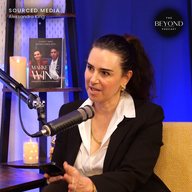 Aleksandra KingHost
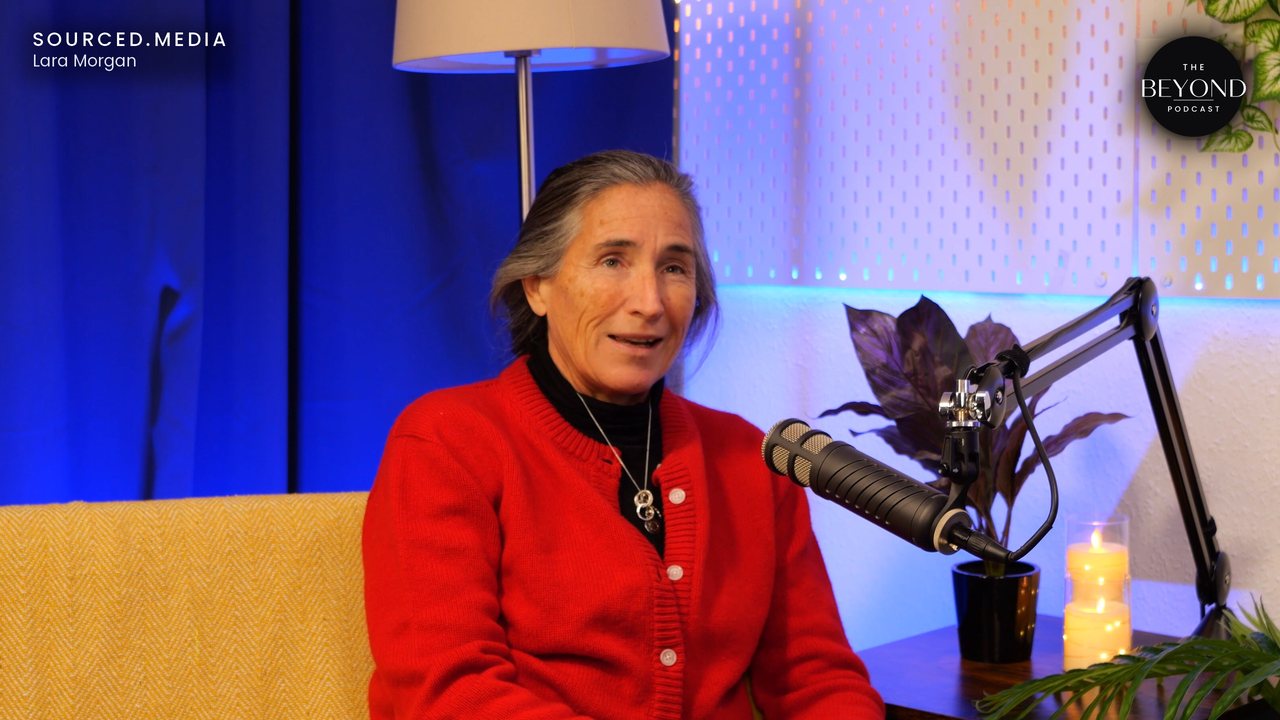
 Lara Morgan